
Key Takeaways
- Plan the patio around how it will be used, not appearance alone.
- Address grading, drainage, soil conditions, and base preparation before selecting a finish.
- Match texture, color, and pattern to the home, climate, and expected foot traffic.
- Use joints, curing, and an appropriate maintenance routine to support long-term performance.
- Request an itemized estimate that separates site work from decorative details.
Table Of Contents
- Start With The Purpose Of The Patio
- Check The Site Before Choosing A Design
- Build A Strong Base
- Compare Decorative Concrete Finishes
- Choose Color And Pattern With Care
- Plan For Drainage And Stormwater
- Follow A Careful Installation Sequence
- Create A Simple Maintenance Plan
- Avoid Common Patio Planning Mistakes
- Prepare A Realistic Budget
- Questions To Ask Before Work Begins
- Final Thoughts
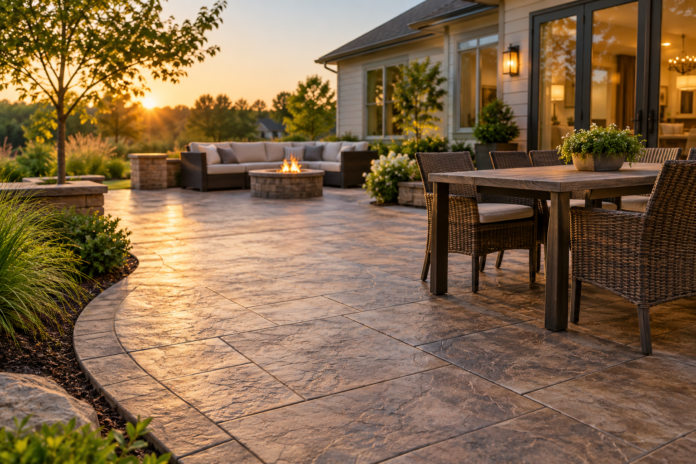
A decorative concrete patio can turn an underused yard into a practical space for meals, gatherings, quiet mornings, and everyday outdoor living. The best results come from treating the project as more than a surface upgrade. Materials, finishes, and planning tools available through Metropolitan Materials can help support the design process, but the patio’s long-term success begins with the site beneath it.
Before choosing a stamp pattern or color, consider how water moves across the property, what the soil is like, and how the finished area will be used. A visually appealing slab can still become frustrating if it holds water, feels cramped around furniture, or develops avoidable surface problems.
1. Start With The Purpose Of The Patio
Start by defining the patio’s main job. A dining area needs room for chairs to slide out, while a lounge area needs circulation space around sofas, tables, and planters. Grilling stations, fire features, play areas, and paths to doors should also be included in the layout from the beginning.
It is easy to measure the slab and forget the space people need to move comfortably. For example, a small patio may fit a table and four chairs on paper, but feel crowded once chairs are pulled back and guests need a path to the door. Planning for future additions, such as a pergola or outdoor kitchen, can also prevent a later redesign.
2. Check The Site Before Choosing A Design
Walk the site after rainfall if possible. Identify low spots, standing water, downspouts, nearby trees, exposed roots, retaining walls, and existing concrete that has settled or cracked. Also consider how the concrete, base material, and equipment will reach the work area.
Decorative treatments improve appearance, but they do not correct movement, weak soil, or poor drainage below the slab. Site conditions should guide the shape, elevation, drainage approach, and finish selection.
3. Build A Strong Base
Excavation, grading, and compaction deserve the same attention as the visible finish. Loose material, vegetation, roots, and unstable soil should be removed before a properly selected base is installed and compacted. The patio should be shaped so water is directed away from buildings and does not collect near thresholds or steps.
Slab thickness, reinforcement, and joint placement should reflect the planned use of the space. A patio that will hold unusually heavy features, such as masonry structures or large outdoor appliances, may need design considerations beyond those of a simple seating area. Reliable concrete application guidance is useful when evaluating materials and construction decisions.
4. Compare Decorative Concrete Finishes
Broom-Finished Concrete
A broom finish provides a clean appearance and useful texture for outdoor walking surfaces. It is a practical choice for patios that prioritize traction and a straightforward look.
Stamped Concrete
Stamped concrete can create patterns inspired by stone, brick, slate, tile, or wood. It requires careful timing during placement, consistent pattern alignment, and a thoughtful joint plan so the finished surface looks intentional.
Exposed Aggregate And Color Treatments
Exposed aggregate reveals decorative stone at the surface and creates a naturally textured appearance. Integral color, stains, and other color treatments can add depth, but surface preparation and compatible maintenance products matter for preserving the intended look.
5. Choose Color And Pattern With Care
Use the home’s siding, masonry, roof tones, and landscape materials as design references. Review samples in direct sun and shade because light changes how color is perceived. Subtle variation often looks more natural outdoors than a completely uniform surface.
Borders can define separate cooking, dining, and seating zones without adding walls or barriers. On a smaller patio, a simple field pattern with a restrained border often feels less busy than several competing textures.
6. Plan For Drainage And Stormwater
Drainage should be coordinated with the surrounding grade, downspouts, landscaping, and patio slope. Water should move away from the foundation and should not be directed toward doors, steps, or neighboring property. Gravel strips, planting beds, channels, and other site-specific measures may help manage runoff.
Where stormwater management is a central concern, permeable pavement approaches may be worth discussing with a qualified local professional. Local requirements and site conditions should be reviewed before choosing a permeable system.
7. Follow A Careful Installation Sequence
- Confirm dimensions, elevations, finish, color, and joint locations.
- Prepare the site, establish drainage, and compact the base.
- Set forms, place any required reinforcement, and verify slope.
- Place, level, finish, and texture the concrete according to the selected design.
- Form or cut control joints, cure the slab appropriately, then apply compatible protective treatments when the surface is ready.
8. Create A Simple Maintenance Plan
Routine care protects both appearance and usability. Sweep off abrasive debris, clean spills promptly, and inspect the patio for cracks, flaking, fading, or deteriorated joint material. Use cleaning products that are suitable for the selected finish and sealer.
Resealing needs vary with sunlight, weather exposure, traffic, moisture, and the product used. In freezing conditions, use winter products carefully and follow the recommendations for the specific surface treatment.
9. Avoid Common Patio Planning Mistakes
- Selecting a pattern before confirming drainage and elevation.
- Making the patio too small for furniture and walking space.
- Skipping soil preparation or base compaction.
- Using a smooth surface in a location that frequently becomes wet.
- Ignoring control joints because of appearance concerns.
- Choosing dark colors for an intensely sunny area without considering comfort.
10. Prepare A Realistic Budget
A complete budget should include demolition, excavation, grading, base materials, reinforcement, concrete placement, decorative treatments, drainage work, access challenges, and future maintenance. Request an itemized estimate so it is clear which costs relate to structural preparation and which relate to visual upgrades.
11. Questions To Ask Before Work Begins
- How will water move away from the patio and foundation?
- What base material and compaction process will be used?
- Where will control joints be placed?
- Which finish is appropriate for local weather and expected traffic?
- When can the patio be walked on, furnished, cleaned, and sealed?
- What maintenance products or practices should be avoided?
Final Thoughts
A durable decorative concrete patio starts below the surface. When function, drainage, base preparation, finish selection, safety, and maintenance are planned together, the finished space is more likely to look cohesive and remain useful through changing seasons.