
Table of Contents
- Why Pre-Use Checks Matter
- The Five-Minute Equipment Check
- Checks for Lawn and Grounds Equipment
- Checks for Construction Equipment
- Fuel, Batteries, and Electrical Parts
- Operator Safety Before the Machine Starts
- When to Stop Work and Request Service
- Extra Checks for Rental and Used Equipment
- A Seasonal Maintenance Plan
- Final Pre-Job Checklist
- Conclusion
Whether you are mowing a residential lawn, clearing storm debris, grading a driveway, or working from a lift, a pre-use inspection should happen before the machine starts. A reliable routine for outdoor power equipment helps homeowners, landscapers, rental customers, and contractors identify obvious problems while they are still small and manageable.
These checks are not a substitute for the owner’s manual, required operator training, or professional repair. They are a practical first line of defense: look over the machine, confirm its safety features and controls are ready, and make sure the jobsite is suitable for the work.
Why Pre-Use Checks Matter
A brief inspection can reveal leaks, loose hardware, damaged guards, low fluids, worn belts, weak batteries, and debris that could interfere with moving parts. Ignoring a minor issue can lead to poor cutting or lifting performance, unexpected downtime, machine damage, or loss of control during operation.
The emphasis on checking equipment is especially relevant for powered access machines. The 2026 “Check It!” safety campaign from the International Powered Access Federation focuses on pre-use inspections, maintenance, and regular servicing for powered access equipment. The same check-first mindset is useful across mowers, chainsaws, compact tractors, skid steers, and other work machines.
The Five-Minute Equipment Check
Use the same walk-around sequence each time. A consistent order makes it less likely that a critical item will be overlooked during a busy day.
- Park safely: Place the machine on stable, level ground when possible. Engage the parking brake and remove the key, or turn off the power, before inspecting moving parts.
- Look for leaks: Check beneath the machine and around hoses, tanks, fittings, and engine areas for fuel, oil, coolant, or hydraulic fluid.
- Inspect guards: Confirm that shields, covers, interlocks, and other protective devices are present and secure.
- Check tires and tracks: Look for low pressure, cuts, missing tread, loose wheel hardware, or visible track damage.
- Test controls: Verify steering, brakes, switches, lights, alarms, and emergency controls before entering the work area.
- Clear debris: Remove grass, mud, branches, dust, and packed material from decks, cooling areas, belts, and moving assemblies.
- Review the work area: Identify holes, slopes, overhead lines, loose objects, bystanders, pets, and other hazards.
Checks for Lawn and Grounds Equipment
Lawn and grounds equipment may be compact, but its blades, chains, belts, and rotating heads still require close attention. Inspect mower blades for cracks, bends, severe wear, and secure mounting. Check the discharge chute and deck for packed grass, corrosion, or damage. On string trimmers and edgers, make sure the cutting head and guard are firmly attached.
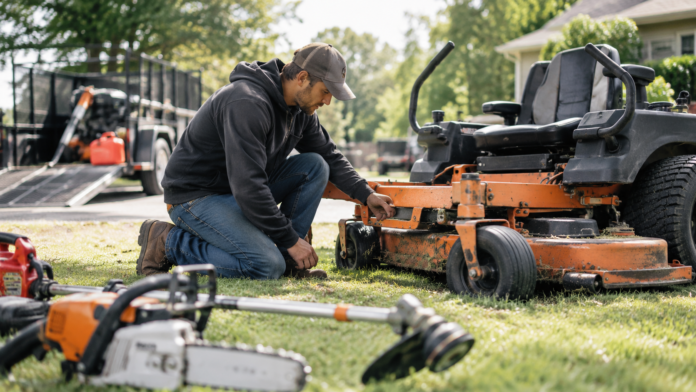
Photorealistic wide establishing shot of a landscaper performing a pre-use inspection on a riding mower and other outdoor power equipment in a residential yard, with the lawn, trees, driveway, tool trailer, and surrounding work area visible to provide context and scale.
For chainsaws, inspect the bar, chain, chain brake, tension, fasteners, and visible fuel components. Blower tubes and intake screens should be secure and clear. Before using snow equipment, inspect belts, shear pins, tires, and the chute. Never reach into a blocked chute while the machine is running, or parts could move.
For example, a property owner may notice that a mower’s discharge guard is loose during a two-minute inspection. Securing it before mowing can prevent unsafe operation and help avoid damage from debris striking an exposed part of the mower.
Checks for Construction Equipment
Skid steers, compact tractors, telehandlers, lifts, loaders, and compactors require a more thorough inspection because attachments, hydraulics, stability, and load limits affect safe operation. Examine hydraulic hoses, fittings, cylinders, attachment connections, pins, latches, and quick couplers for leaks, wear, or visible damage.
Check forks, buckets, platforms, and structural components for cracks or bends. Test backup alarms, warning lights, seat belts, emergency stops, and other required controls. Confirm the planned load is within the machine’s rated capacity and inspect the ground before traveling on slopes, soft soil, or uneven surfaces. Keep other workers outside travel paths, swing areas, and potential drop zones.
Fuel, Batteries, and Electrical Parts
Fuel-Powered Equipment
Use only the fuel specified by the manufacturer. Inspect tanks, caps, lines, and connections before use. Refuel with the engine off, allow hot parts to cool, and work outdoors or in a well-ventilated location away from ignition sources. Workplace fuel handling should also follow applicable flammable-liquid safety requirements.
Battery-Powered Equipment
Check battery packs for swelling, cracks, leaks, corrosion, or heat damage. Use the manufacturer-approved charger and a dry charging area free of flammable materials. Remove a damaged battery from service and have it evaluated in accordance with the manufacturer’s instructions.
Operator Safety Before the Machine Starts
A machine in good condition can still be dangerous in the hands of the unprepared. Read the manual before using unfamiliar equipment. Wear sturdy footwear and task-appropriate eye, hearing, hand, head, or respiratory protection. Keep children, pets, and bystanders out of the work zone, avoid loose clothing near moving parts, and never bypass guards, interlocks, alarms, or emergency shutoffs.
Do not operate equipment when impaired, overly tired, or distracted. If a task requires specific training, such as operating a lift or handling a particular attachment, ensure the operator has the necessary knowledge before beginning work.
When to Stop Work and Request Service
Some defects should end the job until qualified service is available. Stop using the machine if there are fuel, coolant, or hydraulic leaks; missing guards or safety switches; damaged tires, tracks, forks, chains, or lifting parts; unusual smoke, noise, or vibration; or any issue that affects steering, braking, cutting, lifting, or stability.
Report recurring faults instead of repeatedly resetting or ignoring them. Complex electrical, hydraulic, engine, and lift-system repairs should be handled by trained technicians using the correct service information and parts.
Extra Checks for Rental and Used Equipment
Rental and pre-owned equipment deserves extra attention because the operator may not know its full service history. Review the condition report before accepting the machine, photograph existing damage, and report concerns immediately. Ask for a control and emergency system demonstration, confirm capacity and attachment limits, and ensure manuals, keys, chargers, pins, and required safety accessories are included.
Never assume recently serviced rental equipment needs no inspection. Every operator should complete a basic pre-use check and know whom to contact if the machine stops working during the job.
A Seasonal Maintenance Plan
- Before every use: Complete the walk-around and test basic controls.
- Weekly: Clean debris, check fluids, inspect tires, and review attachments.
- Monthly: Inspect belts, filters, batteries, fasteners, and lubrication points according to the manual.
- Before heavy seasonal work: Schedule service and replace worn items before demand is highest.
- Before storage: Clean the machine and follow manufacturer guidance for fuel, battery, and exposed-part protection.
Keep a simple service log with dates, operating hours, inspection findings, repairs, and parts replaced. A record makes recurring issues easier to spot and supports better maintenance decisions.
Final Pre-Job Checklist
- Is the machine clean enough to inspect?
- Are guards and safety devices in place?
- Are tires, tracks, blades, chains, and attachments secure?
- Are fluid levels and fuel or battery systems safe?
- Do brakes, steering, lights, alarms, and controls work?
- Is the operator prepared for this machine and task?
- Is the work area clear and suitable?
- Has every known defect been repaired or reported?
Conclusion
Equipment safety starts before the engine turns on or the battery is connected. A short, repeatable inspection helps protect people, reduce avoidable downtime, and keep machines ready for the work ahead. Make checking first a routine part of every job.