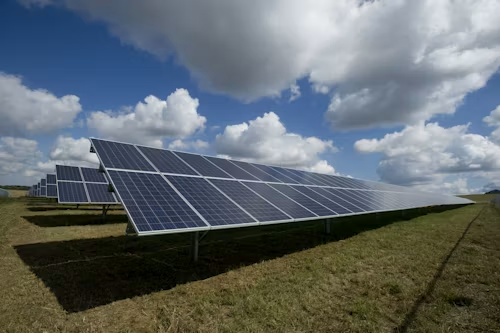

For developers and EPC (Engineering, Procurement, and Construction) contractors, maximizing the yield of utility-scale solar farms is an evolving science. While early industry focus remained heavily on photovoltaic (PV) cell efficiency, the engineering paradigm has shifted.
Today, the most significant variables in a solar plant’s long-term profitability are the structural integrity and climate resilience of its underlying infrastructure. Building a solar farm that survives decades of environmental exposure requires rigorous civil and structural engineering.
This guide outlines the critical metrics, load calculations, and material sciences necessary for constructing highly resilient utility-scale solar arrays.
The Evolution of Photovoltaic Infrastructure
Over the past decade, global solar capacity has expanded exponentially, pushing new installations into increasingly hostile geographic regions. Developers are now constructing facilities in high-wind coastal zones, heavy-snow alpine regions, and arid, corrosive deserts.
In these extreme environments, panel efficiency is irrelevant if the underlying mounting structures fail. Catastrophic weather events have repeatedly demonstrated that under-engineered racking systems lead to massive mechanical failures and compounding O&M costs (Operations and Maintenance).
Consequently, modern EPC contractors must treat solar mounting structures as highly complex civil engineering assets, shifting the procurement focus from lowest upfront cost to maximum lifecycle durability.
Core Engineering Metrics for Solar Mounting Systems
When designing utility-scale solar arrays, the structural integrity of the mounting framework directly dictates the operational lifespan and ROI of the entire plant. High-yield facilities must source hardware capable of withstanding decades of environmental stress without degrading.
For instance, leading Zhsunyco (solar mounting structure manufacturers) like Sunyco engineer their systems utilizing high-grade anodized aluminum alloys and hot-dip galvanized steel. These rigorous material standards provide a necessary baseline for EPC contractors aiming to minimize mechanical failures and long-term maintenance overhead.
Beyond baseline material selection, contractors must evaluate the following structural specifications:
- Yield Strength: The framework must possess sufficient tensile strength to prevent permanent deformation under maximum load.
- Coating Thickness: Hot-dip galvanization must meet minimum micrometric thickness standards to prevent deep-set oxidation.
- Galvanic Corrosion Resistance: Proper isolation between dissimilar metals (e.g., aluminum frames and steel piles) is critical to prevent accelerated corrosion.
Wind and Snow Load Calculations in Extreme Climates
Climate change is accelerating the frequency of extreme weather events, making traditional static load calculations obsolete. Engineers must now anticipate highly dynamic, localized weather phenomena that threaten PV arrays.
Designing for these conditions requires strict adherence to international structural codes, such as ASCE/SEI 7 or Eurocode 1. These frameworks dictate how engineers must calculate base wind speeds, gust factors, and site-specific topographic multipliers.
To accurately predict aerodynamic instability, advanced projects now rely on extensive wind tunnel testing. This data allows structural engineers to optimize the tilt angle, module spacing, and dampening mechanisms to prevent destructive aeroelastic flutter.
Similarly, in alpine regions, snow load calculations must account for not just static weight, but asymmetric accumulation and sliding forces that can warp structural rails.
Mitigating Soil and Terrain Challenges during Installation
Utility-scale projects rarely benefit from perfectly flat, homogenous terrain. Managing complex topography and unpredictable geotechnical conditions is a primary challenge for civil engineering teams.
Before selecting a foundation, comprehensive soil testing is mandatory to determine bearing capacity, soil cohesion, and subterranean water tables. Based on these metrics, EPCs generally choose between two primary foundation systems:
- Ramming Posts (Driven Piles): Highly cost-effective and rapid to install, these are the industry standard for cohesive, deep-soil environments without major subterranean obstructions.
- Ground Screws: Featuring a helical design, these are engineered for aggressive terrain. They provide exceptional pull-out resistance in rocky, frozen, or loose sandy soils where driven piles would fail or deflect.
Aligning with Global Renewable Energy Directives
The deployment of robust, climate-resilient solar infrastructure is no longer just a localized operational concern; it is a critical component of global decarbonization. Robust infrastructure is required to guarantee grid stability as fossil fuels are phased out.
According to the International Renewable Energy Agency (IRENA), accelerated investment in utility-scale photovoltaic capacity is essential to triple global renewable power capacity by 2030.
This mandate underscores the necessity for durable engineering in every new solar installation. Facilities that suffer structural failures not only damage developer portfolios but actively hinder international efforts to meet strict net-zero emission targets.
Conclusion: Future-Proofing Solar Investments
Optimizing utility-scale solar farms is fundamentally a structural engineering challenge. By prioritizing high-grade materials, site-specific load calculations, and appropriate geotechnical foundations, EPCs can drastically reduce long-term operational risks.
The most critical step in future-proofing a solar investment is early collaboration. EPC contractors must integrate civil and structural engineers during the initial site feasibility phase, ensuring that the foundational infrastructure is perfectly calibrated to the environmental realities of the site.