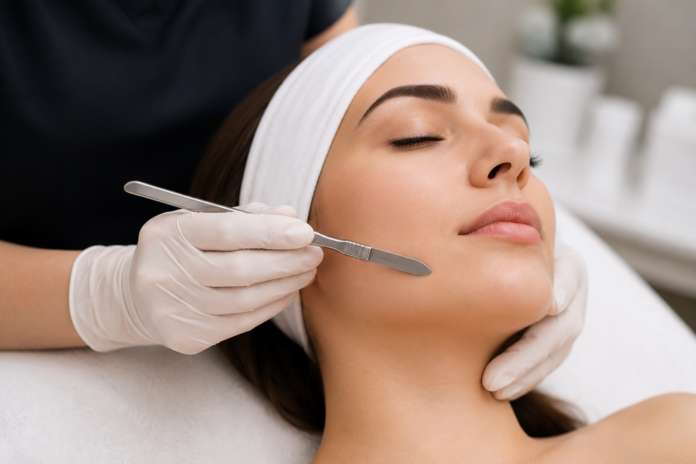

Dermaplaning has become a seriously popular skincare treatment, but like most beauty trends, it has picked up a few myths along the way. Some people worry it will make facial hair grow back thicker. Others assume it is painful, harsh, or only useful if you have a particular skin type.
The reality is a lot less dramatic. Dermaplaning is a straightforward exfoliating treatment that can leave the skin looking smoother, brighter, and more refreshed. So, what is actually true, and what belongs firmly in the myth pile?
Myth 1: Your Hair Will Grow Back Thicker
This is probably the biggest dermaplaning myth of them all.
Dermaplaning removes the fine, soft facial hair often called peach fuzz from the surface of the skin. It does not change the structure of the hair follicle underneath, so it cannot magically make the hair grow back thicker, darker, or faster.
When the hair starts growing back, it may initially feel slightly different because it has been cut straight across. However, its actual thickness and growth pattern have not changed.
Myth 2: Dermaplaning Is Painful
The idea of a blade anywhere near your face might sound intimidating, but professional dermaplaning should not feel like shaving with a standard razor.
A trained provider uses a specialized tool to gently remove dead skin cells and fine hair from the skin’s surface. Most people describe the experience as painless, with some even finding it relaxing.
Choosing an experienced provider, such as dermani MEDSPA®, can also help ensure the treatment is performed professionally and with your individual skin needs in mind.
Myth 3: It Is Only About Removing Peach Fuzz
Getting rid of facial fuzz is certainly one noticeable benefit, but dermaplaning is primarily an exfoliating treatment.
By removing the uppermost layer of dead skin cells, dermaplaning can help create a smoother-looking surface and give the complexion a fresher appearance. Makeup may also apply more evenly afterward, which is one reason the treatment is popular before special occasions.
It is not simply an elaborate facial shave.
Myth 4: Dermaplaning Is Too Harsh for Your Skin
Dermaplaning might sound aggressive, but when carried out correctly, the process is controlled and gentle.
That said, it is not necessarily suitable for every person at every moment. Someone experiencing active acne, irritation, or certain skin concerns may need to wait or consider another treatment instead. A professional consultation can help determine whether dermaplaning makes sense for your skin.
Myth 5: You Will See Permanent Results
Dermaplaning can leave the skin looking noticeably smoother, but it is not permanent.
Dead skin cells naturally build up again and facial hair continues through its normal growth cycle. For that reason, some people choose to have dermaplaning treatments periodically rather than treating it as a one-off solution.
Getting Past the Dermaplaning Hype
Dermaplaning does not make hair grow back thicker, it should not be painful when professionally performed, and its benefits go beyond simply removing peach fuzz.
As with any skincare treatment, having realistic expectations is important. Understanding what dermaplaning actually does makes it much easier to decide whether it deserves a place in your skincare routine, without letting old beauty myths make the decision for you.