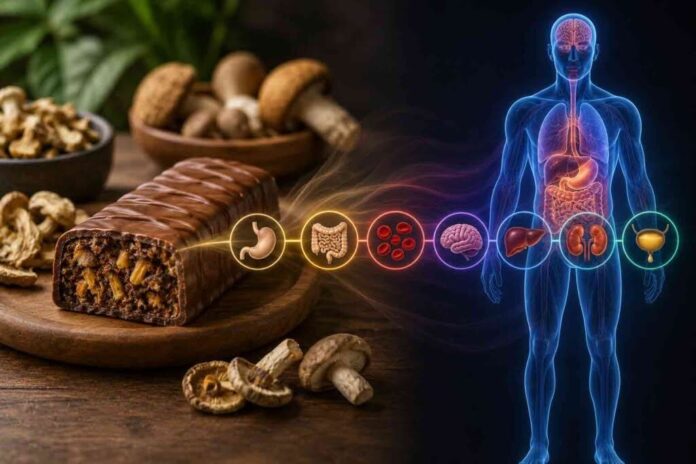

Mushroom-based sweets have become an interesting part of the growing functional food market. Among them, chocolate and candy-style bars offer a familiar format for incorporating mushroom ingredients into a food product.
However, the term “mushroom candy bar” can describe products with very different formulas. Some contain functional mushrooms such as lion’s mane or reishi. Others may use mushroom extracts or ingredients associated with psychoactive species.
Gummies are another popular format. Although both products can contain similar mushroom ingredients, their texture, formulation, ingredients, and labeling can be quite different.
Understanding these differences makes it easier to identify what each product actually contains.
What Is a Mushroom Candy Bar?
A Mushroom candy bar is a confectionery-style product that includes mushroom material or mushroom-derived ingredients.
The mushroom component may be added as a dried powder, extract, or blend. The remaining formula can include ingredients normally found in sweets, such as sugar, cocoa, milk ingredients, flavorings, and fats.
There is no universal recipe for these products. One bar may focus on functional mushrooms, while another may contain a completely different type of mushroom ingredient.
The product name therefore provides only a starting point. The ingredient label offers much more useful information.
Common Ingredients Found Inside
Mushroom candy bars can contain several categories of ingredients.
Mushroom Material
The main mushroom ingredient may appear as powder or extract. The species should be clearly identified whenever possible.
Common functional mushroom species include lion’s mane, reishi, cordyceps, and chaga.
Chocolate or Confectionery Ingredients
Many mushroom bars use cocoa, cocoa butter, sugar, milk powder, or other confectionery ingredients.
Some formulas use dark chocolate, while others use milk chocolate or dairy-free alternatives.
Flavoring Ingredients
Vanilla, coffee, mint, coconut, nuts, and other flavorings may be added to improve taste.
These ingredients can also change the nutritional profile and allergen considerations of the final product.
Functional Mushrooms Versus Psychoactive Mushrooms
Not all mushrooms have the same properties.
Functional mushrooms are commonly used in food and wellness products. They have been studied for their nutritional components and various biological properties.
Psychoactive mushrooms are different. Certain species contain compounds that can affect perception, mood, and cognition.
This distinction is especially important when comparing mushroom sweets. A product containing lion’s mane should not be interpreted in the same way as one containing psychoactive mushroom compounds.
The name of the product alone cannot establish which category it belongs to.
Why Are Gummies So Popular?
Gummies provide a different approach to incorporating mushroom ingredients into a sweet product.
Their soft texture comes from ingredients such as pectin or gelatin, depending on the formula. They may also contain sugar, fruit flavors, acids, sweeteners, and other components.
Gummies are generally smaller individual pieces rather than one solid bar. This changes how the product is packaged and labeled.
Some products marketed as mushroom gummies by boom bar may contain mushroom powders, extracts, or blends. As with candy bars, the exact formulation should be checked rather than assumed from the product name.
Mushroom Bars and Gummies Have Different Textures
Texture is one of the most obvious differences between the two formats.
A candy bar is usually firm at room temperature and can soften when exposed to heat. Chocolate-based versions may melt or develop surface changes under unsuitable conditions.
Gummies are flexible and chewy. Their texture depends heavily on moisture, gelling agents, and storage conditions.
These differences influence how manufacturers formulate and package the products.
The Mushroom Ingredient May Be Similar
Despite their different appearances, a bar and a gummy can contain the same mushroom species.
For example, both formats could use lion’s mane powder or a mushroom extract. However, the surrounding ingredients can be completely different.
This means the physical format does not necessarily tell you which product contains more mushroom material.
To understand the difference, look at the ingredient list and the amount disclosed for each mushroom ingredient.
Powder Versus Extract
The mushroom’s physical form is another important factor.
A powdered mushroom is made from dried mushroom material that has been processed into a fine form. It can contain a broader range of compounds found in the processed material.
An extract is produced through an extraction process designed to concentrate certain components.
The extraction method can influence the resulting composition. Therefore, “mushroom extract” is not enough information by itself to determine its concentration or characteristics.
Serving Information Can Be Different
Bars and gummies are usually divided into individual portions.
A chocolate bar may contain several squares or sections. A gummy product usually contains multiple individual pieces.
The number of pieces does not automatically tell you how much mushroom ingredient is present.
A clear label should explain the serving size and, when available, the quantity of relevant mushroom ingredients.
This information is particularly useful when comparing products with different physical formats.
Other Ingredients Deserve Attention
The mushroom component is only one part of the formula.
Chocolate-based products can contain dairy, soy, nuts, and other common allergens. Gummies may contain gelatin or other ingredients that affect whether they fit particular dietary preferences.
Sweeteners are also common in both categories.
Some products contain additional botanical ingredients, vitamins, minerals, caffeine, or flavor compounds. Checking the full ingredient list can reveal these additions.
What About Reported Effects?
The expected effects depend primarily on the mushroom species and other active ingredients.
Functional mushrooms such as lion’s mane, reishi, and cordyceps have been studied for different biological properties. Research has explored areas such as neurological function, immune activity, and energy metabolism.
However, evidence varies considerably.
Laboratory findings do not automatically prove a health benefit in humans. Some studies also use specific extracts that may differ from ingredients found in commercial foods.
Psychoactive mushroom products have a different effect profile. Their compounds can alter perception and mental processes.
Therefore, it is inaccurate to assume that every mushroom candy or gummy produces the same experience.
How Labels Help With Comparisons
Comparing two products becomes easier when the same information is collected from each label.
Check the mushroom species first. Then identify whether the ingredient is a powder or extract.
Next, review the amount disclosed and the serving size.
Look at the remaining ingredients as well. Sugar, fats, flavorings, allergens, and additional active compounds can all affect the overall formulation.
Finally, consider whether the product makes health claims that are supported by reliable evidence.
Storage Differences Between Bars and Gummies
Storage requirements can vary because the two formats respond differently to temperature and moisture.
Chocolate can soften or melt in warm environments. Changes in temperature can also affect its appearance.
Gummies are generally more sensitive to moisture and may change texture if stored improperly.
Following the manufacturer’s storage instructions is the safest way to maintain the intended quality of either product.
Keeping the packaging properly sealed can also reduce exposure to air, moisture, and external odors.
Legal Considerations Matter
The legal status of a mushroom product depends on its ingredients and location.
Functional mushrooms are generally treated differently from psychoactive mushroom compounds. Some jurisdictions have specific rules covering particular species or active substances.
A product’s availability in one location does not mean the same formula is legal everywhere.
This is particularly relevant when researching products associated with psychoactive mushrooms. Local regulations should always be checked independently.
Research and Marketing Claims
Mushroom products are often marketed with broad descriptions involving focus, energy, relaxation, immunity, or general wellness.
Scientific research can provide useful context, but claims should be considered carefully.
A study involving a particular mushroom species does not automatically validate every product containing that species. The preparation, extract, concentration, and study conditions may all differ.
For this reason, product labels and credible research should be considered together.
Which Format Is Easier to Understand?
Neither candy bars nor gummies are automatically easier to evaluate.
A bar may have a shorter ingredient list if it uses a simple chocolate formula. However, it can also contain several confectionery ingredients.
Gummies may provide clearly divided pieces, but their formulas can include several sweeteners, flavorings, and texture-related ingredients.
The clearest product is generally the one that provides straightforward information about its mushroom ingredients and overall formulation.
Final Thoughts
Mushroom candy bars and gummies may look very different, but they can share some of the same mushroom ingredients.
The biggest differences usually come from the food base, texture, additional ingredients, storage requirements, and physical serving format.
The type of mushroom remains one of the most important factors. Functional mushrooms and psychoactive mushrooms should not be treated as the same category.
Rather than judging a product by its appearance or marketing name, examine the mushroom species, ingredient form, serving information, additional ingredients, and applicable regulations.
This approach provides a clearer understanding of what separates mushroom candy bars from gummies and other mushroom-based formats.
FAQs
What is a mushroom candy bar?
It is a sweet or chocolate-based product containing mushroom material, powder, extract, or a mushroom blend.
Are mushroom candy bars always chocolate-based?
No. The term can describe different confectionery formulas, although chocolate is commonly used.
How are mushroom bars different from gummies?
Bars are generally firm and chocolate or confectionery-based, while gummies have a soft, chewy texture.
Can bars and gummies contain the same mushrooms?
Yes. The same mushroom powder or extract can sometimes be used in both formats.
What are functional mushrooms?
They are mushrooms commonly used in food and wellness products, including lion’s mane, reishi, cordyceps, and chaga.
Are functional and psychoactive mushrooms the same?
No. Psychoactive mushrooms contain compounds that can affect perception and cognition.
What is a mushroom extract?
It is a mushroom-derived ingredient produced through processing intended to concentrate certain compounds.
Why should I check the ingredient list?
It identifies the mushroom species and other ingredients that make up the product.
Can mushroom gummies contain allergens?
Yes. Depending on the formula, they may contain ingredients such as soy, dairy, or other allergens.
Are mushroom candy bars legal everywhere?
No. Legal rules vary according to the ingredients, compounds, and location.