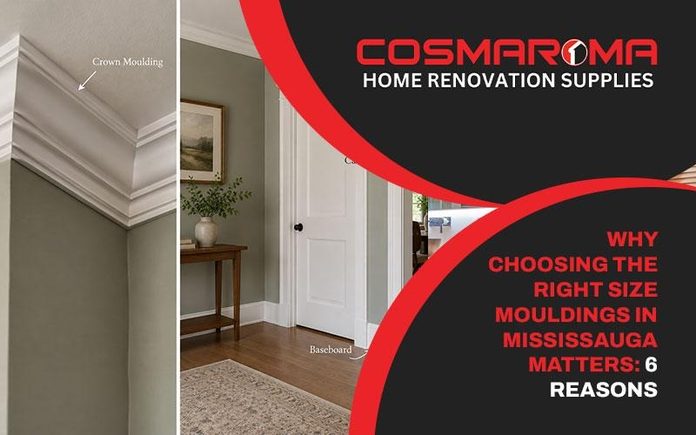

It is easy to forget about your Mississauga home’s mouldings until you notice their size is off. A profile that is too narrow might get lost against tall walls, while something too bulky can make a small room feel cramped. Getting the proportions right helps this form of trim look as it belongs there, rather than being an afterthought.
If you are working on moulding projects in Mississauga, moulding size is key because it ties together your walls, ceilings, doors, and floors.
Everything from the height of your ceiling to the size of your doors and furniture plays a role in how the finished moulding looks in your space. That is why picking moulding just because you like the look of a small piece can lead to a result you did not expect once it is actually on the wall.
In this post, we look at six reasons why the right size of moulding is so important and how you can choose a form of trim that looks great in your Mississauga home.
Why Getting the Moulding Size Right Matters for Your Mississauga Home
These six points explain how moulding size changes the feel of a room. We have also included a quick tip on how to check the size before you buy.
1. Ceiling Height Changes Everything
One of the first things to look at is your ceiling height. The same trim can look totally different depending on the room. A thin crown profile might work in a cozy room with an 8-foot ceiling, but it will look way too small on a taller wall. On the flip side, trim that is too large can pull the eye down and make a room feel heavy.
When you are looking at mouldings in Mississauga stores, think about the wall space around the trim. A wider crown looks much better when there is plenty of height above the doors and furniture. Also, the height of your baseboard should fit the scale of the room rather than just being trendy. When everything is scaled right, the whole room feels more balanced.
2. Doors and Windows Set the Visual Scale
Moulding does not just live on its own; it meets up with door frames, window trim, and baseboards. Every piece needs to relate to the others. If you have a very tall baseboard but the trim around your door is thin, it can look a bit strange. In addition, a massive casing on a small window might take over the wall.
It is a good idea to measure your openings and compare those sizes to the trim you like. A wider casing fits a large opening well, while a slimmer profile is better for a small bedroom door. The goal is to make the room feel planned and comfortable.
3. Room Size Changes the Impact
Keep in mind that a trim sample that looks small in your hand can appear much bolder once it is up on the wall. Long walls add to the presence of your trim because the lines stretch across the room. In smaller spaces, a deep or wide profile might stand out too much, particularly if you have several types of trim meeting in the same area.
When you plan moulding projects in your Mississauga home, be sure to compare the profile with the width of your room and the length of your walls. For example, a simple baseboard of moderate size can define a small room nicely without distracting from your furniture or flooring. A larger room can usually handle a broader profile since there is more space for it to sit comfortably.
You can also create a nice sense of flow by repeating the same moulding size from room to room. Good proportions allow the other finishes in the room to stand out. The goal is for your scale to support the room instead of competing with it.
4. Profile Detail Can Make the Same Width Feel Larger
Two pieces of moulding can be the exact same width but look completely different. A flat, simple style usually feels light and subtle. In contrast, a design with deep steps or patterns looks more significant because the shadows make every edge pop. This shows that you cannot rely on width alone when comparing sizes. Consider the depth, the curves, the bevels, and how many lines you see in the profile as well.
For instance, a decorative crown moulding might feel bigger than a plain one of the same size simply because of how the light plays across its shape. Strong profiles often suit traditional rooms that have lots of architectural detail, while simpler profiles tend to fit well in rooms with a clean, modern look.
It is helpful to test a longer piece of trim against your wall because small samples often do not show how much visual weight a style really has. Choosing the right size is about more than just the measurements; it is also about how the design looks in your home.
5. Moulding Size Changes the Relationship Between Floors and Walls
Baseboards act as a visual border between your floors and walls, and their height really changes how both surfaces look. A short baseboard might disappear next to wide planks or high ceilings, while a very large one can take up too much wall space and make the room feel cluttered. When you look at different moulding options in Mississauga, you should think about your floor colour and wall colour along with the other trim in the room.
A tall and simple baseboard often creates a smooth transition if your flooring has a bold pattern. It is also important that the baseboard meets the door frame in a way that looks intentional.
If one piece is much thicker than the other, the joint will stand out in a bad way. Choosing the right size keeps the transition clean and helps the whole room feel balanced from every angle.
6. Thickness Matters at Corners, Casings, and Transitions
While everyone talks about width, moulding thickness is just as important when you install your trim. If a piece sticks out too far from the wall, you might end up with awkward joints where the baseboards meet the door casings. At the same time, very thin trim can make uneven walls look more obvious. The thickness also changes how shadows fall along the edge, which affects how bold the moulding appears.
A deeper profile creates stronger shadow lines, even if the width is modest. Installers also need enough material at corners and intersections to make clean cuts and tidy connections. Before you pick a profile, check how it will meet existing trim, flooring, door frames, and any nearby wall treatments. Small differences that seem harmless on a sample can become obvious once you join several pieces together.
By paying close attention to thickness, you avoid mismatched edges and give your trim a professional and consistent look throughout the room.
7. Test the Size in the Actual Room Before Buying
Product labels provide useful data, but your room provides the best answer. A great way to test the scale is to place a sample of the actual size, or perhaps a temporary paper strip cut to the same height, against your wall. View it from the doorway, across the room, and near your other openings to get a good sense of the proportions.
When you compare moulding options in Mississauga stores, this simple test helps you see if a profile feels too small, too bold, or just right. For instance, crown moulding that seems large up close might look perfectly balanced from a normal distance.
This applies to baseboards and door casings as well. Testing the size before you order does more than just show you how it looks; it helps you see how the trim relates to your furniture, flooring, ceiling height, and other architectural details. Taking a few minutes to check the proportions can save you from making expensive changes after you start cutting or painting, which helps protect your project budget.
How to Apply Moulding Size to Real Product Choices
Here are some tips on how to apply moulding size to real product options that you find in store.
Compare Sizes Across the Main Trim Categories
Since most renovations involve multiple types of trim, you should plan your sizing choices as a complete set. Baseboards, crown moulding, and door or window casings often sit in the same line of sight. If you select each style on its own, the finished room might feel a bit disjointed, even if every piece looks nice individually. Instead, start with the most prominent trim, such as your baseboard or casing, and then compare the other options against it.
For example, a wide baseboard pairs well with a casing that has enough visual weight to meet it cleanly at a doorway. You can then choose your crown moulding based on the height of your ceiling and the level of detail you already have below. This way, shopping becomes much easier because you are focused on how the pieces relate to each other. It also prevents you from mixing styles that might compete for attention in your finished space.
Match Material Choice to the Size and Finish You Want
The material you choose changes how your moulding looks, feels, and finishes, so think about this alongside the size.
You have options like MDF, wood, and metal. A wide, painted profile often works well with MDF when you want a smooth, consistent surface, while natural wood is a great choice if you want the grain to show. Metal trim is handy for modern looks where you want a slimmer and sharper edge.
Remember that two profiles of the same size can look very different once you consider the material, finish, and shadow lines. The room itself also matters because factors like wear, moisture, and maintenance needs will influence your choice.
Looking at material and size together helps you pick a profile that looks good on paper and works well alongside the other permanent finishes in your room.
Use Flexible Moulding Where Standard Profiles Cannot Follow the Wall
Curved walls, rounded corners, and uneven surfaces can make standard rigid trim difficult to fit cleanly. Flexible moulding is available for these situations, giving you another option when a conventional straight piece will not follow the surface properly. Size still matters with flexible trim because the profile needs to relate to nearby baseboards, casings, or crown moulding. For instance, using a flexible piece that is noticeably narrower than the straight trim beside it can make the transition obvious instead of subtle.
Before buying, check the face width, depth, bend requirements, and how the flexible section will connect to rigid pieces. Also, plan where your joints will fall so the change in material does not become the first thing you notice. Flexible trim can solve a shape problem, but careful sizing is what helps it blend in with the rest of the room once everything is painted.
Bring Measurements With You When Comparing Available Profiles
Choosing the right moulding is much simpler when you shop with your actual room measurements instead of relying on memory. When you bring accurate measurements and clear notes with you, staff can support you with profile selection, installation tips, and logistics like local pickup or delivery.
Before you start comparing products, take a moment to record the ceiling height, wall lengths, and the size of your doors and windows. You should also note existing trim widths and any tricky corners.
Knowing the height of your current casing, for example, helps you avoid choosing a baseboard that creates an awkward transition. Bringing photos of the space is another great way to give context when discussing size or material options with a pro.
Having these details handy also helps you calculate the right amount of material to buy, which saves you from purchasing too much or too little. When you have your room dimensions in front of you, it is much easier to make choices that fit your home perfectly.
Picking the right size for your moulding is about more than just filling gaps. It helps your ceilings, walls, doors, floors, and other features feel connected rather than clashing with each other. If you are shopping for mouldings in Mississauga, try to look past just the small sample piece. Think about your room height, how large your openings are, the length of your walls, the depth of the profile, your materials, and the specific conditions where you plan to install the trim. Testing a piece of the actual size of moulding in your space can really help you make the right choice. A balanced profile does not need to be loud or dramatic to stand out. It just needs to fit the space naturally. By taking your measurements and comparing your options, you can pick trim that fits beautifully and highlights the best parts of your home.