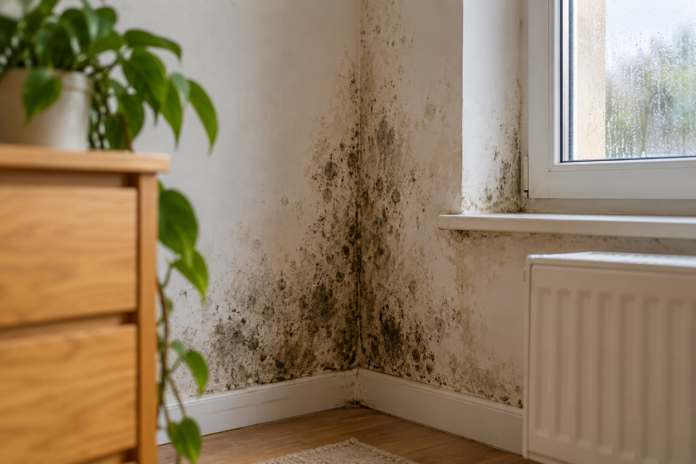

Damp has a way of creeping into a home without anyone noticing. It starts as a window that steams up every morning, or a faint musty smell in a bedroom. Then one day you move a chest of drawers and find the wall behind it speckled with black. Mould is one of the most common problems in homes of every age and price, and it is also one of the most misunderstood.
This guide explains why mould appears, what it does to your health, what you can safely tackle yourself, and when it is time to bring someone in.
Why mould shows up
Mould is a living thing. It needs food, which it finds in dust, paint, paper and plaster, and it needs moisture. Take the moisture away and it cannot grow. That is why almost every mould problem is really a damp problem in disguise.
The damp comes from one of three places. Condensation is the most common. Everyday living puts a lot of water into the air, from showers, cooking, drying clothes indoors and simply breathing. When that moist air meets a cold surface such as a window, an outside wall or the inside of a wardrobe, the water settles on it and stays there.
Penetrating damp is water coming in from outside. A blocked gutter, a cracked render, a missing roof tile or a leaking window seal will soak a wall from the outside in.
Rising damp is water drawn up from the ground through the base of a wall, usually because the barrier that should stop it has failed or been bridged by a raised path or flower bed. It is less common than people think and is often diagnosed when the real cause is one of the other two.
Knowing which of the three you are dealing with matters, because the fixes are completely different.
Is it actually harmful?
For most healthy adults, a small patch of mould in the bathroom is unpleasant rather than dangerous. Mould releases spores into the air, and breathing them in can irritate the eyes, nose, throat and lungs. People with asthma, allergies or a weakened immune system feel this far more, and so do babies and older people. In a damp home, coughs linger, chest infections come round more often and skin conditions flare up.
The other cost is to the home itself. Mould stains decoration, rots timber, ruins clothes and books, and makes rooms smell. A property that has had a long running damp problem is harder to sell and more expensive to put right.
It is not something to panic about, but it is not something to live with either.
Cleaning small patches yourself
If the mould covers an area smaller than a large dinner plate, is on a hard or painted surface, and the people in the home are in good health, you can deal with it yourself.
Open the window, put on gloves and a mask if you have one, and wipe the area with a cloth dipped in a mould cleaner or a mild solution of washing up liquid and water. Do not scrub dry, as that sends spores into the air. Dry the surface fully afterwards and put the cloth in a bag and in the bin.
Leave the room well aired for a few hours. Then, and this is the part most people skip, work out why the wall was damp in the first place. Cleaning without fixing the cause means you will be doing it again next month.
When to call someone in
Some situations are beyond a cloth and a bottle of cleaner. Call a professional if the mould covers a large area, if it has got into plaster, timber or insulation, if it returns within weeks of cleaning, if you cannot find the cause, or if anyone in the household is already unwell. Landlords should be involved straight away if you rent, and in many places they have legal duties to deal with it within set timescales.
Choose carefully. Damp and mould attract a lot of firms that sell one treatment for every problem. A good company starts with a survey, explains which of the three kinds of damp you have, and fixes the cause before treating the mould. Ask what qualifications the person coming to your home holds. Reputable firms put their staff through proper mould training so they know how to contain spores, protect themselves and the household, remove affected material safely and confirm the area is clear afterwards. If someone cannot tell you how they will stop spores spreading to the rest of the house while they work, find someone who can.
Be wary of anyone who diagnoses rising damp from the doorway, quotes for chemical injection before looking at the gutters, or offers a lifetime guarantee on a treatment that does not address ventilation.
Finding the cause yourself
If the problem is small enough to handle at home, start with the obvious. Is the mould in a bathroom or kitchen with no extractor fan, or a fan that nobody switches on? Are clothes drying on radiators? Is the affected wall an outside wall with a wardrobe or bed pushed hard against it? Is the room kept cold with the door shut? Those all point to condensation, and the answers are ventilation, gentle heat and moving furniture a little way from the wall.
If the patch is high on an outside wall, near a window or in a corner below the roof, go outside and look up. Overflowing gutters, cracked pipes and slipped tiles are visible from the ground more often than not.
If the damp is low down, with a tide mark and crumbling plaster, check the ground level outside. Soil, paving or a new patio piled up against the wall is a common cause.
A cheap moisture meter or a simple hygrometer that shows humidity can tell you a lot. Indoor humidity that sits high for weeks on end is a condensation problem however it looks.
Keeping it away
Once the cause is fixed and the mould is gone, a few habits keep it that way. Use extractor fans every time you shower or cook, and leave them running for a while afterwards. Keep lids on pans. Dry washing outside when you can, and in one closed room with a window open or a dehumidifier when you cannot. Open windows on both sides of the house for ten minutes a day, even in winter. Keep the heating on low and steady rather than blasting one room and leaving the rest cold. Leave a gap between furniture and outside walls. Clear the gutters every autumn.
Conclusion
Mould is a symptom. The disease is moisture, and it comes from condensation, water getting in, or water rising up. Small patches on hard surfaces can be cleaned safely at home, as long as you then find and fix the cause. Larger problems, repeat problems and anything affecting someone’s health deserve a properly trained professional who looks for the source rather than just spraying the stain. Get the damp under control and the mould, along with the smell and the winter coughs, goes with it.