
Introduction
Link building is one of the most important parts of search engine optimization. If you want your website to rank higher, attract organic traffic, and become more trusted in your industry, you need strong backlinks from relevant and authoritative websites.
A backlink is a link from another website to your website. When another site links to your page, it can act like a recommendation. It tells users and search engines that your content is useful, trustworthy, or worth referencing.
But not all backlinks are equal.
A link from a respected website in your industry can help your SEO much more than a random link from an unrelated blog. A natural link placed inside helpful content is usually more valuable than a link hidden in a footer, profile page, or spammy directory. That is why modern link building is not about collecting as many links as possible. It is about earning the right links from the right websites.
In this guide, you will learn what link building is, why backlinks matter, what makes a backlink valuable, and how to build high-quality backlinks using practical strategies that work for long-term SEO.
What Is Link Building in SEO?
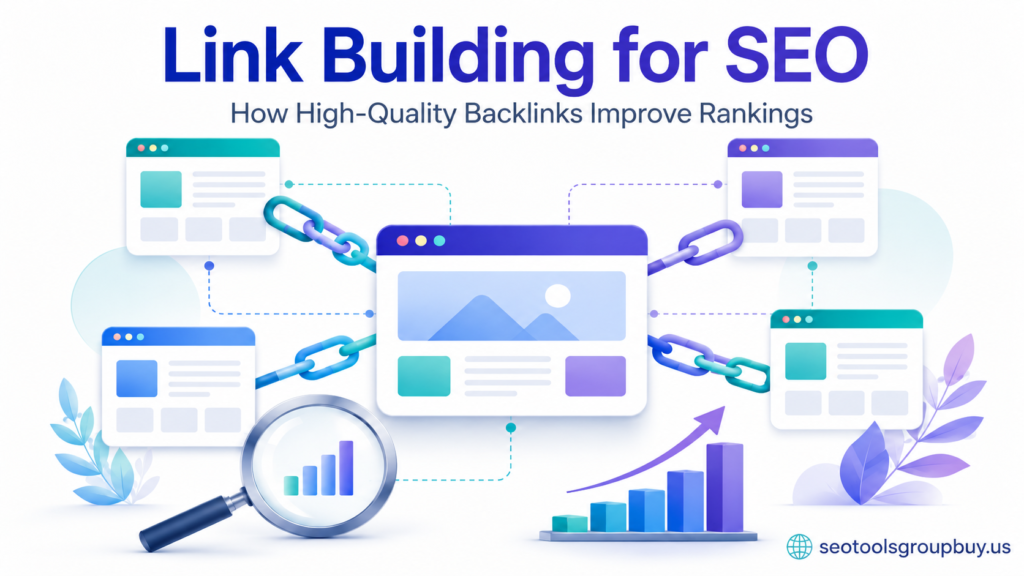
Link building is the process of getting other websites to link to your website. These links are called backlinks, inbound links, or external links.
For example, if a marketing blog writes an article about SEO tools and links to your SEO guide, that is a backlink. If a local business directory links to your company website, that is also a backlink. If a journalist mentions your brand Seotoolsgroupbuy.us in an online article and links to your homepage, that is another type of backlink.
Search engines use links to discover pages and understand relationships between websites. A link can help search engines find your page, understand what your page is about, and evaluate how trusted your website may be.
Link building for SEO is important because backlinks can support your rankings. When your site earns links from trustworthy websites, it can improve your authority and help your pages compete in organic search results.
However, link building must be done carefully. Search engines are much better at identifying manipulative link schemes than they used to be. Buying links, using spammy directories, overusing exact-match anchor text, or creating fake link networks can harm your SEO instead of helping it.
Good link building is based on value. You create something useful, promote it to the right people, and earn links because your content deserves to be referenced.
Why Are Backlinks Important for SEO?
Backlinks are important because they can help search engines understand the popularity, trust, and relevance of a page. If many reputable websites link to a page, that page may be seen as more useful or authoritative.
Backlinks can help your SEO in several ways.
First, backlinks can improve rankings. A page with strong backlinks often has a better chance of ranking for competitive keywords. This does not mean links are the only ranking factor, but they are still an important part of SEO.
Second, backlinks can help search engines discover your content. When a search engine crawls a website that links to your page, it may follow that link and find your page faster.
Third, backlinks can bring referral traffic. Even if a link does not directly improve rankings, people may click it and visit your website. A link from a relevant blog, news website, resource page, or industry directory can send visitors who are already interested in your topic.
Fourth, backlinks can build brand authority. When your business is mentioned on respected websites, people start to trust your brand more. This is especially useful for service businesses, ecommerce websites, SaaS companies, blogs, and local businesses.
The key is quality. A small number of high-quality backlinks can be more powerful than hundreds of low-quality links.
What Makes a Backlink High Quality?
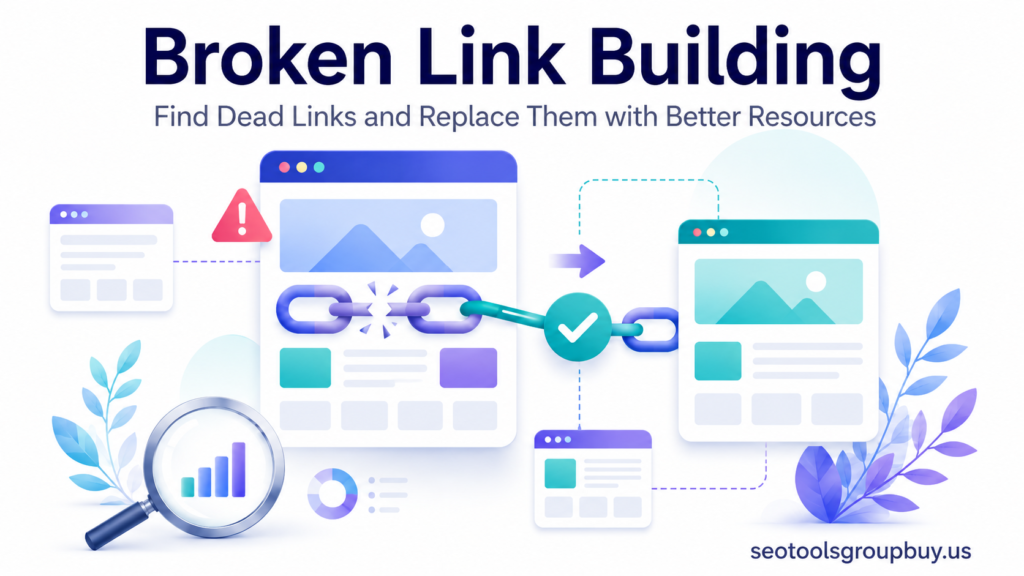
A high-quality backlink is not just any link. It is a link that comes from a trustworthy, relevant, and useful source. Before building or accepting a backlink, you should look at several factors.
1. Relevance
Relevance is one of the most important backlink quality factors.
If your website is about digital marketing, a backlink from an SEO blog, business website, marketing agency, or software review site makes sense. But a link from a random cooking blog or unrelated forum may not provide much value.
Search engines look at context. If the linking website and the linking page are related to your topic, the backlink looks more natural and useful.
A relevant backlink also helps users. If someone is reading an article about content marketing and sees a link to your guide about content strategy, that link provides value. But if the same article links to a completely unrelated product, it feels forced.
2. Authority
Authority refers to the strength and trust of the website linking to you.
A backlink from a well-known news site, educational website, industry publication, or respected business blog is usually more valuable than a backlink from a new, unknown, or low-quality website.
Authority is not only about big brands. Smaller niche websites can also provide valuable backlinks if they have a real audience, useful content, and a clean backlink profile.
When reviewing backlink opportunities, check whether the website publishes high-quality content, has real traffic, and appears trustworthy. Avoid sites that exist only to sell links or publish thin guest posts.
3. Link Placement
Where the link appears on the page also matters.
A link placed naturally inside the main body of an article is usually better than a link in the footer, sidebar, author bio, or comment section. A contextual backlink inside relevant content helps both users and search engines understand why the link is there.
For example, a sentence like “This detailed guide explains how to create an SEO content strategy” with a link to your guide is more useful than a random link placed at the bottom of a page.
The best backlinks are editorial links. That means the website owner or writer chose to include your link because it added value to their content.
4. Anchor Text
Anchor text is the clickable text of a link. It helps users and search engines understand what the linked page is about.
For example, if a link says “link building strategies,” users expect the linked page to explain link building strategies. If the link says “click here,” it gives less context.
Good anchor text should be clear, natural, and relevant. You should not overuse exact-match keywords. If every backlink to your page uses the same anchor text, it can look unnatural.
A healthy backlink profile includes different types of anchor text, such as:
- Branded anchor text: Your company name
- URL anchor text: Your website URL
- Partial-match anchor text: A phrase related to your keyword
- Natural anchor text: Words that fit naturally in the sentence
- Generic anchor text: Phrases like “learn more” or “this guide”
The goal is to make anchor text useful, not spammy.
5. Follow vs. Nofollow Links
Some backlinks can pass ranking signals, while others include attributes that tell search engines how to treat the link.
A standard link without special attributes is often called a follow or dofollow link. These links may pass SEO value.
A nofollow link includes the rel=”nofollow” attribute. This tells search engines that the linking site does not want to fully endorse the linked page.
A sponsored link uses rel=”sponsored” and is used for paid links, advertisements, or sponsored placements.
A UGC link uses rel=”ugc” and is commonly used for user-generated content, such as comments and forum posts.
Nofollow, sponsored, and UGC links can still be useful for referral traffic, brand visibility, and audience reach. But for SEO authority, editorial follow links are usually the most valuable.
6. Traffic Potential
A backlink is more valuable when real people can click it.
If a website has an active audience and your link is placed in a helpful context, it can send qualified visitors to your website. This is important because link building should not only be about rankings. It should also help your business get more visibility, leads, and customers.
Before pursuing a backlink, ask yourself: Would I still want this link if search engines did not exist?
If the answer is yes, it is probably a good link opportunity.
Safe Link Building vs. Spammy Link Building
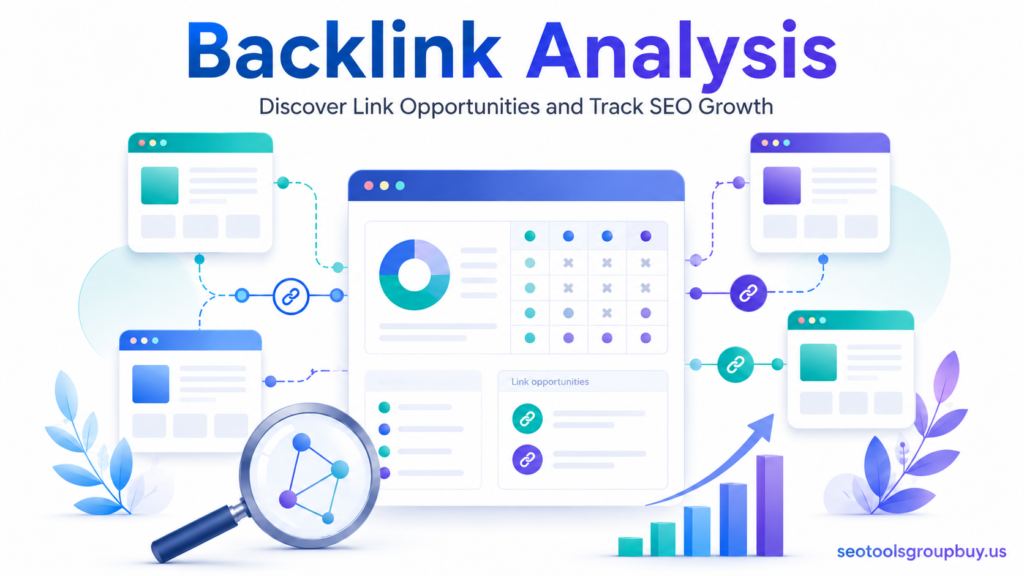
Good link building focuses on value, relevance, and real relationships. Spammy link building focuses on shortcuts.
Safe link building includes:
- Creating useful content that people want to reference
- Reaching out to relevant websites with a genuine reason
- Building relationships with bloggers, journalists, and industry experts
- Getting listed in legitimate business directories
- Publishing guest posts on quality websites
- Creating original research, tools, guides, and resources
- Reclaiming lost links and unlinked brand mentions
- Using digital PR to earn media coverage
Spammy link building includes:
- Buying backlinks that pass ranking value
- Joining private blog networks
- Using automated link building software
- Posting irrelevant comments with links
- Creating low-quality guest posts at scale
- Using exact-match anchor text repeatedly
- Getting links from unrelated or low-quality websites
- Hiding links or placing them only for search engines
The safest link building strategy is simple: build links that make sense for users. If the link helps readers, supports the content, and comes from a relevant website, it is much more likely to be a quality backlink.
Best Link Building Strategies for SEO
Now let’s look at practical link building strategies you can use to build high-quality backlinks.
1. Create Linkable Assets
A linkable asset is a piece of content that naturally attracts backlinks. Instead of asking people to link to your homepage, you create something valuable that other websites want to cite.
Examples of linkable assets include:
- Original research
- Industry statistics
- Complete guides
- Free tools
- Templates
- Calculators
- Checklists
- Infographics
- Case studies
- Comparison pages
- Glossaries
- Data reports
For example, if you run a digital marketing website, you could publish a detailed report about social media trends in your country. Bloggers, journalists, and agencies may link to your report when discussing marketing trends.
If you run a finance website, you could create a loan calculator or budgeting template. Other websites may link to it as a useful resource.
The best linkable assets solve a real problem or provide information that is difficult to find elsewhere.
2. Use Email Outreach
Email outreach is one of the most common link building methods. It involves contacting website owners, bloggers, editors, or journalists and asking them to consider linking to your content.
The mistake many people make is sending generic emails. A message like “Please link to my article” usually does not work.
Good outreach is personalized. You need to explain why your content is useful, why it fits their page, and how it benefits their audience.
Here is a simple outreach template:
Subject: Useful resource for your article about [topic]
Hi [Name],
I was reading your article about [topic] and found it very helpful, especially the section about [specific point].
I recently published a detailed guide on [your topic], which includes [unique value: checklist, examples, data, template, tool, etc.].
It may be a useful addition for your readers here: [URL]
No worries if it is not a fit. I just thought it could add value to your page.
Best,
[Your Name]
The key is to be respectful, specific, and helpful. Do not pressure people. Focus on building relationships, not just links.
3. Try Broken Link Building
Broken link building is a strategy where you find broken links on other websites and suggest your content as a replacement.
A broken link is a link that leads to a page that no longer exists. These links create a bad user experience, so many website owners are happy to fix them.
The process is simple:
- Find a relevant website in your niche
- Check the site for broken external links
- Find a broken link related to your content
- Create or identify a suitable replacement page on your website
- Contact the website owner and suggest your link
Your message can be simple:
Hi [Name],
I noticed a broken link on your page about [topic]. The link pointing to [old resource] seems to no longer work.
I have a similar updated resource here that may be useful as a replacement: [your URL]
Hope this helps.
Best,
[Your Name]
Broken link building works best when your replacement content is genuinely relevant and helpful.
4. Find Unlinked Brand Mentions
Sometimes websites mention your brand, product, founder, or content but do not link to your website. These are called unlinked brand mentions.
For example, a blog may write, “According to [Your Brand], small businesses should focus on local SEO,” but they may not link to your site.
In this case, you can contact the website and politely ask them to add a link. Since they already mentioned you, this type of outreach often has a higher success rate.
You can find unlinked brand mentions by searching for:
- Your brand name
- Your website name
- Your product names
- Your founder or author names
- Unique phrases from your content
When you find a mention without a link, send a short message:
Hi [Name],
Thank you for mentioning [Your Brand] in your article about [topic]. I really appreciate it.
Would you be able to add a link to our website so your readers can find the source more easily?
Here is the best URL: [URL]
Thanks again,
[Your Name]
This is one of the easiest link building opportunities for established brands.
5. Analyze Competitor Backlinks
Competitor backlink analysis helps you find websites that are already linking to similar businesses or content in your industry.Many SEO professionals use affordable SEO tools to review competitor backlinks, discover link gaps, and find better link building opportunities.
If a website links to your competitor, it may also be willing to link to you if you have a better resource, stronger guide, useful tool, or updated content.
Look for:
- Websites linking to competitor blog posts
- Resource pages mentioning competitors
- Directories listing similar businesses
- Journalists covering your industry
- Guest posts written by competitors
- Review websites and comparison pages
- Broken competitor pages with backlinks
The goal is not to copy every backlink your competitor has. The goal is to understand what types of content and websites attract links in your niche.
For example, if your competitor’s most linked page is a statistics article, you may create a better and more updated statistics page. If many competitors are listed in industry directories, you can submit your business to the same relevant directories.
Competitor backlink research gives you a roadmap for your own link building campaign.
6. Use Backlink Gap Analysis
A backlink gap analysis compares your backlinks with your competitors’ backlinks. It shows which websites link to your competitors but not to you.
This is useful because those websites have already shown interest in your industry. They may be easier to contact than completely cold prospects.
For example, if three competitors are mentioned on the same “best SEO agencies” page and your business is missing, you can contact the website and ask to be considered.
To make backlink gap analysis effective, prioritize websites that are:
- Relevant to your niche
- Not spammy
- Actively updated
- Linking to multiple competitors
- Likely to accept high-quality resources
- Useful for referral traffic
Then create a strong reason for them to link to you. You may offer a better guide, updated data, expert commentary, a case study, or a useful tool.
7. Reclaim Lost Backlinks
Sometimes your website loses backlinks. This can happen when:
- The linking page is updated
- The author removes your link
- Your page is deleted
- Your URL changes
- A redirect is broken
- The linking website removes old content
- Your page returns a 404 error
Reclaiming lost backlinks is often easier than building new ones because the website already linked to you in the past.
Start by identifying lost backlinks. Then check why the link was removed.
If your page was deleted, restore it or redirect the old URL to a relevant page. If the linking page still exists but your link was removed, contact the site owner and ask whether they can add it back.
Keep your message polite. Do not demand the link. Simply explain that the old link may have been removed accidentally and provide the correct URL.
8. Publish Guest Posts on Relevant Websites
Guest posting is when you write an article for another website and include a link back to your site.
Guest posting can still be effective when done properly. The problem is low-quality guest posting, where people publish thin, generic articles only to get backlinks.
A good guest post should:
- Be published on a relevant website
- Provide real value to readers
- Be written for humans, not just search engines
- Include natural links only where useful
- Avoid over-optimized anchor text
- Match the quality standards of the website
Before pitching a guest post, study the target website. Read their existing articles. Understand their audience. Suggest a topic that fills a gap or adds a fresh perspective.
A strong guest post pitch may look like this:
Hi [Name],
I enjoyed your recent article about [topic]. I especially liked your point about [specific detail].
I would love to contribute a guest article for your blog. Here are a few topic ideas your audience may find useful:
- [Topic idea 1]
- [Topic idea 2]
- [Topic idea 3]
I can make the article practical, original, and tailored to your readers.
Best,
[Your Name]
Guest posting should be about authority and relationships, not just backlinks.
9. Use Digital PR
Digital PR is a link building strategy that focuses on earning media coverage. Instead of asking for links directly, you create a story that journalists, bloggers, and publishers want to cover.
Digital PR can include:
- Original research
- Expert commentary
- Industry surveys
- Newsworthy campaigns
- Data-driven stories
- Creative brand campaigns
- Local business stories
- Trend reports
- Product launches
- Charity or community initiatives
For example, a real estate website could publish a report about the most affordable cities for first-time buyers. A fitness brand could survey people about workout habits. A travel business could create a study about the most searched holiday destinations.
The key is to create a story that is interesting beyond your own website. Journalists do not want advertisements. They want stories, data, insights, and expert opinions.
Digital PR can generate high-quality backlinks from news websites, magazines, blogs, and industry publications.
10. Become a Source for Journalists
Journalists often need expert quotes, data, and opinions for their articles. If you provide a helpful answer, they may mention and link to your website.
This works especially well if you have expertise in your field.
For example:
- A lawyer can comment on legal trends
- A doctor can explain health topics
- A marketer can discuss SEO changes
- A finance expert can comment on budgeting
- A real estate agent can talk about property prices
- A tech founder can explain software trends
To get these opportunities, monitor journalist request platforms, social media, and industry communities. Respond quickly with clear, useful, and quotable insights.
Your response should be short, professional, and specific. Avoid generic comments. The easier you make the journalist’s job, the more likely they are to use your quote.
11. Get Listed on Resource Pages
Resource pages are pages that collect useful links about a specific topic. Many websites have pages like:
- Best tools for small businesses
- Useful SEO resources
- Recommended marketing blogs
- Local business resources
- Helpful guides for students
- Industry templates and checklists
If your content is genuinely useful, you can ask to be included.
Search for terms like:
- “best [topic] resources”
- “[topic] useful links”
- “[topic] recommended tools”
- “[industry] resources”
- “submit a resource”
When reaching out, explain why your page deserves to be included. Focus on the benefit to their readers.
12. Build Local and Industry Citations
If you run a local business, citations can help your online visibility. A citation is a mention of your business name, address, phone number, and website.
You can build citations on:
- Local business directories
- Chamber of commerce websites
- Industry directories
- Local news websites
- Review platforms
- Supplier or partner pages
- Event pages
- Community websites
Citations may not always be powerful backlinks, but they help users discover your business and can support local SEO.
Make sure your business information is consistent across all platforms.
13. Create Statistics Pages
Statistics pages are excellent linkable assets because writers often need data to support their articles.
For example, you could create:
- SEO statistics
- Ecommerce statistics
- Real estate statistics
- Social media statistics
- Small business statistics
- Education statistics
- Travel statistics
- Healthcare statistics
To make your statistics page stronger, include original data if possible. If you use third-party data, organize it better than existing pages and keep it updated.
Add charts, tables, summaries, and clear headings. Make it easy for writers to find and cite specific stats.
14. Publish Case Studies
Case studies can attract backlinks because they show real results and practical examples.
A good case study explains:
- The problem
- The strategy
- The process
- The results
- The lessons learned
For example, an SEO agency could publish a case study showing how it increased organic traffic for a client. A software company could show how customers saved time using its product. A fitness coach could show a client transformation story.
Case studies work well because they are unique. Competitors cannot easily copy your real results.
15. Build Relationships Before Asking for Links
Many people treat link building like a one-time transaction. They send hundreds of emails and hope someone replies.
A better approach is to build relationships.
Engage with people in your industry. Comment on their content. Share their posts. Mention them in your articles. Invite them to contribute quotes. Connect with them before you need anything.
When you build real relationships, link building becomes easier. People are more likely to link to your content when they already know and trust you.
Relationship-based link building takes more time, but it is more sustainable.
How to Create a Link Building Campaign
A successful link building campaign needs planning. You should not randomly contact websites without a clear goal.
Here is a simple step-by-step process.
Step 1: Choose the Page You Want to Promote
Decide which page needs backlinks. It could be:
- A service page
- A product page
- A blog post
- A guide
- A landing page
- A tool
- A research report
- A comparison page
For link building, informational pages often attract links more easily than commercial pages. People are more likely to link to a useful guide than a sales page.
Step 2: Define Your Target Keywords
Choose the keywords you want the page to rank for. For example, if your page is about backlinks, your keywords might include:
- link building
- link building for SEO
- backlinks
- high-quality backlinks
- backlink building
- link building strategies
- SEO backlinks
These keywords help you find relevant websites, topics, and anchor text opportunities.
Step 3: Identify Link Prospects
A link prospect is a website that may link to your page.
You can find prospects by:
- Searching Google
- Analyzing competitor backlinks
- Looking for resource pages
- Finding broken links
- Searching for unlinked brand mentions
- Reviewing industry blogs
- Checking local directories
- Monitoring journalist requests
Create a spreadsheet with columns for website URL, contact name, email address, page topic, opportunity type, authority, relevance, and outreach status.
Step 4: Qualify Your Prospects
Do not contact every website you find. First, check quality.
Ask:
- Is the website relevant to my niche?
- Does it publish real content?
- Does it have an active audience?
- Is the page suitable for my link?
- Does the website look trustworthy?
- Is the content original?
- Does it seem like a link farm?
- Would I be proud to have a link from this site?
Remove low-quality prospects before outreach. This saves time and protects your backlink profile.
Step 5: Create a Strong Pitch
Your outreach pitch should explain why your content is useful.
Avoid saying, “Please give me a backlink.” Instead, show the value.
Mention:
- The specific page you are referring to
- Why your content fits
- How it helps their readers
- What makes your resource unique
- The exact URL you are suggesting
Keep the email short. Busy website owners do not want to read long messages.
Step 6: Follow Up
Many people will not reply to your first email. A polite follow-up can improve results.
Send one or two follow-ups, but do not be annoying. If someone does not respond after a couple of attempts, move on.
A simple follow-up can be:
Hi [Name],
Just checking whether you had a chance to review my previous message about [topic].
I thought this resource might be useful for your readers: [URL]
No problem if it is not a fit.
Best,
[Your Name]
Step 7: Track Your Results
Track every outreach email and backlink.
Monitor:
- Emails sent
- Replies received
- Links earned
- Links lost
- Anchor text
- Referring domains
- Target pages
- Organic ranking changes
- Referral traffic
- Conversions from referral traffic
Tracking helps you understand which link building strategies work best for your website.
Common Link Building Mistakes to Avoid
Link building can help your SEO, but mistakes can hurt your website. Here are common errors to avoid.
Buying Low-Quality Links
Paid links that are designed to manipulate rankings are risky. Many websites selling backlinks have poor quality, duplicate content, and spammy outbound links.
If a link is paid, sponsored, or part of an advertisement, it should be properly qualified. Do not buy links only to pass SEO value.
Using Exact-Match Anchor Text Too Often
If every backlink uses the same keyword, your link profile can look unnatural. Use a mix of branded, natural, partial-match, and URL anchors.
Building Links From Irrelevant Websites
A backlink from an unrelated site may not help much. Relevance matters. Focus on links from websites connected to your industry, audience, or location.
Ignoring Content Quality
You cannot build strong links to weak content. If your page is thin, outdated, or generic, people will not want to link to it.
Improve your content before starting outreach.
Sending Generic Outreach Emails
Generic outreach gets ignored. Personalize your emails and explain why your content is useful for that specific website.
Focusing Only on Homepage Links
Homepage links are useful, but deep links to specific pages can help individual pages rank. Build links to guides, tools, blog posts, service pages, and resources.
Not Tracking Lost Links
Backlinks can disappear. If you do not monitor them, you may lose valuable links without knowing. Regular backlink audits help you protect your progress.
How to Measure Link Building Success
Link building results take time. You may not see ranking improvements immediately. That is why you need to measure multiple metrics.Tools available through SEO Groups Buy can help users monitor backlinks, rankings, referring domains, and overall SEO performance more easily.
Important link building metrics include:
Referring Domains
A referring domain is a unique website that links to you. Ten links from ten different websites are usually more valuable than ten links from the same website.
Backlink Quality
Look at the quality of the websites linking to you. Are they relevant? Do they have real content? Are they trusted in your niche?
Anchor Text Distribution
Check whether your anchor text looks natural. Too many exact-match anchors can be risky.
Organic Rankings
Track the keywords your target pages are ranking for. If your link building campaign is successful, rankings may improve over time.
Organic Traffic
More backlinks can help increase organic traffic, especially when combined with strong content and technical SEO.
Referral Traffic
Some backlinks send direct visitors. These visitors may become leads, customers, subscribers, or readers.
Conversions
The final goal is not just links. The goal is business growth. Track whether link building helps generate inquiries, sales, sign-ups, or other important conversions.
Link Building Checklist
Use this checklist before launching your campaign:
- Choose the target page
- Make sure the page is high quality
- Identify target keywords
- Research competitor backlinks
- Find relevant link prospects
- Remove low-quality websites
- Prepare personalized outreach emails
- Use natural anchor text
- Track outreach status
- Monitor new backlinks
- Check lost backlinks
- Measure rankings and traffic
- Repeat what works
Frequently Asked Questions About Link Building
What is link building?
Link building is the process of getting other websites to link to your website. These links are called backlinks and can help improve SEO, referral traffic, and brand authority.
Why is link building important for SEO?
Link building is important because backlinks can act as trust signals. When reputable websites link to your content, search engines may see your website as more authoritative and useful.
What are high-quality backlinks?
High-quality backlinks come from relevant, trustworthy, and authoritative websites. They are placed naturally in useful content and make sense for readers.
Are all backlinks good for SEO?
No. Some backlinks have little value, and spammy backlinks can be harmful. Quality is more important than quantity.
What is anchor text?
Anchor text is the clickable text in a hyperlink. It helps users and search engines understand what the linked page is about.
What is broken link building?
Broken link building is a strategy where you find broken links on other websites and suggest your content as a replacement.
What are nofollow links?
Nofollow links include a special attribute that tells search engines not to treat the link as a full endorsement. They can still bring traffic and visibility.
Should I buy backlinks?
Buying backlinks for SEO is risky and can violate search engine guidelines if the links are intended to manipulate rankings. Focus on earning links through quality content, outreach, digital PR, and real relationships.
How long does link building take to work?
Link building is a long-term strategy. Some links may bring referral traffic quickly, but ranking improvements often take weeks or months depending on competition, content quality, and your overall SEO strategy.
What is the best link building strategy?
The best strategy depends on your website, industry, and goals. However, creating linkable assets, doing email outreach, broken link building, competitor backlink analysis, unlinked brand mentions, and digital PR are some of the most effective methods.
Final Thoughts
Link building is not about chasing random backlinks. It is about earning trust, building authority, and creating content that people want to reference.
The best backlinks come from relevant websites, appear naturally in useful content, and help real users. If you focus on quality instead of shortcuts, link building can become one of the most powerful parts of your SEO strategy.
Start by improving your content. Then research your competitors, find link opportunities, build relationships, and promote your best resources. Over time, high-quality backlinks can help your website rank higher, attract more organic traffic, and become a trusted name in your industry.