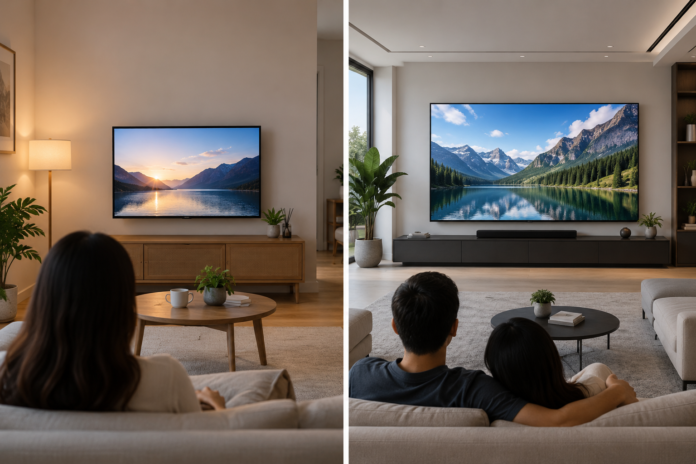

Choosing a television involves more than selecting the largest screen that can fit on a wall. Room dimensions, viewing distance, seating arrangement and TV placement all affect how an appropriately sized screen fits into a living space.
A 55-inch TV and a 65-inch TV can provide different viewing experiences depending on where they are installed and how far viewers sit from the screen. Considering these factors together can help households select a screen size that works with the existing layout rather than assessing size in isolation.
What TV Screen Size Works Best in a Small Living Space?
Small living rooms generally provide less distance between the main seating area and the television. This makes viewing distance an important consideration when deciding which screen size is appropriate.
A smaller room does not automatically require a small television. However, a larger screen can take up more visual and physical space, particularly when the available wall area and seating distance are limited.
When assessing a TV for a small living space, consider:
- Viewing distance: Measure the distance between the main seating position and the planned TV position rather than relying only on the room’s overall dimensions.
- Wall space: Check whether the television can be positioned without interfering with shelving, furniture or other fixtures.
- Seating arrangement: Consider the position from which the TV will be viewed most frequently.
- Room layout: Avoid placing the television where doors, windows or furniture restrict the available viewing area.
A 55-inch TV may be considered where the room has limited space between the seating area and television position, but the appropriate choice ultimately depends on the specific layout and viewing distance.
What TV Screen Size Works Best in a Medium Living Space?
Medium-sized living rooms usually provide more flexibility because there may be greater separation between seating and the television. This can make both mid-sized and larger screens practical depending on the room’s dimensions and arrangement.
The relationship between screen size and viewing distance remains important. A television should be assessed according to where viewers sit rather than simply categorising the room as small, medium or large.
For a medium living space, assess:
- Main viewing distance: Identify the usual seating position and measure its distance from the screen.
- Number of viewers: Consider whether people watch from one main seating position or several locations around the room.
- TV wall dimensions: Check the available width and height before deciding on screen size.
- Furniture arrangement: Ensure the screen remains visible from the primary seating areas.
- Viewing habits: Films, sports, gaming and general television may place different demands on screen visibility.
A 65-inch TV can be considered in a medium-sized room when the available viewing distance and layout accommodate it. The key consideration is whether the screen size works with the room’s actual dimensions rather than the room category alone.
What TV Screen Size Works Best in a Large Living Space?
Large living rooms can create greater distances between the television and seating areas. If viewers sit relatively far from the screen, a larger television can help maintain visibility and make content easier to see from the main seating positions.
However, room size alone should not determine the choice. A large living room may contain different seating zones, meaning the TV should be positioned according to the primary viewing area.
Important factors include:
- Seating distance: Measure the distance from the screen to the seats used most often.
- Room zoning: Identify whether the TV serves one seating area or several.
- Screen placement: Position the television where it can be viewed without major obstructions.
- Wall proportions: Consider the available wall width and height when assessing the physical fit.
- Viewing angle: Check whether the main seats provide a suitable position relative to the screen.
In a large space, a screen that is too small for the viewing distance may be less practical for viewers seated further away. Therefore, seating distance and room layout should be assessed together before selecting a television.
How Can You Match TV Screen Size With Your Living Room?
Matching TV size to a living room requires more than measuring the wall where the television will be installed. The most useful starting point is to establish the primary viewing distance and then assess whether the chosen screen fits comfortably within the available space.
A practical assessment can include:
- Measure the viewing distance: Measure from the main seating position to the intended TV position.
- Measure the available wall space: Check the width and height available for installation or furniture placement.
- Map the seating arrangement: Identify the seats that will be used most frequently.
- Consider room lighting: Windows and artificial light sources can affect where the television can be positioned.
- Check installation requirements: Account for furniture, wall mounting, power access and connected devices.
- Assess the complete layout: Make sure the television works with the room rather than being evaluated separately from the furniture and seating.
Screen size is therefore one part of a broader room-planning decision. Whether considering a 65-inch TV, a 55-inch TV or another size, viewing distance, placement and seating should be assessed together.
Frequently Asked Questions
Is a 65-inch TV suitable for a small living room?
It can be suitable in some layouts, but suitability depends on viewing distance, available wall space and seating arrangement rather than room size alone.
Is a 55-inch TV suitable for a large living room?
It may be suitable depending on the distance between the seating area and television. A larger room does not automatically require a larger screen.
Does viewing distance matter more than room size?
Viewing distance is an important consideration because it determines how large the screen appears from the primary seating position.
Should TV size be based on wall space?
Wall space should be considered, but it should not be the only factor. Viewing distance, seating position and room layout should also be assessed.
How should I measure my living room before choosing a TV?
Measure the distance between the main seating position and intended TV location, as well as the available wall or furniture space for the television.
Visit Harvey Norman Singapore and let us help you select a screen size that fits your living space and viewing habits.