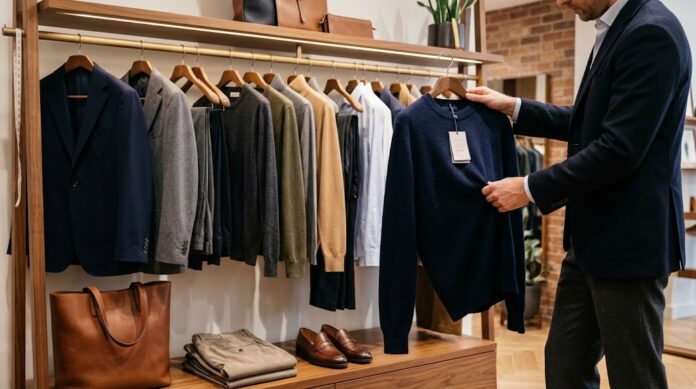

Few things feel better than finding a garment you have admired for months marked down to a fraction of its original price. The fabric is beautiful, the cut looks right, and the discount makes a long-considered purchase suddenly feel sensible.
Then the doubts arrive. Will it actually fit? Does it go with anything already in the closet? And what happens if it doesn’t work out?
Sales on high-end menswear can be a genuinely smart way to build a better wardrobe. They can also leave someone with an expensive piece that never leaves the hanger. The difference usually comes down to preparation.
Why Luxury Pieces Go On Sale
Premium retailers mark down merchandise for practical reasons, not because anything is wrong with it. Seasons change, new collections arrive, and floor space has to be cleared. Sizes get broken as popular measurements sell first, leaving a handful of pieces in less common sizes or colors.
That last point matters. Sale racks tend to hold fewer options and more limited sizing than full-price collections. The best finds are often the quiet staples, such as well-made trousers, knitwear, or shirts in versatile colors that simply didn’t sell through before the season ended.
Knowing this changes how to shop. Instead of hoping for a specific item, it helps to arrive with a clear sense of what would genuinely improve a wardrobe and to recognize it when it appears.
Final Sale Changes The Math
Many retailers mark discounted luxury items as final sale, meaning no exchanges and no returns. It is a reasonable policy given the reduced price, but it shifts all of the risk onto the buyer.
At full price, a shopper can usually try something at home, live with it for a few days, and send it back if it isn’t right. With final sale, that safety net is gone. Whatever is bought is kept, whether it fits perfectly or sits awkwardly across the shoulders.
That is why the most useful question during any sale is not “Is this a good deal?” but “Would I be happy owning this if I could never return it?”
Know Your Measurements Before You Shop
Sizing across luxury labels can vary considerably, and European brands often use different size scales from American ones. A size that fits perfectly in one brand may run small or large in another.
The most reliable approach is to measure garments that already fit well rather than relying on the number on the tag. For trousers, that means the waist, rise, thigh, inseam, and leg opening. For jackets and shirts, the chest, shoulder width, sleeve length, and back length are the key figures.
Comparing those measurements with the retailer’s size guide, or asking a sales associate for specific dimensions, removes much of the guesswork. Many specialty stores are happy to answer questions by phone or email, and a quick conversation can prevent a costly mistake.
It also helps to understand what a tailor can and cannot fix. Hemming trousers, adjusting a waist slightly, or shortening sleeves are routine alterations. Changing shoulder width or significantly altering a jacket’s length is difficult and expensive, and often not worth attempting.
Prioritize Versatility Over Excitement
Sales tempt people toward pieces they would never buy at full price, such as a bold pattern, an unusual color, or a statement item that seems fun in the moment. Occasionally those purchases work out. More often, they become the most expensive items in the closet per wear.
Neutral, versatile pieces tend to deliver better value. Think olive, navy, grey, tan, and charcoal. These colors pair easily with one another and move comfortably between settings.
A pair of five-pocket trousers in a refined stretch cotton is a good example of a smart sale buy. It sits somewhere between jeans and dress trousers, works with a polo on the weekend or a knit and blazer during the week, and is suitable for many offices. Pieces like this earn their place quickly because they fit into many outfits rather than just one.
Before buying, try to picture at least three outfits the new item would complete using clothes already owned. If that exercise feels like a stretch, the piece may not be worth the risk.
Look Closely At Fabric And Construction
A discount doesn’t change the quality of what’s being bought, but it is still worth checking. Fabric composition, weight, and finishing all affect how a garment wears over time.
Natural fibers and thoughtful blends tend to age well. A small amount of stretch in cotton trousers adds comfort and helps the fabric recover its shape. Clean stitching, neatly finished seams, and quality buttons and zippers are all signs of careful construction.
Seasonality matters too. A heavy winter piece bought on sale in late spring may sit unworn for months, while lighter trousers or knitwear can often be worn across several seasons.
Shop With A Plan, Not A Mood
One of the simplest habits is keeping a short running list of wardrobe gaps. Perhaps there is no good pair of casual trousers for the office, the knitwear drawer is thin, or a reliable navy jacket is overdue for replacement.
When a sale comes along, that list acts as a filter. Brand loyalists might keep an eye out for a Zegna mens sale for exactly that reason, since a well-timed markdown can make a premium staple far more accessible. But the same discipline applies to any label: buy what fills a real gap, in the right size, in a color that works with everything else.
Setting a budget before browsing helps as well. Sales create urgency, and a firm spending limit keeps excitement from turning into regret.
Care Protects The Investment
A discounted luxury garment still deserves full-price care. Following the care label, hanging trousers properly, brushing rather than over-washing fabrics, and storing knitwear folded instead of hung all extend a garment’s life considerably.
Treated well, a single smart sale purchase can stay in regular rotation for years, which is where the real savings show up.
Questions Worth Asking At The Register
Do I know this item will fit, based on real measurements?
Can I name three outfits it will complete?
Would I still want it at full price?
Am I comfortable keeping it if it can’t be returned?
A good sale isn’t about how much was saved. It’s about buying something worth owning at a price that makes sense.