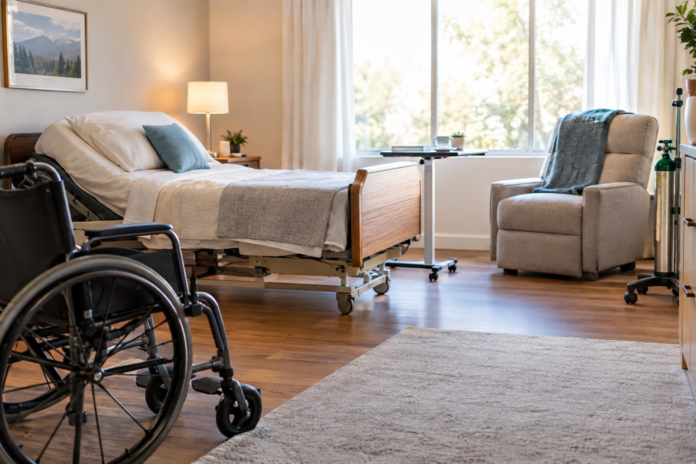

Key Takeaways
- A thoughtful recovery space can reduce common household hazards and make everyday care less stressful.
- Room measurements, clear pathways, lighting, flooring, outlets, and seating all affect safe equipment use.
- Medical equipment must suit the person’s care needs and the layout of the home.
- Users and caregivers need practical instruction before operating beds, lifts, oxygen equipment, or mobility aids.
- A daily safety check and a backup plan can help households adapt as recovery needs change.
Why the Recovery Space Matters
After surgery, an injury, an illness, or a hospital discharge, many people need to recover at home while managing new limits on strength, balance, or mobility. A typical bedroom or living room may be comfortable, but it may not have the space, access, or safety features needed for a wheelchair, hospital bed, lift chair, or transfer device.
Families across the Denver metro area and Colorado Front Range can work with MedicMedical Rentals Auroraal Rentals Aurora for home medical equipment delivered to residences from Castle Rock to Longmont. The right equipment is only part of the plan. The surrounding room should also support safe movement, easier caregiving, and a more comfortable daily routine.
This guide provides general home-planning ideas, not medical advice. A physician, nurse, occupational therapist, physical therapist, or other qualified care professional should help determine the appropriate equipment, transfer methods, and activity limits for the individual.
Choose the Best Room
A main-floor bedroom, guest room, office, or living room can become a recovery area. The best choice is usually the one that minimizes stairs and provides reasonable access to a bathroom, kitchen, and exterior exit. For homes with multiple levels, installing a home elevator can further improve accessibility and make it easier to move safely between floors during recovery. A living room may offer more open space, while a bedroom can provide more privacy and rest. Consider the person’s needs first, then the home’s layout.
Measure before delivery, especially when renting larger items such as a hospital bed, recliner lift chair, power wheelchair, or Hoyer lift. Check the following areas:
- Doorway and hallway width
- Turning space around the bed and seating
- Floor condition, thresholds, and rugs
- Outlet locations and access to light switches
- Clearance through elevators, stairways, or entry doors
Clear Pathways Before Equipment Arrives
Create a direct route between the bed, bathroom, favorite chair, and exit. Remove loose rugs, small tables, laundry baskets, pet bowls, toys, and decorative items that could catch a foot, a walker, a wheelchair, or a transfer device. Keep frequently used items, such as glasses, water, medications, phones, and tissues, within easy reach.
Secure cords along walls rather than across walkways, and do not run tubing where it could be stepped on or pinched. The home hazards associated with medical devices include clutter, loose carpeting, poor lighting, pets, and electrical concerns, all of which deserve attention before recovery begins.
Check Floors, Lighting, and Seating
Smooth, stable flooring helps users and caregivers move more confidently. Thick carpeting may be difficult for a wheelchair, mobility scooter, knee walker, or lift to roll over. Slippery tile, wet bathroom floors, and raised thresholds should be addressed whenever possible. Use non-slip solutions only if they lie flat and do not create a new trip hazard.
Add bright lighting near the bed, doorway, bathroom, and primary walking route. Night-lights can make overnight bathroom trips safer. For sitting and standing, choose a sturdy chair with armrests and a firm seat. Very low, soft furniture can make transfers more difficult.
Plan for Medical Equipment
Equipment should fit the care plan and the room. Leave adequate space for caregivers to assist on both sides of a hospital bed when needed, and ensure wheelchair users have room to turn without striking furniture. Over-bed tables should be stable and easy to position without blocking movement.
Consider the Needs of Each Device
- Hospital beds: Need clear access, a nearby outlet, and room for bed adjustments and caregiver assistance.
- Wheelchairs, power wheelchairs, and scooters: Need reliable charging access, turning room, and an unobstructed route through doors.
- Knee walkers and walkers: Need dry, even floors and a place to park without blocking a pathway.
- Hoyer lifts and transfer equipment: Need sufficient floor clearance and caregiver training before use.
- Oxygen concentrators: Need appropriate placement, open airflow around the unit, and careful management of cords and tubing.
Ask the rental provider about setup, cleaning, maintenance, weight limits, charging, storage, and return procedures. Never alter equipment or improvise a repair without approval from the provider or a qualified professional.
Review Electrical and Fire Safety
Inspect outlets before setting up powered equipment. Avoid damaged cords, overloaded power strips, and extension cords that cross walking paths. Make sure the user can hear smoke alarms from the recovery room, and keep a flashlight, charged phone, and emergency contacts nearby.
Oxygen requires additional precautions. Keep oxygen equipment away from smoking, candles, open flames, heat sources, and faulty wiring. For equipment that depends on electricity or batteries, make a power-outage plan with the care team and provider. Reviewing current medical-device safety updates can also help households stay alert to relevant warnings or recalls.
Set Up a Caregiver Station
Choose one organized area for care notes, device instructions, appointment details, medications, and supplies. Labeled bins are safer and easier to manage than loose items spread across the room. A simple written schedule can track meals, exercises, medication times, equipment checks, and follow-up appointments.
Useful supplies may include gloves, cleaning materials, a phone charger, a flashlight, spare batteries, a water bottle, a small waste container, and a list of emergency contacts. Keep private medical information visible only to the people who need it.
Teach Everyone How to Use the Equipment
Every regular caregiver should receive hands-on instruction for the equipment they will use. Ask for demonstrations of brakes, controls, alarms, charging procedures, transfer techniques, and emergency steps. Then use the “show me” method: the caregiver repeats the task while the trained professional observes and answers questions.
A quick online video is not a substitute for individualized instruction on complex equipment. Write down questions before delivery, and ask who to contact if an issue occurs after normal business hours.
Create a Daily Safety Check
- Confirm that walking and rolling pathways are clear and dry.
- Look for loose cords, damaged equipment, or blocked access to controls.
- Test the wheelchair, bed, and transfer device brakes as directed.
- Check battery levels, charging connections, and needed supplies.
- Make sure the user can reach a phone, call button, water, and emergency contacts.
- Ask whether the person feels stable, comfortable, and able to request help.
Prepare for Changes During Recovery
Recovery needs often change week by week. A person may initially need a hospital bed or lift chair, then later rely on a walker, knee walker, or wheelchair for shorter periods. Stay in contact with the care team about pain, sleep, transfers, mobility, and daily activities. Remove or return equipment that is no longer needed so it does not become another obstacle in the home.
Questions to Ask Before Equipment Arrives
- What measurements should be taken before delivery?
- Does this equipment require a dedicated outlet or regular charging?
- What should happen during a power outage?
- Who provides setup and operating instructions?
- How should the equipment be cleaned and maintained?
- What signs indicate a problem, and who should be contacted?
- When should the equipment be reassessed or returned?
Conclusion
A safer recovery space does not need to resemble a hospital room. It should be clear, practical, well-lit, and tailored to the person using it. By measuring the space, reducing hazards, planning for equipment, and preparing caregivers, households can support a more comfortable and confident recovery at home.