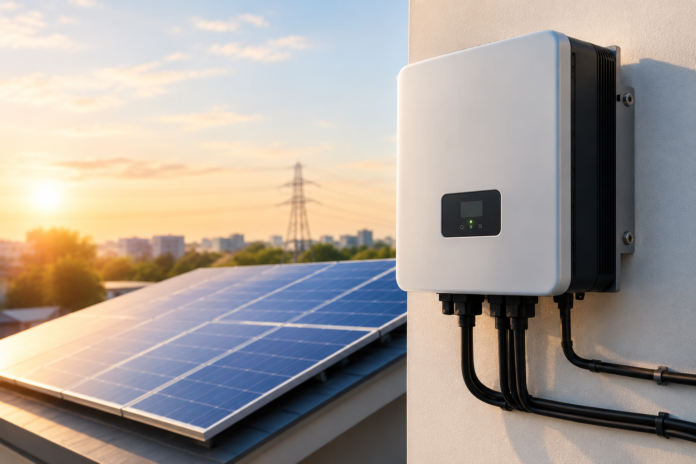

Choosing an inverter for a grid-connected solar system involves more than checking its power rating. The inverter needs to work with the property’s electrical connection, the solar array, and the utility grid while meeting applicable technical and safety requirements.
The best on-grid solar inverter should therefore be evaluated against factors such as grid synchronisation, voltage and frequency compatibility, protection features, system capacity, and net-metering requirements. Since Distribution Company (DISCOM) procedures and technical requirements can vary by state and connection type, checking the applicable conditions before installation can help avoid compatibility issues. Let’s explore what to check before making a choice.
What is an On-Grid Solar Inverter?
An on-grid solar inverter converts DC electricity from solar panels into AC power for household or commercial use. It also synchronises solar generation with the utility grid.
When generation exceeds consumption, surplus power can be exported through applicable net-metering arrangements. A grid-connected system generally does not require batteries.
For the best on-grid solar inverter, grid compatibility is essential. Applicable technical standards and state DISCOM requirements should be checked before installation.
What Should You Check for DISCOM Compliance?
The applicable DISCOM requirements should be checked for the specific state, connection, and solar installation. Several technical factors can help determine whether an inverter is appropriate for a grid-connected system.
- Grid Voltage and Frequency: Check that the inverter’s output specifications correspond with the electrical characteristics required for the intended grid connection. Correct voltage and frequency operation is essential for safe grid-connected performance.
- Phase Configuration: Confirm whether the property uses a single-phase or three-phase connection and select an inverter configuration accordingly. The phase arrangement should also correspond with the approved solar system.
- Grid Synchronisation: An on-grid inverter needs to match the utility grid’s voltage, frequency, and phase before supplying power to the grid. This allows solar generation to operate in coordination with the existing electricity supply.
- Anti-islanding Protection: An inverter connected to the utility grid should have appropriate protection that responds to a grid outage. Anti-islanding functionality helps prevent continued energisation of the grid connection when utility supply is unavailable.
- Safety and Protection Features: Review the inverter’s electrical protection features, including protection against conditions such as overcurrent, reverse polarity, and voltage-related disturbances. The applicable installation should also meet relevant safety and protection requirements.
- Net-metering Compatibility: If surplus solar electricity is intended for export, confirm that the proposed inverter and overall system configuration support the applicable net-metering arrangement. The installation and verification process may involve the state DISCOM.
The best on-grid solar inverter for a particular project is therefore one whose technical specifications and configuration align with the requirements applicable to that installation, rather than one selected solely on its capacity or efficiency.
How Does Inverter Capacity Affect Your Choice?
Inverter capacity determines the rated amount of AC power the unit can deliver. It should be considered alongside the solar panel capacity, expected generation, electrical load, and the approved grid connection.
The available grid-tie inverter ranges cover different system sizes:
- 3kW–6kW: Single-phase grid-tie configurations can be relevant for residential and smaller rooftop installations.
- 5kW–20kW: Three-phase configurations can accommodate larger rooftop systems and commercial applications.
- 30kW–110kW: Higher-capacity three-phase configurations are available for larger commercial and industrial solar projects.
Capacity should be matched with the approved solar system rather than selected simply because a higher rating appears more capable. The inverter’s maximum DC input power and voltage should also be checked against the planned solar array.
The best on-grid solar inverter should have a capacity and electrical configuration that correspond with the solar array and grid connection approved for the project.
What Should You Verify Before Installation?
Before purchasing or installing an inverter, verify the requirements that apply to the specific project and DISCOM. These checks can help you determine whether the best on-grid solar inverter for your installation meets the required technical and compliance conditions.
- DISCOM Requirements: Check the latest requirements applicable to your state, connection type, and proposed rooftop solar capacity. Central technical standards also apply to grid connectivity, and the Central Electricity Authority (CEA) published a draft update to its grid-connectivity regulations, making it important to rely on current requirements.
- Technical Specifications: Compare the inverter’s voltage, frequency, phase, capacity, DC input range, protection functions, and other relevant specifications with the approved system design.
- Required Documentation: Confirm the technical documents, product information, certifications, and other records required for the application and installation process.
- Inspection and Commissioning: Ensure the completed installation follows the applicable procedure for inspection, verification, metering, and commissioning. Under the government rooftop-solar programme, State DISCOM verification forms part of the process for applicable residential installations.
Monitoring capabilities can also be worth checking. Ministry of New and Renewable Energy (MNRE) currently has a notice concerning compliance with guidelines for inverter-level generation data and storage of inverter-level data for rooftop solar systems, so project-specific monitoring and data requirements should be verified as part of the current compliance process.
Choose an Inverter That Fits Your Grid Connection
Selecting the best on-grid solar inverter requires attention to its capacity, grid compatibility, protection features, and applicable DISCOM requirements. Checking these factors before installation can help ensure the system is suited to the property’s electrical connection and solar setup.
Energy solution providers like Eastman Auto & Power Limited offer on-grid solar solutions designed for different residential applications. Explore the available options and choose a system that aligns with your solar capacity, grid connection, and applicable DISCOM requirements.