
Key Takeaways
- Attic insulation performs better when air leaks and moisture sources are addressed first.
- Palm Beach Gardens homes need solutions suited to high heat, heavy rain, and humid outdoor air.
- The attic floor and roofline create very different attic environments.
- Damaged ducts, roof leaks, and exhaust vents can undermine an otherwise strong insulation upgrade.
- Material choice should be based on the complete attic design, not price or R-value alone.
In Palm Beach Gardens, Florida, an attic must handle intense sun, long air-conditioning seasons, salt-air humidity, and sudden summer storms. A thoughtful upgrade begins by treating the attic as part of the whole house, not just an unused space above the ceiling. The right attic spray foam insulation strategy can help reduce heat gain and unwanted air movement. Still, it should be selected only after the home’s roof, ducts, ventilation, and moisture conditions have been reviewed.
Adding insulation without identifying the source of a comfort problem can leave homeowners with the same warm bedrooms, uneven temperatures, or high indoor humidity. In South Florida, the best results usually come from a coordinated plan that addresses heat, air leaks, moisture, and HVAC performance together.
Why Attic Planning Matters in Palm Beach Gardens
Roof surfaces can absorb substantial solar heat, and that heat can build up above the ceiling plane before moving into rooms below. When air gaps are present around wiring, plumbing, recessed lights, or attic hatches, warm and humid air can also travel where it does not belong. This can increase cooling demand and make upstairs rooms, bonus rooms, and bedrooms near the attic feel noticeably less comfortable.
For a conventional vented attic, insulation on the attic floor helps separate the living area from the hot space above it. Air sealing should happen first because attic air-sealing projects identify common leakage points that insulation alone cannot seal. A conditioned or sealed attic requires a different design approach, especially when HVAC equipment and ducts are located under the roof.
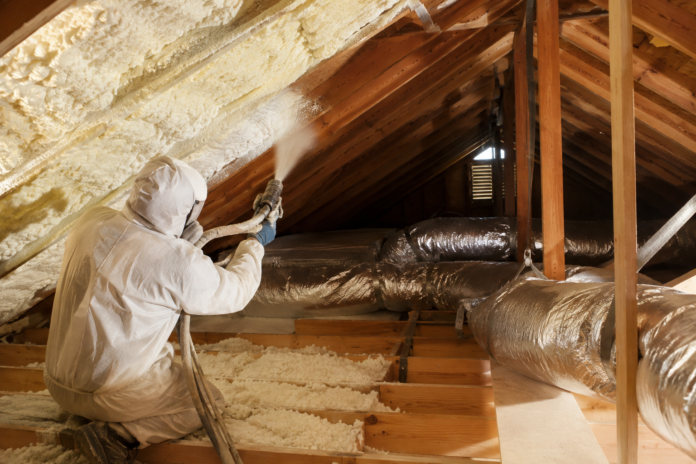
In some Palm Beach Gardens homes, open-cell spray foam insulation may be considered for a conditioned attic roofline because it can conform around framing and irregular surfaces. The decision still depends on roof details, indoor humidity control, local code requirements, and a clear plan for managing moisture.
Signs an Attic Upgrade May Be Needed
- Rooms below the attic stay warmer than the rest of the home.
- The air conditioner runs for extended periods during sunny afternoons.
- Some rooms cool quickly, while others remain humid or stuffy.
- Existing insulation is thin, compressed, dirty, wet, or uneven.
- There is visible light around penetrations, vents, or the attic access panel.
- Musty odors, water stains, mold-like growth, or evidence of a roof leak appear in the attic.
- Cold supply ducts show condensation or have loose, damaged insulation.
What To Check Before Adding Insulation
Start with an inspection instead of covering old materials with new ones. Check the roof deck and framing for active leaks or past water damage. Confirm that bathroom, kitchen, and dryer exhaust ducts terminate outdoors rather than releasing moisture into the attic. Inspect HVAC ducts for disconnected joints, crushed sections, damaged jackets, and condensation.
Also, review the depth and condition of existing insulation, the attic hatch, ceiling penetrations, electrical components, chimneys, and recessed lighting. Older homes may contain unknown debris, animal waste, or vermiculite insulation. If materials appear unsafe or contaminated, arrange professional testing or remediation before disturbing the area.
Comparing Common Insulation Options
- Fiberglass: Widely available and often economical for attic floors. It slows heat transfer but does not seal air leaks on its own, and it can lose effectiveness when compressed or wet.
- Cellulose: Can provide continuous coverage across an attic floor and works well when installed at the correct depth. It must remain dry and should not block ventilation pathways in a vented attic.
- Open-cell spray foam: Can fill gaps and reduce air movement along suitable interior assemblies or conditioned attic rooflines. It needs a moisture-conscious roof and HVAC plan.
- Closed-cell spray foam: Offers high insulation value per inch, air sealing, and greater resistance to moisture movement. It typically has a higher upfront cost and requires precise installation.
Compare proposals by scope, not just material. Ask about preparation, air sealing, insulation thickness, coverage area, protection of mechanical equipment, access for future repairs, cleanup, warranty terms, and final verification.
Attic Floor or Roofline?
Attic Floor Insulation
This approach typically keeps the attic outside the conditioned space. It can work well in a properly vented attic, provided ceiling leaks are sealed, and insulation does not cover soffit vents. It also requires a plan for walkways and access to equipment to prevent future service work from compressing the insulation.
Roofline Insulation
Insulating the roofline can bring the attic closer to indoor conditions, which may benefit homes with ducts or air handlers in the attic. However, sealing the roofline changes airflow and moisture behavior. Research on moisture performance in unvented attics underscores the need to evaluate roof assemblies, duct conditions, and humidity control as a single system.
Managing Moisture and Airflow
Moisture control is essential in coastal South Florida. Repair roof leaks before insulating. Seal ceiling gaps that allow humid air into the attic. Make sure exhaust fans discharge outdoors, and check duct insulation and vapor barriers where cold air moves through a hot attic.
For example, a home with warm back bedrooms and persistent humidity may seem to need more insulation. The real issue could be a combination of leaky ceiling penetrations, sweating ducts, and an HVAC system that is not removing enough moisture. Evaluating all three conditions before installation helps prevent a partial fix.
A Practical Seven-Step Upgrade Process
- Record symptoms: Track hot rooms, humidity readings, AC runtime, odors, and visible staining.
- Inspect the attic: Look for leaks, gaps, insulation damage, duct issues, and ventilation concerns.
- Choose the assembly: Decide whether the attic floor or roofline will define the thermal boundary.
- Complete repairs: Address roof, electrical, duct, and exhaust problems first.
- Air-seal key locations: Focus on hatches, plumbing openings, wiring gaps, and ceiling penetrations.
- Install insulation: Use the chosen material at the correct coverage and thickness.
- Verify results by rechecking humidity, airflow, access points, and room-to-room comfort.
Common Planning Mistakes To Avoid
- Adding insulation over wet or contaminated material.
- Blocking soffit vents in a vented attic.
- Ignoring attic-hatch gaps and ceiling penetrations.
- Assuming a larger AC system will solve humidity problems.
- Covering duct defects instead of repairing them.
- Selecting insulation solely because it has the lowest initial price.
- Changing to a roofline-insulated attic without a moisture strategy.
Common Questions About Attic Insulation
Does more insulation always make a home cooler?
No. Insulation slows heat transfer, but it cannot correct major roof leaks, duct failures, air leaks, or HVAC problems on its own.
Can attic work help with high indoor humidity?
Air sealing can reduce the amount of humid air entering through unintended gaps. Still, humidity may also come from duct leakage, plumbing issues, ventilation problems, or AC equipment that needs evaluation.
Should existing insulation be removed?
Wet, moldy, contaminated, pest-damaged, or severely compressed insulation may need to be removed. Clean, dry material can sometimes remain after the attic is properly prepared.
Final Thoughts
An attic upgrade in Palm Beach Gardens should balance heat control, air sealing, moisture management, duct performance, and safe access. A careful inspection and a complete plan can help homeowners avoid costly mistakes while improving comfort through Florida’s hottest and most humid months.