
Key Takeaways
- Ann Arbor weather makes moisture control, flashing, and drainage central to any siding plan.
- Older homes may need careful repair work to preserve original trim, proportions, and architectural character.
- The right siding material depends on exposure, maintenance expectations, budget, and the condition of the existing wall.
- A solid project plan includes a detailed inspection, weather protection steps, a realistic schedule, and a process for hidden repairs.
- Permit and historic district requirements should be confirmed before any visible exterior changes begin.
Why Ann Arbor Weather Should Shape the Siding Plan
From the Old West Side to Burns Park and the Northside, Ann Arbor homes face wet springs, humid summers, snow, ice, wind, and frequent temperature swings. Siding affects curb appeal, but it also serves as part of a larger wall system that helps direct water away from vulnerable areas. For homeowners researching vinyl siding installation in Ann Arbor MI, Peak Home Exteriors provides siding replacement and repair information for Ann Arbor, Saline, Dexter, Chelsea, and Ypsilanti. The company highlights 17 years of exterior construction experience and advanced training for vinyl and fiber-cement installation, making its service page a useful local reference when comparing materials, wall protection steps, and installation expectations.
Planning for weather starts with understanding that precipitation is not limited to one season. Ann Arbor receives roughly 38 inches of precipitation in a typical year, with rain or snow possible throughout the calendar. The National Oceanic and Atmospheric Administration’s Ann Arbor climate normals can help homeowners put local conditions into perspective. Rain and snowmelt test window trim and flashing, freeze-thaw cycles can expose weak seams, and summer sun can affect color and material movement.
- Look for stains below windows, beneath roof edges, and around exterior penetrations.
- Check for loose panels, cracked caulk, warped trim, or soft areas near the ground.
- Make sure gutters, downspouts, and splash blocks move water away from the foundation and siding.
Match the Siding Style to the Neighborhood
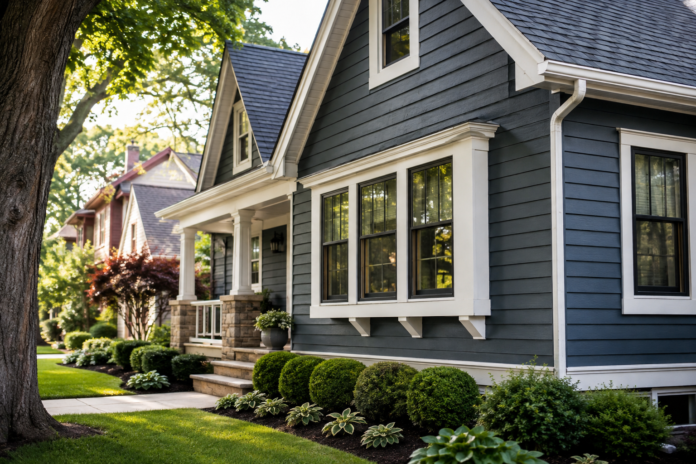
A siding update should make the house look intentional rather than newly covered. Ann Arbor includes historic cottages, brick homes, postwar ranches, contemporary builds, and larger properties near Westgate, Dicken, and northeast Ann Arbor. Consider the home’s roof pitch, window placement, porch details, masonry, and the visual rhythm of nearby homes before selecting a profile or color.
Horizontal lap siding offers a familiar, low-profile appearance, while vertical panels can create a cleaner, modern, or farmhouse-inspired effect. Shakes can add texture to a gable or porch section without overwhelming the facade. Contrasting trim can frame windows and doors, but overly heavy trim may make a modest home appear out of scale. Muted colors often work well with brick, stone, mature trees, and Michigan’s changing seasons.
Take Extra Care With Older and Historic Homes
Older siding should be inspected before it is removed or covered. Original wood may have isolated areas of decay that can be repaired, while other sections may conceal moisture damage, insect activity, or deteriorated sheathing. The goal is to understand what is present, not assume that complete replacement is always necessary.
For homes with defining historic features, preserve the visible proportions of corner boards, window casings, eaves, and decorative details whenever practical. The National Park Service’s historic-home rehabilitation guidance emphasizes retaining character-defining materials and features when planning rehabilitation work. If a property is in a local historic district, check with the City of Ann Arbor or the appropriate reviewing authority before changing exterior materials or details visible from the street.
Compare Common Siding Materials
When selecting siding materials, homeowners should align their choices with their specific needs and discuss critical considerations with contractors. Vinyl siding is favored for its low maintenance and diverse color options, yet questions about expansion and contraction, as well as protection in vulnerable areas, are essential. Fiber cement siding is noted for its traditional aesthetic and durability, but demands attention to cutting techniques, flashing, painting, and spacing for optimal longevity. Engineered wood siding mimics natural wood while offering increased durability, necessitating conversations around moisture protection for edges and joints. Wood siding, appealing to historic home owners, requires an understanding of its maintenance, painting, and repair needs. Ultimately, effective water management is crucial across all siding projects to prevent moisture intrusion and prolong the exterior’s lifespan.
Visible siding is only one layer of exterior protection. A careful installation should include an inspection of sheathing, flashing, weather-resistive barrier, soffits, fascia, trim, and drainage paths. If old siding comes off, that is an opportunity to identify issues that were not visible from the outside.
- Inspect for cracks, loose pieces, staining, and soft areas.
- Check window and door trim for gaps or signs of water entry.
- Review exposed sheathing and repair damage before covering it.
- Install or repair the weather barrier where needed.
- Use proper flashing at windows, doors, roof-to-wall transitions, and penetrations.
- Keep siding clear of roofs, decks, soil, and paved surfaces.
- Coordinate the work with gutters and downspouts.
Choose the Right Installation Window
Spring and fall can offer comfortable working temperatures, but rain may affect scheduling. Summer often provides longer workdays, while winter conditions can limit material handling and require more weather protection. Ask for a written schedule that identifies the expected start and completion dates, daily cleanup practices, protection for landscaping and walkways, permit responsibilities, and the process for approving hidden repairs.
How to Vet a Local Siding Contractor
Compare more than the bottom-line estimate. Confirm insurance, licensing requirements, written scope details, references, manufacturer training, warranty terms, and experience with homes similar to yours. The estimate should state whether removal is included, how sheathing repairs are priced, which flashing and weather-barrier materials will be used, and who handles disposal. Clear answers now can prevent surprises after work begins.
Common Questions From Ann Arbor Homeowners
How long does a siding project take?
Timing depends on home size, material, design complexity, crew availability, weather, and hidden repairs. A straightforward, smaller home may move quickly, while a large home or detailed historic project can take several weeks.
Should old siding always be removed?
Not always, but removal allows the wall system to be inspected directly. The best approach depends on the existing materials, their condition, local requirements, and the selected siding product.
Can new siding solve moisture problems?
Not by itself. Leaks, failed flashing, roof runoff, damaged sheathing, and clogged gutters must be corrected as part of the overall exterior plan.
What color works best?
Consider the roof, brick or stone, sun exposure, mature landscaping, neighborhood character, and long-term appeal instead of choosing a short-lived trend.
Conclusion
A successful Ann Arbor siding project balances weather protection, architectural character, maintenance needs, and neighborhood fit. Start with a careful inspection and a written scope of work. When the wall system, water management details, and design choices are considered together, the finished exterior is better positioned to look appropriate and perform well through Michigan seasons.