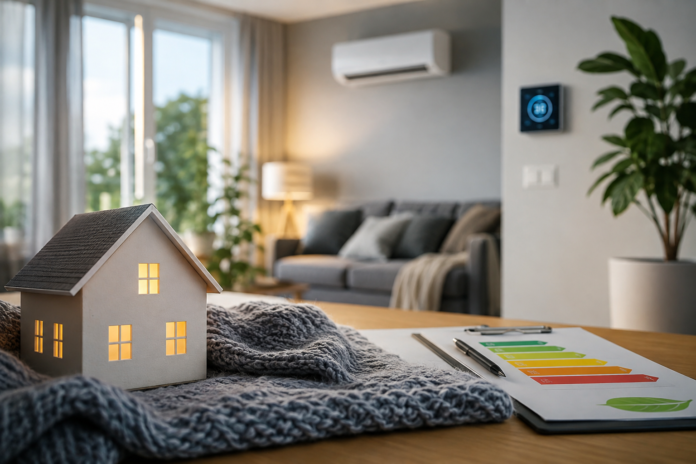

A comfortable home should feel welcoming throughout the year without requiring excessive heating or cooling. Improving energy efficiency can help you maintain more consistent indoor temperatures while reducing wasted energy and potentially lowering household bills.
The good news is that creating a more comfortable, efficient home does not always require a complete renovation. A combination of simple changes and larger upgrades can make a noticeable difference.
Improve Your Home’s Insulation
Insulation is one of the most important factors in home energy efficiency. Without adequate insulation, heat can escape through the roof, walls and floors during colder months. In warmer weather, outside heat can also make it harder to keep rooms comfortable.
Check the insulation in your loft, walls and floors to identify areas that could benefit from an upgrade. Improving insulation can help your home retain a steadier temperature, reducing the amount of work required from your heating and cooling systems.
Stop Unwanted Draughts
Small gaps around windows, doors and other openings can allow both cold and hot air to creep in. Draught-proofing these areas is often a relatively affordable home improvement.
Weatherstripping, door sweeps and suitable sealants can help close unwanted gaps. Pay particular attention to older windows and exterior doors. However, avoid blocking purpose-built ventilation, as good airflow remains important for maintaining indoor air quality and managing moisture.
Consider a More Efficient Heating and Cooling System
Heating and cooling equipment has a major influence on both comfort and household energy consumption. If your existing system is old, unreliable, or inefficient, replacing it could provide more consistent temperatures and improved performance.
Heat pumps are an option worth considering because they can provide both heating and cooling. Homeowners exploring heat pump installation services can speak with a professional about the right system size and configuration for their property.
Choosing correctly sized equipment is particularly important. A system that is unsuitable for the property may struggle to maintain comfortable temperatures or operate as efficiently as expected.
Make Better Use of Your Thermostat
Your heating and cooling system should not have to run at full capacity when nobody is home. A programmable or smart thermostat can give you greater control over your indoor temperature throughout the day.
Create a schedule that reflects when your household is normally at home, asleep, or away. Small adjustments can reduce unnecessary energy consumption without making your living spaces uncomfortable.
Upgrade Lighting and Appliances
Heating and cooling are not the only areas where energy can be saved. Replacing traditional bulbs with LEDs can reduce electricity consumption while providing effective everyday lighting.
When appliances eventually need replacing, check their energy-efficiency ratings before buying. Refrigerators, washing machines, dryers, and other frequently used appliances can contribute significantly to household electricity consumption over their lifetimes.
Pay Attention to Your Windows
Windows can be another source of unwanted heat gain or heat loss. Energy-efficient glazing can improve thermal performance, but smaller changes can also help.
Closing curtains or blinds at appropriate times can reduce heat transfer through windows. In summer, keeping direct sunlight out during the hottest part of the day can help rooms stay cooler. During colder weather, well-fitted curtains can provide an additional barrier against heat loss.
Create a More Efficient Home One Step at a Time
Making your home more comfortable and energy efficient does not have to happen all at once. Start with straightforward improvements such as sealing draughts, adjusting thermostat settings and switching to efficient lighting. Larger projects, including insulation and heating or cooling upgrades, can then be planned according to your home, priorities and budget.
By reducing wasted energy and improving temperature control, you can create a home that feels more comfortable in every season while using energy more effectively.