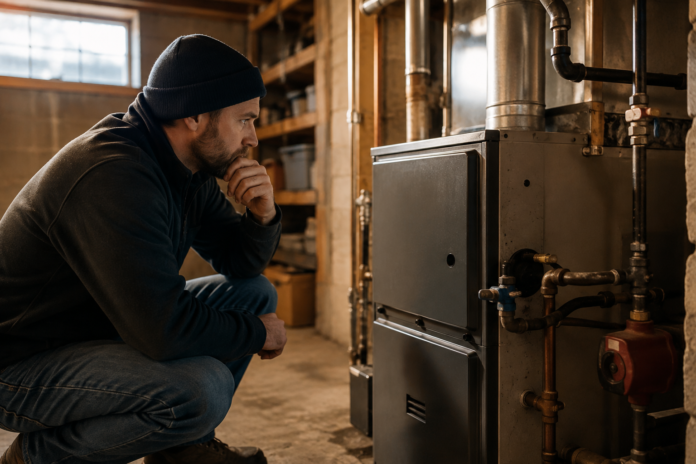

Your furnace clanked twice last February at 11 p.m. You called a technician, paid for the repair, and told yourself you’d deal with it in spring. Spring came and went. Now it’s fall again, and the question hasn’t gone away: is this system worth another fix, or is it finally time to pull the plug?
Most homeowners wait until a breakdown forces the decision. That’s almost always the worst possible time to choose a new heating system. You’re cold, you’re stressed, and you’re not shopping carefully. Getting ahead of this decision by even one season changes everything you can negotiate, compare, and afford.
Here’s how to read the actual signals your system is sending you.
Age Is Not Just a Number Here
The single most reliable predictor of a heating system’s remaining useful life is how old it is. That’s not oversimplified. It’s just how the physics works.
Gas and oil furnaces typically run well for 15 to 20 years. Boilers, which circulate hot water through radiators rather than blowing heated air through ducts, have a longer ceiling. According to the U.S. Energy Information Administration’s 2025 residential heating analysis, heating fuel choices across U.S. households are shifting rapidly, but millions of homes in the Northeast still run on older oil and propane systems that were installed well before current efficiency standards existed. A system past its 15th birthday running on fuel that costs more each season is a double cost problem.
If you don’t know your system’s age, look for the manufacturer’s label on the unit. The serial number almost always encodes the production year. Most manufacturers format it as the first two digits of the serial. If the label is missing, call the manufacturer’s customer line with the model number.
Age alone isn’t a death sentence, but it changes the math on every repair quote you get.
The CROAK Framework: Five Signs a System Is Done
I use a five-point check I call CROAK when evaluating whether a heating system has truly reached the end. It’s not scientific, but every experienced technician I’ve talked to uses some version of it, even if they don’t name it the same way.
- C — Cost of last repair exceeded 25% of replacement cost. If a single fix ran $800 and a new unit costs $3,000, you’re already a third of the way to a new system with no guarantee you’re done spending.
- R — Repeated breakdowns in 24 months. One failure is mechanical luck. Two is a pattern. Three is a system in systemic decline.
- O — Output is uneven. Cold rooms, short cycling, long run times to reach temperature. These are signs the system is no longer sized or functioning correctly for the space it’s heating.
- A — Age past 15 years with recent repair history. The combination matters. An old unit that’s never been touched is different from one that’s been patched four times.
- K — Kill price: parts are discontinued or backordered. When your technician tells you a replacement part takes three weeks to arrive from a single supplier, that system has outlasted its supply chain.
Two checks from the list above and repair still makes sense. Three or more, and replacement is almost certainly the right call.
What Your Fuel Type Has to Do With It
Your heating fuel matters more than most people realize when evaluating whether to replace a system. Not all systems age identically, and your region’s dominant fuel mix can affect both parts availability and the cost of operating an older, inefficient unit.
Northeast homeowners are in a particularly specific position here. CTData’s November 2025 analysis of U.S. Census Bureau data found that 35% of Connecticut households rely on heating oil, far above the 4% national average, making the state fourth in the nation for heating oil dependence. That means a huge share of Connecticut homes are running older oil-fired systems on a fuel that fluctuates in price every winter. If your equipment is aging and inefficient, you’re not just paying for wear and tear: you’re also burning more gallons per degree of warmth than a modern high-efficiency system would require.
Homeowners in rural parts of Northeastern Connecticut who heat with propane face a similar calculus. For those households evaluating both fuel contracts and system replacement at the same time, it’s worth talking to a local provider who handles both sides. Services like oil and propane in brooklyn ct can give you a real picture of delivery costs, tank options, and how fuel choice intersects with the equipment decision before you sign anything.
A Scenario Worth Walking Through
Consider a 1978 colonial in Windham County, Connecticut. It runs a cast iron oil-fired boiler installed in 1997. The homeowner got a quote in fall 2024 for a cracked heat exchanger repair: $1,100. The boiler is 27 years old. Parts are still available, but barely.
Running the CROAK check: the repair cost is 35% of a basic new boiler installation. The boiler has had three service calls in four years. Output is slightly uneven on the upper floor. Age is 27. Parts are hard to source.
That’s five out of five. Replace the boiler. The only real question is when: ideally, before the heating season, not during it. Late summer or early fall is the right window. Contractors aren’t stretched thin, lead times on equipment are shorter, and you have time to compare two or three quotes without pressure.
The homeowner who waits for the January failure will pay more, wait longer, and have fewer choices. That’s the real cost of delay.
The Repair-or-Replace Decision Table
| System Age | Repair Quote vs. Replacement Cost | Recommended Action |
| Under 10 years | Any amount | Repair. System has useful life remaining. |
| 10 to 15 years | Under 20% of replacement | Repair, but start budgeting for replacement. |
| 10 to 15 years | Over 20% of replacement | Get a replacement quote before deciding. |
| Over 15 years | Any amount | Strongly consider replacement, especially with repeated failures. |
| Over 20 years | Any amount | Replace. Operating risk is high regardless of repair cost. |
What to Actually Do Before You Call Anyone
Before you get a single quote, do this first:
- Find the manufacture date on your unit and write it down.
- List every service call you’ve had in the past three years, with approximate costs.
- Note whether any rooms heat unevenly or whether the system runs longer than it used to.
- Check your utility bills for the past two winters and compare them to the winter before the problems started.
- Ask your technician specifically: “If you owned this system, would you repair it or replace it?” Most honest technicians will give you a straight answer when asked that directly.
Take that information into your quotes. Any contractor who won’t engage with your documented history isn’t someone you want doing a major installation.
“An aging heating system is one of the most underestimated costs in homeownership because the decline is gradual. Homeowners don’t notice the efficiency loss year over year until a breakdown forces them to reckon with it all at once.” This view reflects a broad consensus among HVAC professionals when discussing deferred maintenance in older residential heating systems.
One More Thing Worth Knowing
A new high-efficiency system doesn’t just reduce breakdowns. It reduces fuel consumption. Modern oil and propane furnaces and boilers operate at significantly higher Annual Fuel Utilization Efficiency ratings than systems installed 20 or 25 years ago. An old system running at 70% efficiency is wasting roughly 30 cents of every dollar you spend on fuel. A modern 90%-plus unit shrinks that waste dramatically.
Over three or four heating seasons in a cold-weather state, that efficiency gap can offset a meaningful portion of the replacement cost. That’s not a guarantee, since fuel prices vary and usage depends on how cold your winters run, but it’s a real number worth asking your contractor to calculate before you make a final decision.
The right time to replace your heating system is before it fails on the coldest night of the year. If your system is showing two or more CROAK signals, this fall is probably that right time. Start the conversation now, while you still have options.