

Understanding How L-Glutathione Affects Skin Pigmentation
At its core, L-glutathione is a tripeptide composed of three amino acids: cysteine, glutamic acid, and glycine. Within the human body, it functions as an essential antioxidant, protecting cells from the damaging effects of oxidative stress caused by free radicals. When applied topically, it acts as a cellular shield, helping to neutralize the environmental aggressors—such as UV radiation and pollution—that often trigger the overproduction of melanin.
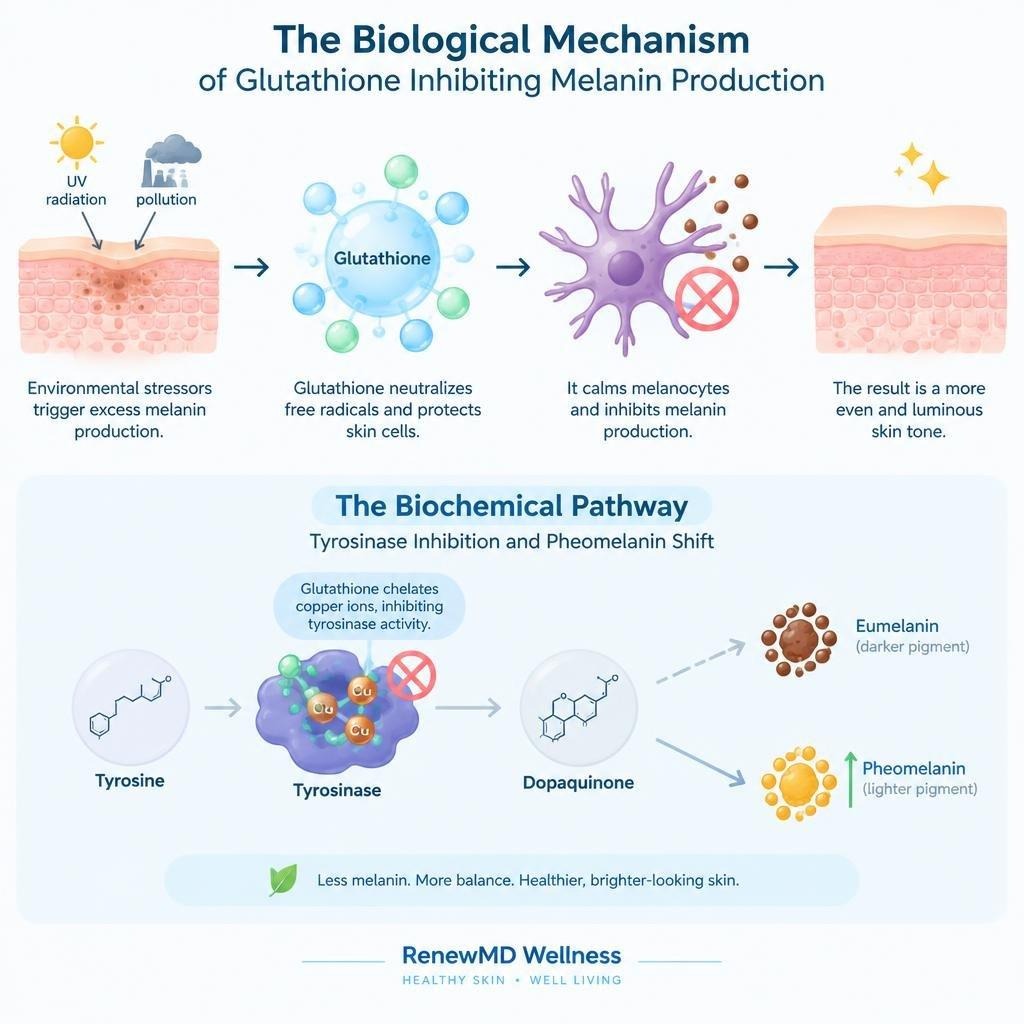
When our skin is exposed to these stressors, it may respond by producing excess pigment, leading to concerns like melasma, sun spots, and post-inflammatory hyperpigmentation. By maintaining a healthy antioxidant balance, L-glutathione helps calm the melanocytes, the cells responsible for pigment production, fostering a more even and luminous skin tone.
Biochemical Pathway: Tyrosinase Inhibition and Pheomelanin Shift
The skin-brightening potential of L-glutathione is rooted in its ability to modulate the melanogenesis pathway. The enzyme tyrosinase is the “gatekeeper” of melanin production; it catalyzes the transformation of tyrosine into dopaquinone. L-glutathione influences this process in two primary ways. First, it directly inhibits tyrosinase activity by chelating the copper ions required for the enzyme to function.
Second, it triggers a shift in the type of melanin produced. There are two main forms of melanin: eumelanin, which is dark brown or black, and pheomelanin, which is lighter, yellow-to-reddish pigment. L-glutathione encourages the melanocytes to favor the production of pheomelanin over eumelanin. Furthermore, it helps downregulate the expression of the microphthalmia-associated transcription factor (MITF), a key protein that controls the proliferation of pigment-producing cells. By influencing these pathways, the ingredient helps diminish the appearance of existing dark spots while preventing the formation of new ones.
Evaluating Delivery Methods: Topical vs Oral vs Intravenous
When choosing a method for skin brightening, it is important to distinguish between the various routes of administration. Intravenous (IV) glutathione is often marketed for rapid results, but it carries significant safety risks, including potential liver dysfunction and severe allergic reactions, and lacks standardized clinical protocols.
Oral supplementation is another common approach, though its bioavailability can be limited by the digestive process, leading to variable results. In contrast, topical application—such as a well-formulated cream—provides a localized, controlled way to deliver the antioxidant directly to the epidermis. Because the skin is a barrier, effective topical creams often use advanced delivery systems, such as encapsulation or esterified derivatives, to ensure the molecule penetrates the surface effectively. This targeted approach minimizes systemic exposure while maximizing the benefit for the skin’s surface.
Assessing Formulations in Topical Skin Brightening Treatments
The efficacy of a cream is not determined by the presence of L-glutathione alone, but by the entire formulation. Because glutathione is prone to oxidation, it requires a stable environment to remain active. Look for products that utilize airless pump packaging, which prevents the cream from being exposed to light and air, maintaining the potency of the antioxidants.
Furthermore, the base of the cream matters. Ingredients like botanical oils (olive, rice bran, or acai) can help support the skin’s lipid barrier while facilitating better absorption of the active peptides. When you are looking for skin brightening treatments to integrate into your life, consider the pH balance of the product. A slightly acidic environment—typically between 4.5 and 5.5—is often ideal for maintaining the stability of brightening agents and supporting the skin’s natural protective barrier.
Powerful Synergies in At-Home Skin Brightening Treatments
Glutathione rarely works alone. To achieve the best results, it is often paired with other proven brightening agents that target pigmentation through different mechanisms. For example, Vitamin C (ascorbic acid) is a potent partner that also fights oxidative stress and helps stabilize the glutathione molecule. Niacinamide is another excellent addition, as it interferes with the transfer of pigment to the skin’s surface while simultaneously strengthening the skin barrier.
For those dealing with stubborn dark spots, ingredients like tranexamic acid or alpha arbutin can provide synergistic effects, addressing pigmentation from multiple angles. When these ingredients are combined in a thoughtful, dermatologist-tested formula, they offer a comprehensive approach to brightening that is far more effective than any single ingredient could be on its own.
Ingredient Comparison: Glutathione vs Traditional Brightening Agents
Ingredient Primary Mechanism Irritation Risk Stability L-Glutathione Antioxidant/Enzyme inhibition Very Low Needs protection Vitamin C Antioxidant/Brightening Moderate Sensitive to light/air Niacinamide Melanin transfer inhibition Very Low Highly stable Alpha Arbutin Tyrosinase inhibition Low Stable Tranexamic Acid Plasmin inhibition Low Stable
As shown in the table above, L-glutathione stands out for its exceptionally low irritation risk, making it a “hero” ingredient for those with sensitive skin who may find stronger acids or harsh brighteners difficult to tolerate. While other agents like Vitamin C are highly effective, they can sometimes cause stinging or redness; glutathione provides a gentler, yet effective, alternative for long-term maintenance.
Essential Safety Criteria for Choosing a Glutathione Whitening Cream
Safety should be your primary concern when selecting any skin-lightening product. The first step is to verify the concentration. Clinical studies often highlight the efficacy of a 2% concentration of glutathione. Anything significantly higher may not necessarily yield better results and could potentially disrupt the stability of the formula.

Always check for third-party testing or GMP (Good Manufacturing Practice) certifications. These labels indicate that the product has been manufactured under strict quality controls and that the ingredients listed on the label are actually present in the bottle. Avoid products that make “miracle” claims or lack a clear ingredient list, as these may contain hidden, harmful additives like mercury or high-dose hydroquinone, which are not safe for long-term use.
Quality Standards, Ingredient Purity, and Irritation Testing
Before applying a new cream to your entire face, always perform a patch test. Apply a small amount of the product to your inner forearm or behind your ear and wait 24 to 48 hours to ensure there is no reaction. This is particularly important if you have a history of fragrance sensitivity or reactive skin.
Look for formulations labeled as non-comedogenic, which ensures the product won’t clog your pores. If you are using a product that contains multiple active acids or potent brighteners, introduce it slowly into your routine—perhaps starting every other night—to allow your skin to adjust. This gradual approach is the safest way to build tolerance and avoid the risk of contact dermatitis.
Integrating Topical Creams with Clinical Skin Brightening Treatments
Topical glutathione is an excellent maintenance tool, but it works best when supported by a consistent skincare routine. In the morning, always follow your brightening cream with a broad-spectrum SPF 30+ sunscreen. UV exposure is the primary driver of melanin production; without sun protection, any progress you make in brightening your skin will be quickly undone by new sun damage.
If you are undergoing clinical procedures, such as chemical peels or microneedling, consult your provider about when to resume your topical glutathione cream. Often, these treatments can enhance the absorption of your skincare products, allowing the glutathione to penetrate deeper into the skin. A typical timeline for seeing visible changes in skin tone is 8 to 12 weeks of consistent, twice-daily application. Patience is key, as cellular turnover is a gradual process that cannot be rushed.
Frequently Asked Questions About Glutathione Skin Creams
How long does it take to see visible results from topical glutathione cream?
Most clinical benchmarks suggest that you should expect to use a 2% glutathione cream consistently for at least 10 weeks to see a measurable reduction in melanin index. Because the skin’s natural cycle of shedding and renewal takes time, results are gradual. You may notice a “fresher” glow in the first few weeks, but significant improvements in dark spots and tone typically build over the 8-to-12-week mark.
Are there any adverse side effects associated with topical glutathione?
Topical glutathione is widely considered to have an excellent safety profile. Unlike some skin-lightening agents that can cause thinning or irritation, glutathione is an antioxidant that the body recognizes. While rare, some individuals may experience mild localized reactions if they are sensitive to the preservatives or botanical bases used in a specific cream. This is why a patch test is always recommended.
Can glutathione whitening creams be used daily on sensitive skin?
Yes, in fact, one of the primary advantages of L-glutathione is its suitability for sensitive and acne-prone skin. Because it is a naturally occurring peptide, it is generally well-tolerated. When choosing a product for daily use, look for formulas that are free from harsh fragrances and synthetic dyes, and that include soothing ingredients like hyaluronic acid or aloe vera to maintain the skin’s moisture levels.
Conclusion
Finding a safe and effective L-glutathione skin whitening cream is about prioritizing science over marketing hype. By focusing on stable formulations, understanding the role of synergistic ingredients, and committing to a routine that includes daily sun protection, you can safely harness the power of this “master antioxidant.”
Skin health is a marathon, not a sprint. The most sustainable results come from consistent, gentle care that respects your skin’s barrier. Whether you are addressing specific areas of hyperpigmentation or simply seeking a more radiant complexion, an evidence-based approach will serve you far better than any quick-fix solution. If you find that your skin concerns persist, consider reaching out to professionals who can guide you toward skin brightening treatments tailored specifically to your skin type and goals. By staying informed and choosing high-quality products, you are well on your way to achieving a brighter, more confident glow.