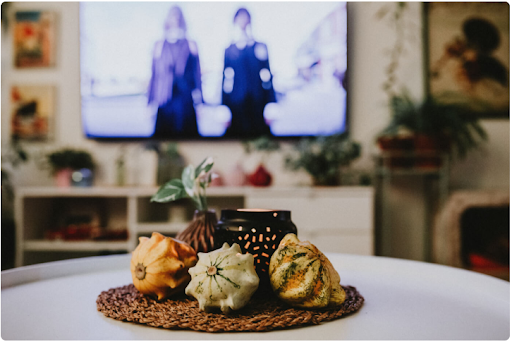

Fall decor can go wrong surprisingly quickly.
One minute you are adding a candle and a warm-toned throw blanket. The next, every surface is covered in pumpkins, fake leaves, wooden signs, plaid fabric, and something that says “Hello Autumn” in cursive.
Seasonal decorating works best when your home still looks like your home.
The goal is not to replace your existing style for three months. It is to make small changes that introduce warmer colors, softer textures, and a slightly cozier atmosphere.
Start With the Colors Already in Your Home
You do not need to introduce every traditional autumn color.
Look at what is already there.
If your home has lots of white, beige, or cream, add warmer shades such as camel, rust, brown, or burgundy.
If your interior is darker, olive green, deep red, brass, and burnt orange can work well.
For modern spaces, muted colors usually blend more naturally than bright seasonal decorations.
Think:
- Terracotta
- Chocolate brown
- Burgundy
- Olive
- Warm beige
- Mustard
- Deep orange
- Dark green
Choosing two or three colors is usually enough.
Change Textiles Before Buying Decorations
Fabric is one of the easiest ways to make a room feel more seasonal.
Swap lightweight summer cushions for heavier materials.
Bring out knitted or woven throws.
Add a thicker rug if the room feels bare.
You can also change bedding, table runners, or curtains if you already own seasonal alternatives.
Texture often creates a stronger autumn feeling than literal decorations do.
A chunky knit blanket says fall without needing a single pumpkin beside it.
Use Natural Materials
Fall decor works particularly well with wood, ceramic, stone, wicker, linen, and dried plants.
These materials create warmth without making the room feel themed.
Try adding:
- Wooden trays
- Ceramic vases
- Woven baskets
- Dried branches
- Pinecones
- Acorns
- Seasonal flowers
- Small pumpkins or gourds
Natural pieces also tend to transition well into winter, which means you do not have to pack everything away the moment November ends.
Decorate in Small Areas
You do not need to decorate every corner of the house.
Choose a few areas where seasonal details will have the most impact.
The entryway.
The coffee table.
The dining table.
A fireplace mantel.
A console table.
The kitchen counter.
Keeping decorations concentrated in a few places makes the home feel intentional rather than cluttered.
It also makes everything much easier to put away later.
Keep the Coffee Table Simple
The coffee table is an easy place to overdecorate.
Try using a tray to contain everything.
Add a candle, a small vase, and perhaps one seasonal object.
That is usually enough.
The tray keeps the arrangement visually organized while still leaving room for the coffee table to function like an actual coffee table.
If you have to move seven decorative pumpkins every time someone wants to put down a mug, the setup may have gone too far.
Use Pumpkins Selectively
Pumpkins are almost unavoidable in fall decor, but they do not need to dominate the room.
Instead of filling every surface, choose a few.
Real pumpkins work well near entrances, dining tables, and kitchens.
For a more neutral look, use white, green, or muted varieties instead of only bright orange.
Ceramic or wooden pumpkins can also work if they fit the rest of your decor.
The key is repetition without excess.
Three pumpkins grouped together usually look better than fifteen spread randomly around the room.
Warm Up the Lighting
Lighting has more influence on atmosphere than most decorative objects.
Replace cool bulbs with warm-white ones where appropriate.
Use table lamps and floor lamps instead of relying entirely on overhead lighting.
Candles add another layer of warmth, especially in the evening.
Even a room with very little seasonal decor can immediately feel more autumnal when the lighting becomes softer.
If you are trying to create a recognizable fall aesthetic, lighting is one of the easiest places to start because it changes the mood of everything already in the room.
Add Seasonal Art
You do not need to replace expensive wall art.
Smaller framed prints can change seasonally.
Try botanical illustrations, landscapes, vintage photography, abstract art in warmer colors, or simple nature-inspired prints.
Another easy option is to use a Fall Aesthetic Wallpaper as inspiration for the colors and imagery you want to introduce around the room. Muted forests, rainy windows, autumn leaves, warm cafés, and rustic textures can all translate surprisingly well into physical decor.
Digital frames are useful too because the artwork can be changed without storing anything physically.
You can also lean framed seasonal prints against shelves or mantels rather than hanging them permanently.
Bring Fall Into the Dining Area
The dining table is another easy place to introduce seasonal decor.
Keep the centerpiece low so people can still see one another.
You could use:
- A bowl of apples or pears
- Small pumpkins
- Candles
- Dried flowers
- Branches
- A simple runner
- Wooden serving boards
Neutral tableware paired with one seasonal centerpiece often looks better than an entire fall-themed dining set.
Do Not Forget the Entryway
The entrance creates the first impression of the season.
You do not need much.
A wreath.
A doormat.
A small lantern.
A basket.
A few pumpkins beside the door.
If you have an indoor console table, a vase with branches and a candle may be enough.
The entryway is also a good place for slightly more obvious seasonal decorations because they do not have to compete with the rest of your living space.
Use Scent as Part of the Decor
Seasonal decorating is not purely visual.
Scent can completely change how a room feels.
Fall-friendly options include:
- Cinnamon
- Apple
- Cedar
- Vanilla
- Amber
- Clove
- Sandalwood
- Pumpkin spice
Candles and diffusers are the obvious options, but natural scents work too.
A small pan simmering with orange peel, cinnamon, and cloves can make the entire house smell seasonal.
Just avoid combining too many strong fragrances at once.
Mix Seasonal Pieces With Everyday Decor
Do not remove everything you normally display.
Instead, work seasonal items into your existing arrangements.
Add a small pumpkin beside your usual books.
Put dried branches in the vase you already use.
Place a fall candle on your normal tray.
Swap one cushion rather than all of them.
When seasonal decor mixes with everyday objects, the room feels more natural.
Leave Some Empty Space
Not every shelf needs decorating.
Not every corner needs filling.
Empty space makes the seasonal pieces you do use stand out more.
It also prevents the room from feeling visually noisy.
If you add something and the space suddenly feels crowded, remove something else.
Decorating is often as much about editing as adding.
Let Fall Decor Evolve Through the Season
Your home does not need to look exactly the same from September through November.
Early fall can be lighter.
Use branches, dried flowers, warm neutrals, and subtle orange tones.
Closer to Halloween, introduce darker colors, pumpkins, and slightly moodier lighting.
Later in the season, remove the obvious Halloween pieces and keep the warmer blankets, candles, wood tones, and deeper colors.
This creates a natural progression instead of one seasonal setup that stays untouched for three months.
The Best Fall Decor Still Feels Like Home
Seasonal decorating should make your home feel more enjoyable, not make you nervous about touching anything.
Use blankets that people can actually sit under.
Light the candles.
Eat the apples in the centerpiece.
Move things around.
Let the room remain functional.
The most convincing fall interiors are rarely the ones with the most decorations.
They are the ones that feel warmer, softer, and slightly more inviting than they did a few weeks earlier.
That is usually all the season needs.