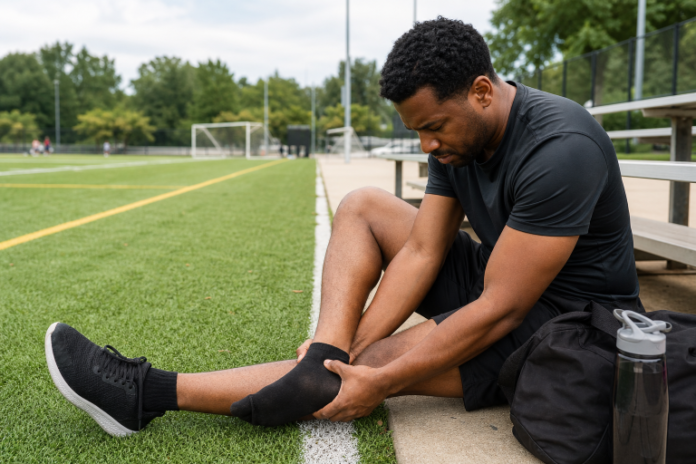

Musculoskeletal injuries can affect bones, joints, muscles, tendons, ligaments, and nerves. Whether the problem began with a fall, a twist, a hard workout, or repetitive work, the right next step depends on the type and severity of the injury. A leading orthopedic doctor in Jenks for joint pain and mobility issues can help determine whether an injury is likely to improve with activity changes, needs a structured rehabilitation plan, or may require a surgical opinion.
Rest, rehabilitation, and surgery are not always competing choices. A person may need a short period of protection after an injury, followed by guided exercise, while surgery may be reserved for specific fractures, major tears, unstable joints, or symptoms that do not improve with appropriate non-surgical care.
The First Steps After An Injury
Stop the activity that triggered the pain, especially if it caused a sharp sensation, a pop, sudden weakness, or loss of control. Protect the area from additional strain, use a comfortable support if needed, and make note of when the symptoms started and which movements worsen them. Repeatedly “testing” an injured ankle, knee, shoulder, or wrist can turn a manageable problem into a more serious one.
For example, a runner who keeps training after a sharp ankle twist may worsen swelling or instability. Likewise, a worker who continues lifting overhead with shoulder pain may further irritate an already strained muscle or tendon. Early restraint does not mean complete inactivity, but it does mean avoiding movements that clearly aggravate the injury.
When An Injury Needs Prompt Medical Attention
Some symptoms require urgent evaluation rather than a routine appointment. Seek emergency care for severe pain after major trauma, a visible deformity, an open wound near a suspected fracture, or skin that becomes pale, blue, cold, or unusually tight. You should also seek prompt help for numbness, tingling, marked weakness, a locked joint, rapidly increasing swelling, or an inability to bear weight or use the limb normally.
These warning signs can point to a fracture, dislocation, circulation problem, nerve involvement, or significant soft-tissue injury. The National Institutes of Health notes that severe pain or swelling, an obvious deformity, and inability to tolerate weight are among the signs that need timely medical evaluation after an injury.
How A Musculoskeletal Injury Is Evaluated
A useful treatment decision begins with an accurate diagnosis. A clinician typically asks how the injury occurred, how symptoms have changed, what motions are limited, and whether there are prior injuries or medical conditions that affect healing. The physical examination may assess tenderness, swelling, range of motion, strength, balance, joint stability, sensation, and circulation.
When Imaging May Help
X-rays can help identify many fractures and joint alignment issues. Ultrasound, MRI, or other imaging may be appropriate when the concern involves tendons, ligaments, cartilage, muscles, nerves, or a fracture that is not obvious on an X-ray. Imaging is useful when it can change the treatment plan, but not every ache or sprain requires an MRI right away.
Pain location does not always reveal the exact source. Knee pain, for instance, may be influenced by the hip, nearby muscles, tendons, nerves, or movement patterns elsewhere in the leg. The best plan should reflect the diagnosis, overall health, work demands, activity goals, and personal preferences.
When Rest And Activity Changes May Help
Rest is often helpful, but it rarely means staying in bed. For many mild strains, overuse injuries, and temporary flare-ups, rest means reducing the specific motion, impact, or load that causes pain while maintaining safe movement in other areas of the body. This may include taking breaks from repetitive work, replacing running with a low-impact option, or using crutches, a brace, or a wrap as instructed.
Cold or heat may sometimes improve comfort, but the right approach depends on the injury and its timing. Rest alone may not be enough for a displaced fracture, major tendon or ligament tear, unstable joint, persistent weakness, or symptoms that repeatedly return when activity resumes.
How Rehabilitation Supports Recovery
Rehabilitation can be the main treatment, part of pre-surgical preparation, or an essential stage after surgery. Physical therapy and guided exercise can restore mobility, strength, balance, coordination, and confidence while helping a person return safely to daily tasks, work, or sport.
- Early stage: Reduce irritation and regain safe, comfortable movement.
- Middle stage: Build strength, endurance, and control.
- Later stage: Practice work, exercise, and sport-specific tasks.
- Final stage: Assess readiness for a full return to higher-demand activity.
A gradual program matters because pain relief does not always mean the injured area has regained strength or stability. Structured rehabilitation programs are designed to rebuild motion and function before returning to the activity that caused the injury.
When Surgery May Enter The Conversation
Surgery is not automatically the first or best answer. It may be considered when a fracture is displaced, a joint is unstable, a tendon or ligament injury causes major loss of function, or a reasonable course of non-surgical care has not produced meaningful improvement. In some situations, delaying repair could make recovery more difficult.
The decision should include the injury’s severity, the expected benefits and risks of a procedure, recovery time, alternatives, age, health history, occupation, and desired activity level. Even when surgery is appropriate, recovery commonly includes protection, follow-up visits, rehabilitation, and a gradual return to normal movement.
Questions To Ask Before Choosing Treatment
- What is the most likely cause of my symptoms?
- Do I need imaging now, or can it wait?
- What could happen if treatment is delayed?
- Which non-surgical options are reasonable for me?
- How long should improvement take?
- What activities are safe during recovery?
- What would surgery involve, including risks and recovery?
- When would a second opinion be helpful?
Bring a medication list, previous imaging, notes about work or sports demands, and a written list of questions to the appointment. Clear information helps create a plan that fits real-life needs.
How To Plan A Safer Return To Activity
Returning to demanding activity is a process, not a single date on the calendar. Before increasing workload, consider whether pain is controlled during daily movement, swelling is stable or improving, range of motion is close to the expected level, and strength and balance have improved. The injured area should also tolerate simple practice tasks before a return to full shifts, heavy lifting, running, cutting, jumping, or contact sports.
Increase one variable at a time, such as distance, weight, speed, or duration. If symptoms worsen during or after activity, scale back and discuss the pattern with a healthcare professional.
Common Recovery Mistakes To Avoid
- Waiting too long after a serious injury.
- Assuming every injury requires an MRI.
- Stopping all movement for too long without guidance.
- Returning to full activity as soon as pain decreases.
- Ignoring weakness, poor balance, or recurring instability.
- Using an online exercise plan that does not match the diagnosis.
- Comparing recovery timelines with someone else’s injury.
Final Takeaway
The safest path after a musculoskeletal injury starts with recognizing its seriousness and getting an appropriate evaluation. Rest can protect irritated tissue, rehabilitation can restore function, and surgery may be appropriate for selected injuries. Severe symptoms, suspected fractures, loss of function, or pain that does not improve deserve professional medical guidance.