
Key Takeaways
- Choose a fence based on its purpose, such as privacy, security, or pet containment.
- Compare wood, vinyl, aluminum, and chain link for cost, durability, and maintenance.
- Consider Maryland’s weather, drainage, slopes, and property layout.
- Plan gates, posts, and access points carefully.
- Check property lines, permits, HOA rules, and pool safety requirements.
- Compare long-term maintenance costs, not just initial installation prices.
- Select a fence that suits your property and everyday needs.
Choosing a fence for a Maryland home or business starts with how the property is used each day. A backyard built for quiet gatherings has different needs than a front yard, a dog run, a pool enclosure, or a commercial service area. Whether you are considering a wood fence in Maryland or another material, the best result comes from matching the design to your priorities before selecting colors, panels, or decorative details. Maryland properties can include level suburban lots, wooded yards, waterfront-adjacent areas, older neighborhoods, and newer developments with HOA requirements. Seasonal rain, humidity, winter weather, slopes, and mature landscaping can all affect the fence layout and the amount of upkeep it may need over time.
Start With the Main Goal
A fence should solve a clear problem. Your main goal may be privacy from nearby homes, pet containment, a safer pool area, a visible property boundary, improved curb appeal, or more controlled access. List that primary goal first, then note secondary preferences such as color, height, or decorative style. Starting with a material rather than a purpose can lead to compromises later. An open metal fence may suit a front yard where sightlines matter, while a solid fence may be more useful around a patio. One Maryland property can also use more than one style when different areas have different functions.
Match the Fence to Property Use
- Backyards: Consider privacy, outdoor seating, pet containment, children’s play areas, and access to gates.
- Front yards: Balance property definition with visibility for driveways, walkways, landscaping, and street-facing appearance.
- Side yards: Leave practical room for trash bins, HVAC service, utility access, and equipment movement.
- Pool areas: Prioritize controlled access, dependable gate hardware, and applicable barrier requirements.
- Commercial spaces: Focus on access points, durability, visibility, and the level of security the site requires.
Compare Common Fence Materials
Wood
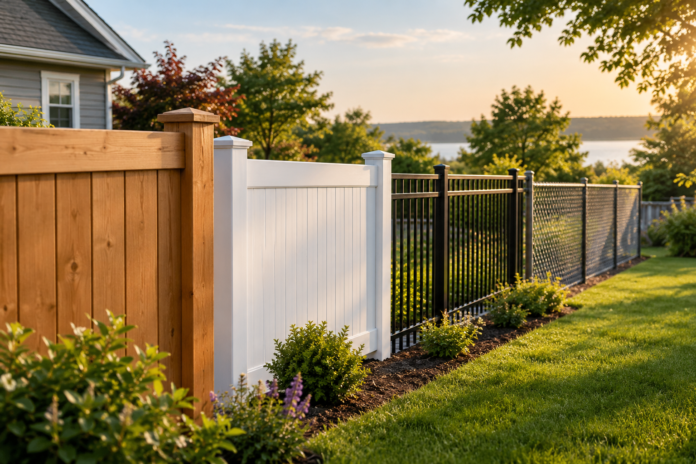
Wood offers a natural appearance and broad design flexibility. Closely spaced boards can create substantial visual screening, while picket and rail styles provide a more open look. Wood fences benefit from regular inspections because moisture, sunlight, insects, and contact with wet soil can affect their condition.
Vinyl
Vinyl can provide a consistent finished appearance and is often chosen by owners who want less routine surface maintenance. Privacy panels are available in solid styles, but posts, rails, and panels should still be checked for looseness, cracks, or damage after severe weather or impact.
Aluminum and Other Metal Options
Aluminum and similar open metal styles work well where views, airflow, and sightlines are important. They can suit gardens, front yards, driveways, and pool surroundings. Because they do not provide full visual screening on their own, homeowners may pair them with thoughtfully placed plants or other approved screening methods.
Chain Link
Chain link is a practical option for large yards, pet areas, service zones, and clear boundaries. It provides visibility and airflow and can be combined with privacy slats, screening fabric, or landscaping. Mesh, fence height, gate design, and bottom clearance all deserve attention during planning.
Plan for Privacy and Visibility
Privacy is influenced by more than fence height. Board spacing, changes in grade, patio placement, nearby second-story windows, and the position of outdoor lighting can all affect how enclosed a yard feels. Identify the specific views you want to block, rather than automatically enclosing every side of the lot with the same design. A solid backyard fence may work well beside a seating area, while partial screening or a trellis may feel lighter near a garden. Keep enough room for gates, maintenance, drainage, and future landscaping so the fence remains useful as the property changes.
Build Safety Into the Layout
Fence panels are only part of a safe layout. Gates should be located where they are easy to reach, monitor, and fully open without hitting vehicles, steps, shrubs, or stored items. If children or small pets will use the enclosed area, inspect lower gaps and choose latches that support the intended level of access control. For a pool, appearance should never outweigh barrier safety. Review the pool safety barrier guidance and confirm the requirements that apply to your Maryland county, municipality, and community before installation begins.
Check Property and Site Conditions
Confirm the property line before finalizing the fence route. Then walk the planned path and note slopes, drainage routes, retaining walls, tree roots, low spots, driveways, utility equipment, and access needs. A layout that looks simple on paper may require stepped panels, adjusted post placement, or a different gate location in the yard. Before post holes are dug, contact 811 to have the approximate locations of buried utility lines marked. This step is important whether the project involves a few posts or a full perimeter fence.
Review Maintenance and Long-Term Costs
The lowest initial estimate is not always the lowest cost over the life of a fence. Compare cleaning, staining, sealing, painting, replacement parts, hardware, and repair access. Ask for written estimates that identify the material, height, post and gate details, removal work, site preparation, cleanup, and any permit-related responsibilities. It is also worth asking how easily an individual panel, picket, rail, or gate component can be repaired. A fence that fits the household’s maintenance routine is more likely to remain attractive and functional.
Avoid Common Fence Planning Mistakes
- Choosing a material before deciding what the fence must accomplish.
- Assuming a property line instead of confirming it.
- Forgetting daily movement through gates and service areas.
- Ignoring drainage, slopes, or mature tree roots.
- Using the same fence design in every part of the property without considering function.
- Comparing estimates by price alone.
- Skipping local, HOA, or pool-barrier reviews.
Use a Simple Fence Planning Checklist
- Write down the primary purpose of the fence.
- Mark areas needing privacy, visibility, pet control, or controlled access.
- Measure the approximate route and count the gates needed.
- Review grades, drainage, landscaping, and service access.
- Compare two or three materials that fit the goal.
- Check applicable local rules and arrange utility marking.
- Request detailed written estimates.
- Choose a design that fits the property and daily routine.
Common Questions About Fence Selection
Which fence material provides the most privacy?
Solid wood and solid vinyl styles can provide strong visual screening. The final level of privacy also depends on height, board spacing, grade changes, and the location of nearby windows and outdoor spaces.
Which fence needs the least maintenance?
Vinyl and many metal options generally require less routine surface care than wood. Every fence still benefits from cleaning, hardware checks, and inspections after storms.
Can different fence materials be used on one Maryland property?
Yes. An open front-yard fence and a more private backyard fence can work well together when the transition looks intentional, and each design supports the area it encloses.
Final Thoughts
The right fence for a Maryland property fits the site, supports everyday use, meets safety needs, and matches realistic maintenance expectations. Homeowners should consider the property’s layout, weather exposure, drainage, soil conditions, and surrounding landscape before choosing a material and design. Comparing options such as wood, vinyl, aluminum, and chain link can help identify a solution that balances privacy, visibility, durability, and overall cost. It is equally important to plan gate placement, post locations, and access points carefully to ensure the fence remains functional and convenient over time. Before installation begins, reviewing property boundaries, local zoning regulations, permit requirements, and homeowners association guidelines can help prevent delays and costly adjustments. Looking beyond the initial price to consider cleaning, repairs, refinishing, and long-term replacement needs can also lead to a more practical investment. With thoughtful planning and the right materials, a well-designed fence can improve security, define outdoor spaces, enhance curb appeal, and complement the property’s character for years to come.