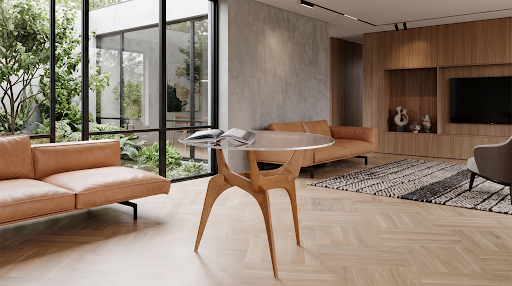

A clear protective layer can help preserve a dining table, desk, coffee table, or other finished surface without hiding the material underneath. Acrylic, often called plexiglass or Lucite, has become a popular alternative to glass and flexible plastic table covers because it combines transparency, relatively low weight, impact resistance, and rigidity. But acrylic is not automatically the best choice for every table. Its advantages come with trade-offs, particularly around scratching, heat, thickness, cleaning, and thermal expansion. Choosing the right material just like plexiglass table top protector depends on how the table is used and what type of protection is actually needed.
Plexiglass Table Protector Explained
A plexiglass table protector is a rigid sheet of transparent acrylic placed over an existing tabletop. Acrylic is a thermoplastic material known for its optical clarity, relatively low weight, weather resistance, and ability to be fabricated into different shapes.
The terms plexiglass and acrylic are commonly used interchangeably in everyday conversation. Plexiglas, however, is also a specific trademarked acrylic product name. For consumers, the more important distinction is usually the material itself rather than the terminology.
Unlike a flexible vinyl table cover, acrylic remains relatively rigid when placed over a flat surface. That makes it suitable when the goal is to protect the appearance of the original tabletop while maintaining a cleaner, more finished look.
Acrylic table protectors are commonly considered for wood, veneer, painted surfaces, desks, dining tables, coffee tables, and other furniture where scratches, spills, and everyday wear are concerns. Current U.S. marketplace results show acrylic protectors being offered in rectangular and round formats and in different thicknesses.
What Does Acrylic Protect a Table From?
The main purpose of a rigid acrylic cover is to create a sacrificial surface between the furniture and everyday objects. For a dining table, that can mean protection from plates, utensils, writing instruments, children’s activities, spills, and minor abrasion. On a desk, it can reduce direct contact between the finished surface and keyboards, notebooks, office equipment, pens, and other frequently moved objects.
Acrylic can also help protect decorative furniture finishes. A clear sheet allows the underlying wood grain, paint, pattern, or other design to remain visible rather than covering it with an opaque mat.
However, protection has limits. Acrylic itself can scratch, and it should not be treated as a completely scratch-proof or heat-proof material. Compared with glass, acrylic generally has a softer surface and therefore requires more care to maintain a pristine appearance.
How Thick Should an Acrylic Table Protector Be?
Thickness is one of the most important considerations because it affects rigidity, weight, handling, and appearance. Thin acrylic can work for relatively light-duty applications, particularly where the sheet is primarily being used as a surface barrier. Thicker material becomes more rigid and substantial and is better suited to larger tabletops where flexing would be undesirable.
For example, current acrylic table protector offerings commonly include thicknesses around 1/8 inch and 1/4 inch, while thicker acrylic sheets are also available for tabletop applications.
The correct thickness should not be selected based on size alone. Consider the table’s support structure, dimensions, intended use, and whether the acrylic will sit directly on a continuous flat surface.
A large sheet supported only around its perimeter behaves differently from a smaller sheet that rests completely on the tabletop. If significant loads will be placed on the protector, the underlying table and the acrylic’s span both matter.
For a basic protective cover over a fully supported tabletop, a moderate thickness may be sufficient. For larger installations, heavier use, or situations where rigidity matters, a thicker sheet can make more sense.
Acrylic vs. Glass Table Protectors
The most important comparison for many homeowners is acrylic versus glass. Glass has a harder surface and generally offers better scratch resistance. It also handles heat better than acrylic in many ordinary applications. This makes glass attractive for dining tables and other surfaces where hot objects or heavy everyday use are common.
Acrylic has different strengths. It is considerably lighter than glass and has much higher impact resistance. If dropped or subjected to a strong impact, acrylic does not behave like conventional brittle glass. This can make handling and installation easier.
The trade-off is surface durability. Acrylic can develop scratches more readily, particularly if it is cleaned incorrectly or exposed to abrasive materials.
For a household that frequently moves the protector for cleaning, weight can be a meaningful consideration. For someone whose top priority is a highly scratch-resistant surface, glass may have the advantage. Neither material should simply be labeled “better.” They solve slightly different problems.
Acrylic vs. Vinyl Table Covers
Flexible vinyl and PVC table protectors are another common alternative. Vinyl covers are generally thinner, softer, and easier to roll or cut. They can be useful when spill resistance and inexpensive everyday coverage are the primary goals. Current U.S. marketplace listings include clear PVC protectors designed for dining tables, desks, countertops, and other surfaces.
Acrylic provides a more rigid and furniture-like appearance. It is less likely to look like a flexible plastic sheet sitting on the table.
The choice therefore comes down partly to aesthetics and use. A flexible cover may be perfectly practical for a busy family table, craft area, or temporary application. Acrylic is more appropriate when maintaining a clear, rigid surface is important.
Does Acrylic Scratch Easily?
This is one of the biggest misconceptions about acrylic. Acrylic is durable and impact-resistant, but those characteristics do not mean its surface is scratch-proof. In fact, acrylic is generally more susceptible to surface scratching than glass.
Dust particles can become abrasive when rubbed across the sheet. Rough paper, metal objects, ceramics, and unsuitable cleaning tools can also create fine marks.
The good news is that minor acrylic scratches can sometimes be polished out. This is one reason acrylic can remain useful over a long period even after normal surface wear develops.
Prevention is still better than repair. A clean microfiber cloth and appropriate acrylic-safe cleaning method are preferable to dry wiping with a rough cloth.
How to Clean an Acrylic Table Protector
Cleaning acrylic correctly is relatively simple, but technique matters. Start by removing loose dust and particles without aggressively rubbing them across the surface. Then use a soft microfiber cloth and a mild cleaning solution appropriate for acrylic.
Avoid abrasive cleaners, scouring pads, rough paper towels, and chemicals that may damage or cloud the surface. Some conventional household glass cleaners are not appropriate for acrylic because their chemical formulation may negatively affect the plastic surface.
For stubborn marks, repeated aggressive rubbing is usually the wrong approach. The goal should be to loosen the contaminant rather than grind it into the surface.
If the protector develops fine scratches over time, products specifically designed for polishing acrylic may help restore its appearance, depending on the severity of the damage.
Can You Put Hot Dishes on Acrylic?
This is where acrylic requires more caution. Acrylic should not be treated as a heatproof countertop. High temperatures can affect the material, and the exact resistance depends on the acrylic formulation, thickness, exposure time, and temperature.
A hot pan, baking dish, cookware, or heated appliance should therefore not be placed directly on an acrylic protector unless the material’s manufacturer specifically states that the application is suitable.
Use trivets, heat-resistant pads, or other appropriate barriers for hot cookware. This is an important difference between acrylic and glass. Glass generally provides greater heat tolerance, although even glass products have application limits and can be affected by extreme or sudden temperature changes.
Does Acrylic Expand with Temperature?
Yes. Acrylic experiences thermal expansion and contraction, and the effect becomes more noticeable with larger sheets. This matters because a large acrylic panel does not necessarily remain dimensionally identical as temperatures change. One technical comparison notes that acrylic’s coefficient of thermal expansion is significantly greater than that of glass.
For a simple tabletop protector that is simply resting on a flat surface, this usually isn’t a major issue. But it becomes more relevant when acrylic is mechanically fixed, tightly framed, or installed in a way that restricts movement.
Large or permanently installed acrylic components should therefore be designed with the material’s movement characteristics in mind.
How to Keep an Acrylic Protector From Sliding
Acrylic is relatively rigid, but a smooth tabletop can allow a protective sheet to shift. One approach is to use small transparent rubber or silicone bumpers underneath the sheet. These can provide additional friction while keeping the protector slightly separated from the furniture surface.
The placement matters. Bumpers should support the sheet without creating excessive point loading or an uneven appearance.
Adhesives are generally less attractive for a removable tabletop protector because they can complicate cleaning and potentially affect the furniture finish.
For a simple tabletop application, the goal should be controlled stability rather than permanently bonding the protector to the furniture.
Is Acrylic a Good Choice for Wood Tables?
Acrylic can be particularly useful on finished wood and veneer tables because the transparent material allows the underlying surface to remain visible.
This is important for furniture where appearance is part of the value. A clear rigid cover can provide a barrier against many everyday scratches and spills without completely hiding the wood grain.
However, the protector itself becomes part of the visible surface. If it accumulates scratches, haze, or fingerprints, the aesthetic benefit is reduced.
For that reason, acrylic makes the most sense when the owner is willing to treat the protector as a clear finished surface that also needs maintenance.
What About Round, Oval, and Irregular Tables?
Acrylic is well suited to custom shapes because it can be fabricated into more than basic rectangles. Round and oval table protectors are common examples. Current U.S. listings show acrylic and other clear tabletop materials being offered for round furniture, while custom fabrication allows sheets to follow more unusual dimensions.
Accurate measurement is particularly important with custom shapes. For a round tabletop, measure the diameter at several points to verify that the furniture is actually symmetrical. For an oval or irregular shape, measure the maximum width and length and document the geometry carefully.
A protector that is slightly undersized may leave portions of the furniture exposed, while one that is too large can create an awkward overhang.
When Should You Choose Acrylic Instead of Glass?
Acrylic tends to make the most sense when low weight, impact resistance, easier handling, and transparency are high priorities.
Glass may be preferable when scratch resistance, surface hardness, and greater heat tolerance matter more.
Flexible vinyl or PVC can be more appropriate when the goal is inexpensive, lightweight spill protection rather than a rigid furniture surface.
The best choice depends on the actual environment. A formal dining table used occasionally has different requirements from a family table used every day. A desk has different demands from a coffee table. A craft table has different risks from an antique wood surface.
Final Considerations Before Choosing a Table Protector
The right protective material should be selected according to the table, not simply the material’s marketing claims.
Consider the dimensions first, then think about daily use, expected impact, exposure to heat, cleaning habits, appearance, and how frequently the protector will be removed. Thickness should follow those requirements rather than being chosen arbitrarily.
Acrylic offers a useful middle ground between rigid glass and flexible plastic. It is transparent, relatively lightweight, impact-resistant, and available in custom shapes and thicknesses. But it is also more vulnerable to scratching and heat than many people initially expect.
For homeowners who understand those limitations, an acrylic protector can be an effective way to preserve a tabletop while keeping its original appearance visible. For applications dominated by hot cookware or a need for maximum scratch resistance, another material may be the smarter choice.
The key is not finding the “best” table protector in general. It is choosing the material whose strengths actually match the way the table will be used.