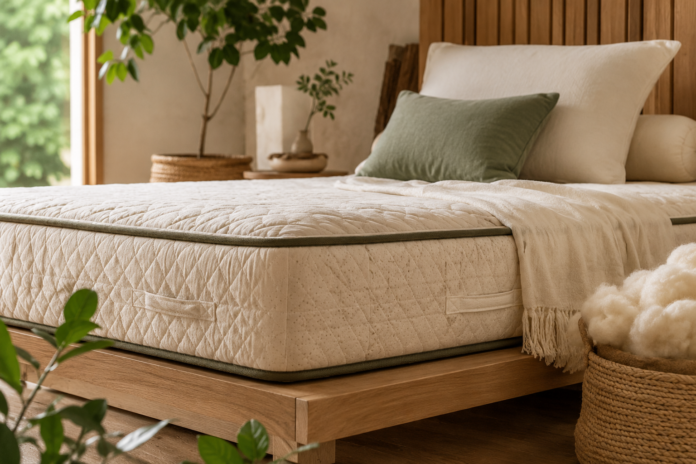

Buying a mattress is a personal decision, and the word “organic” adds another layer of questions. A mattress may contain natural latex, wool, cotton, plant-based fibres, steel coils, adhesives, fire barriers, or synthetic foams in different combinations. Some products use certified materials throughout, while others contain only one or two natural components. The label alone therefore does not reveal how the mattress feels, how it is built, or whether it meets a shopper’s priorities.
A more useful approach is to examine the materials, construction, documentation, comfort, and ownership terms together. Organic materials may appeal to people who want a more transparent sleep surface, prefer renewable inputs, or dislike the feel and odour associated with some conventional foams. Yet comfort and support still matter most: even a carefully sourced mattress is a poor choice if it creates pressure points or fails to keep the body comfortably aligned.
What “Organic Mattress” Can Mean
Unlike a simple firmness label, “organic” can describe several different things. It may refer to certified organic cotton in the cover, certified latex in the comfort layers, wool used as padding or a fire barrier, or a larger construction in which most major textile and foam components meet a defined standard. “Natural,” “eco-friendly,” and “organic” are not automatically interchangeable.
Shoppers should look beyond the front-page description and ask which individual components are certified, who issued the certification, and whether the claim applies to a raw material or the finished mattress. Product documentation should identify the layers clearly enough to understand what is natural, what is synthetic, and why each material is present. Vague phrases such as “green foam” or “bio-based comfort” deserve follow-up questions because they do not state how much of the material comes from renewable sources.
The Main Materials to Understand
Natural latex is made from rubber-tree sap and is commonly used as a resilient comfort material. It tends to feel buoyant and responsive rather than slow-sinking. Latex can relieve pressure while helping the sleeper feel supported on the surface. Its open structure and perforations may also promote airflow, although the complete mattress design determines how warm or cool the bed feels.
Cotton is frequently used in covers and batting. It offers a familiar, breathable textile surface, but the amount and certification status can vary. Wool may be used for cushioning, moisture management, and fire-resistance strategies. A mattress can also combine natural comfort layers with pocket coils, creating a hybrid that adds edge support, airflow, and a more familiar spring response.
Matching Construction to Sleep Style
Material preference should be considered alongside body type and sleeping position. Side sleepers usually need enough surface cushioning for the shoulders and hips, while back sleepers often benefit from balanced contouring with firmer support through the middle of the body. Stomach sleepers commonly prefer a surface that limits excessive hip sinkage. Combination sleepers may value latex because its responsiveness can make changing positions easier.
Firmness labels are useful starting points, not universal measurements. One manufacturer’s medium may feel firmer than another’s, and the same mattress can feel different to people of different weights. Layer thickness, latex density, coil design, quilting, and cover tension all influence the final sensation. Couples should also consider motion transfer, edge stability, and whether both sleepers can remain comfortable on the same design.
When reviewing Organic mattresses at Sleep Masters Canada, shoppers can use the available natural-latex and hybrid options as a practical comparison point, then evaluate each model by its complete material list, firmness, construction, and trial terms. The goal is not simply to find an “organic” label, but to identify a mattress whose documented materials and physical feel work together.
Certifications and Documentation
Third-party certifications can make material claims easier to assess, but shoppers still need to understand their scope. A certificate may apply to a latex layer, a textile, a production facility, or the finished product. Ask for the certification name, certificate number when available, issuing organization, and the exact component covered. Current documentation is more useful than a logo displayed without explanation.
A clear law label and detailed product specification can answer practical questions about fibre content, foam types, coil systems, and country of manufacture. Retail staff should also be able to explain how the mattress meets fire-safety requirements. Be cautious when a seller cannot distinguish between natural content, organic certification, low-emission testing, and sustainability claims; these are related topics, but they are not the same claim.
Health and Environmental Expectations
People often consider organic mattresses because they are sensitive to odours or want fewer petroleum-based materials near their sleeping area. Natural materials can support those preferences, but broad health promises should be treated carefully. No mattress can guarantee relief from allergies, pain, or sleep disorders, and natural latex itself may be unsuitable for someone with a relevant sensitivity.
Durability and Long-Term Value
Organic and natural mattresses often cost more because latex, wool, certified textiles, and specialized construction can be expensive. Price should therefore be considered over the expected useful life rather than only at checkout. Dense latex and well-built coil units can be durable, but longevity depends on material quality, sleeper weight, foundation support, maintenance, and daily use.
Testing the Mattress and Reviewing the Trial
An in-store test should last longer than a quick sit on the edge. Lie in the position used most often at home, notice pressure at the shoulders and hips, and check whether the lower back feels supported without being pushed upward. Couples should test the mattress together when possible. A responsive latex bed can feel unfamiliar to someone accustomed to memory foam, so comparing several constructions is useful.
For online or showroom purchases, read the sleep-trial policy before paying. Important details include the minimum adjustment period, return or exchange fees, pickup arrangements, condition requirements, and whether the trial applies to special orders. Also confirm delivery access, old-mattress removal, and the process for resolving damage.
Questions Worth Asking Before Buying
A well-informed conversation with a retailer should cover the percentage and source of natural latex, the certification status of cotton and wool, every synthetic component, the type of fire barrier, and the recommended foundation. Buyers should also ask whether the floor model matches the delivered construction and whether layer specifications can change without notice.
Comfort questions matter just as much: Which model suits the sleeper’s position and weight? How does the surface respond near the edge? Is there enough cushioning for pressure relief? What happens if the selected firmness is wrong? Clear, specific answers are more valuable than sweeping claims about health or luxury.
Choosing with Both Values and Comfort in Mind
An organic mattress can be a thoughtful purchase when its materials, construction, and documentation match the buyer’s goals. The strongest choice is not necessarily the product with the most ecological language. It is the mattress that provides transparent information, appropriate support, comfortable pressure relief, credible material claims, and ownership terms the shopper understands.
By comparing layer contents, certification scope, physical feel, durability, and trial conditions, consumers can separate meaningful qualities from broad marketing language. That process leads to a decision grounded in both personal values and the practical reality of sleeping on the mattress every night.