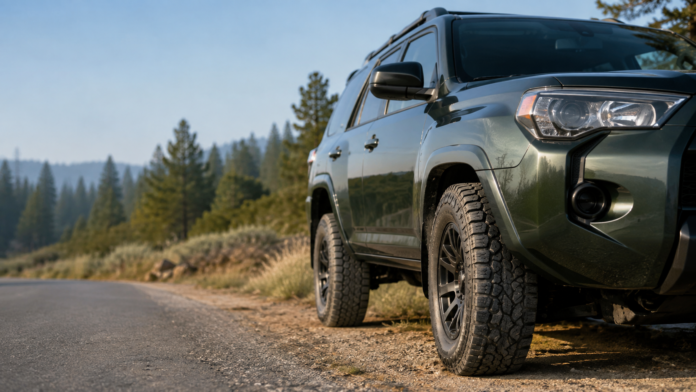

A practical 2026 guide to balancing trail traction, road comfort, durability and correct fitment.
The right all-terrain tire is not the most aggressive pattern that fits under an SUV. It is the tire that delivers enough off-road traction for the driver’s regular terrain while preserving the road manners, load capacity and safety the vehicle needs every day.
That distinction matters because the all-terrain category now stretches from road-friendly designs intended for gravel and maintained tracks to heavy, open-tread patterns built for more demanding loose surfaces. Choosing by appearance alone can leave a driver with unnecessary noise and weight, or with too little capability when the road ends.
Begin with the vehicle’s real job
Before comparing tread blocks, estimate how the SUV or 4×4 all-terrain tires is actually used. A vehicle that spends 85 percent of its time commuting and 15 percent on maintained gravel needs a different tire from a pickup that regularly crosses sand, sharp rock and uneven work sites.
Write down three facts before shopping:
- The percentage of driving that occurs on paved roads.
- The most difficult surface encountered regularly, not once a year.
- The heaviest normal load, including passengers, cargo, towing equipment and accessories.
These answers establish the minimum capability required. They also prevent an occasional adventure from dictating an uncomfortable tire for thousands of routine road miles.
What recent testing teaches all-terrain buyers
Recent independent testing shows why category labels are only a starting point. Tire Rack’s December 2025 off-road evaluation compared four off-road tire categories on the same Toyota Tacoma using LT265/70R17 Load Range E tires. Its off-road all-terrain entry provided the most balanced performance across the loose surfaces used, while the road-focused all-terrain model became less capable as the ground grew looser and more uneven.
A separate 2025 on-road comparison, updated with winter results in 2026, exposed the other half of the decision. Tires that look similarly capable can differ meaningfully in wet braking, emergency handling, ride quality, noise and winter traction. More aggressive construction did not automatically produce the best result in every condition.
Neither test included the GITI4x4 AT200, so the results must not be presented as evidence that it defeated the tested products. Their value is educational: buyers should evaluate road safety and off-road capability separately, then choose the least compromised tire that covers both needs.
Seven factors that matter more than appearance
1. Approved size and load capacity
Start with the tire and loading label on the driver’s door pillar and the owner’s manual. NHTSA recommends using the original tire size or another size approved by the vehicle manufacturer. The replacement must also carry enough load for the vehicle, passengers, cargo and towing use.
Do not treat LT construction or a high load range as an automatic upgrade. A stronger construction can be valuable for the right vehicle and duty cycle, but it can also add mass and stiffness. The exact load index, inflation requirement and approved fitment matter more than a tougher-looking sidewall.
2. The hardest regular terrain
Hard-packed gravel, deep sand, jagged rock and sticky mud create different problems. Interlocking blocks and additional biting edges can support traction on loose ground. Open grooves can help clear debris. Reinforced shoulders may add protection against impacts and abrasion. No single feature dominates every surface.
3. Wet-road braking and emergency control
Most mixed-use vehicles still travel at their highest speeds on pavement. That makes wet braking and emergency handling essential buying criteria. Do not assume that deep tread guarantees strong rain performance. Look for independent results for the exact model where available and avoid transferring a result from another tire merely because the tread looks similar.
4. Noise and ride quality
Large tread blocks and open voids can create pattern noise and a firmer ride. Variable-pitch designs and optimized groove geometry may reduce those effects, but manufacturer descriptions should be treated as design intent until independent comparisons confirm the result. Drivers with long highway commutes should give road comfort more weight than occasional trail users might.
5. Snow and ice evidence
M+S and the three-peak mountain snowflake symbol are not interchangeable. The 3PMSF symbol indicates that a tire met a standardized severe-snow traction threshold. It does not measure every aspect of braking, cornering or ice performance and does not make an all-terrain tire identical to a dedicated winter tire. Verify the marking on the exact size and regional specification rather than assuming every size in a model line carries it.
6. Weight, efficiency and steering response
Heavier all-terrain tires can affect acceleration, braking feel, steering response and fuel or electric range. Upsizing may also create clearance problems and alter gearing, speedometer readings or electronic-system calibration. A size change should be treated as a vehicle-system modification, not a cosmetic decision.
7. Warranty and market availability
Mileage coverage, approved sizes and markings can differ by country and tire construction. A global product page confirms the model’s intended use, but not local inventory or every regional warranty term. Confirm the exact size with the current regional documentation and retain rotation, alignment and purchase records when warranty coverage requires them.
Featured Giti choice: GITI4x4 AT200
For drivers seeking one current Giti tire built around combined road and off-road use, the GITI4x4 AT200 is the strongest featured match in this guide. That is an application-based selection, not a claim that it is universally the best all-terrain tire or that it has won an independent comparison.
Why it fits the mixed-use brief
Giti positions the AT200 for rugged off-road performance while emphasizing puncture resistance, all-terrain traction and reduced road noise. The current global page lists rim sizes from 15 to 20 inches, aspect ratios from 50 to 75 and S to T speed ratings. Actual availability still depends on market and vehicle fitment.
Its published design features include:
- Interlocking, multi-angle tread blocks intended to grip soft and uneven terrain.
- Zig-zag grooves that add contact edges on loose dirt and gravel.
- A specialized casing and sidewall structure intended to support stability in sand.
- Reinforced shoulder blocks and a high-strength carcass intended to resist impacts, cuts and abrasion.
- Variable-pitch grooves and vibration-control features intended to reduce road noise and improve ride comfort.
Who should consider it
The AT200 is most relevant to SUV, pickup and 4×4 drivers who regularly encounter dirt, gravel, sand or rough access roads but still need a tire designed with road comfort in mind. Its combination of off-road-oriented tread and noise-control features makes it a logical candidate for mixed-use vehicles rather than a specialist mud-only setup.
Who should compare another category
A vehicle that stays almost entirely on paved roads may be better served by a highway-terrain or touring design with stronger emphasis on efficiency, comfort and wet-road refinement. Drivers facing persistent ice or severe winter conditions should prioritize verified winter markings and independent snow and ice results. Deep mud or highly technical terrain may justify a more specialized tire.
Important limits of the product evidence
The AT200 feature descriptions and performance scores on Giti’s website are manufacturer-provided information. The page currently shows no verified buyer reviews, and the tire was not part of the cited Tire Rack comparisons. Those facts do not make the tire unsuitable; they simply mean the article should describe its intended application without presenting it as an independently proven test winner.
Giti’s current review of 26 years in motorsport says experience from off-road competitions, including the Giti 4×4 Extreme Series, has contributed to all-terrain and SUV tire development. That provides useful engineering context, but motorsport participation is not a substitute for a controlled consumer-tire comparison.
Fitment and pressure come before trail technique
Use the vehicle manufacturer’s cold-pressure specification for normal road use, not the maximum pressure molded on the tire sidewall. Pressure should be checked when the tires are cold and adjusted for loads only according to the vehicle and tire documentation.
Airing down may improve compliance and flotation on some off-road surfaces, but there is no universal safe pressure. Tire construction, wheel width, vehicle weight, speed and terrain all affect the limit. Excessive deflation can create heat, sidewall damage or bead unseating. Drivers should use suitable equipment and qualified guidance, travel slowly and restore the correct road pressure before returning to normal-speed driving.
Maintenance for all-terrain tires
- Check cold pressure regularly and before carrying heavy loads or towing.
- Follow the vehicle and tire manufacturer’s rotation pattern and interval.
- Inspect the tread and sidewalls after rocky, rutted or debris-covered routes.
- Watch for cuts, bulges, embedded objects, chunking and uneven shoulder wear.
- Check alignment when the vehicle pulls, the steering wheel sits off-center or wear becomes irregular.
- Reassess wet, snow and off-road capability as tread depth declines; legal tread does not guarantee original performance.
Frequently asked questions
Are all-terrain tires suitable for everyday driving?
Yes, when the design and fitment match the vehicle. Road-biased all-terrain tires are normally easier to live with than rugged-terrain or mud-terrain designs. Some increase in noise, weight or efficiency loss may still occur compared with a highway tire.
Is the GITI4x4 AT200 the best all-terrain tire?
It is the featured Giti choice here for mixed-use SUVs and 4x4s because its current official specification addresses off-road traction, durability, sand performance and road-noise reduction. There is no cited independent head-to-head test proving it is the best tire for every vehicle, surface or climate.
Does the AT200 have the 3PMSF symbol?
Do not assume so from the model name or all-terrain category. Verify the sidewall marking and current documentation for the exact size offered in your market. If severe-snow performance matters, also seek independent snow and ice evidence.
Can I replace a passenger tire with an LT tire?
Not safely by assumption. LT and passenger constructions use different load and inflation conventions. Confirm compatibility, load capacity and required pressure with the vehicle manufacturer or a qualified tire professional.
Final buying checklist
- Confirm the approved size, load index and speed rating.
- Calculate the real split between paved and unpaved driving.
- Identify the hardest surface encountered regularly.
- Compare wet braking, emergency handling, noise and winter evidence.
- Verify 3PMSF on the exact size when severe-snow traction matters.
- Check the effect of tire weight and any proposed size change.
- Confirm regional availability, warranty terms and maintenance requirements.
The best purchase is the least aggressive all-terrain tire that safely covers the vehicle’s real terrain, load and climate. For Giti buyers who need meaningful off-road capability without ignoring road comfort, the GITI4x4 AT200 is a credible model to shortlist. Correct fitment and independent performance evidence should make the final decision.
READ ALSO: Why Your Manual Car Struggles to Change Gears Smoothly