
Key Takeaways
- Begin with the venue, time of day, wedding colors, and requested dress code.
- Choose fabrics, layers, and shoes that suit the season and setting.
- Coordinate with the wedding palette without matching the bridal party exactly.
- Prioritize a comfortable fit, ease of movement, and a polished personal style.
- Shop early enough to allow for delivery, alterations, and accessory planning.
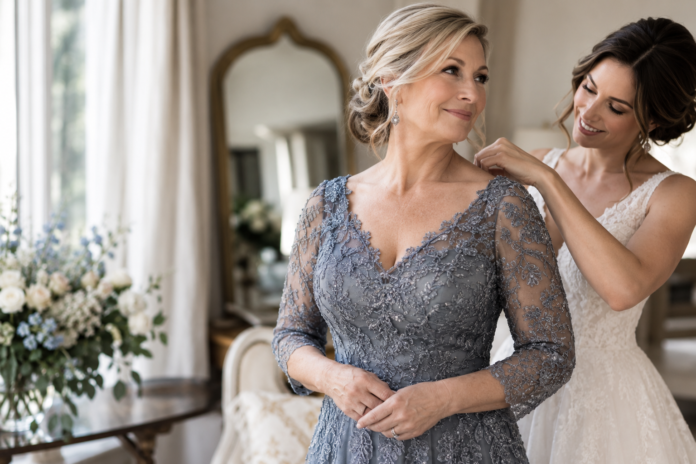
Choosing a mother-of-the-bride outfit is about finding a look that feels celebratory, photographs beautifully, and remains comfortable from the ceremony through the last dance. A thoughtful collection of mother of the bride dresses can offer a useful starting point, but the final choice should reflect the wedding itself as much as personal taste.
Before focusing on color or embellishment, look closely at the invitation and talk with the couple. The venue, season, start time, formality, and wedding palette all help narrow the choices. A refined outfit that fits the setting will always feel more appropriate than one chosen only because it looked appealing on a hanger.
Start With the Wedding Details
Open the invitation before beginning the search. Note whether the event is indoors or outdoors, whether it begins in the afternoon or evening, and whether the ceremony is in a church, garden, hotel, beach, vineyard, or private home. Ask the couple if they have preferences about colors, sleeves, neckline coverage, or the level of formality for close family members.
The mother of the bride is highly visible throughout the day, so her outfit can be slightly more elevated than a typical guest’s look. Still, it should never compete with the bride or make coordinating family photographs feel visually busy.
Match the Outfit to the Venue
A venue affects more than the mood of the event. It influences fabric, hem length, footwear, outerwear, and even how much sparkle feels natural. For help organizing venue details alongside attire decisions, wedding-planning basics can make it easier to keep the entire celebration on track.
- Ballroom or city hotel: Long gowns, sleek column dresses, satin, crepe, tailored jackets, and refined metallic accents work well.
- Garden wedding: Chiffon, floral details, midi lengths, block heels, and soft layers complement the outdoor setting.
- Beach ceremony: Lightweight fabrics, breathable linings, simple jewelry, and sand-appropriate shoes are practical choices.
- Church ceremony: Sleeves, a matching jacket, or an elegant wrap can provide coverage while still looking formal.
- Vineyard or barn: Dressy separates, soft tailoring, textured fabrics, and stable shoes create a polished yet relaxed look.
Use the Season as a Style Guide
Seasonal conditions should shape the outfit from the beginning. Spring weddings often suit soft shades, lace, chiffon, and light layers. Summer calls for breathable materials, secure necklines, and shoes that remain comfortable in the heat. Fall welcomes richer colors, longer sleeves, textured fabrics, and wraps, while winter can support velvet, brocade, satin, tailored suiting, and warmer accessories.
Plan for temperature changes, not just the forecast. Outdoor photographs, air-conditioned ballrooms, cool houses of worship, and evening receptions may require a wrap or jacket even during a warm-weather wedding.
Read the Dress Code Carefully
The invitation should guide the level of formality. For black-tie, a floor-length gown or a highly polished formal ensemble is usually the safest choice. Formal weddings can also accommodate sophisticated midi dresses and elegant jumpsuits. Cocktail attire favors tea-length, midi, or knee-length styles with elevated accessories, while semi-formal and casual celebrations allow more flexibility without eliminating the need for a special-occasion finish.
If the wording is vague, use the venue and time of day as clues, then ask the couple rather than guessing for fresh inspiration. At the same time, while reflecting classic etiquette, current mother-of-the-bride dress trends show how streamlined gowns, jumpsuits, and updated details can fit modern weddings.
Choose a Flattering Silhouette
There is no single silhouette that works for every mother of the bride. The best option is one that feels secure, allows natural movement, and supports confidence in photographs. Focus on fit through the shoulders, bust, waist, and hips. Excellent tailoring often makes a simple outfit look more luxurious than heavy embellishment ever could.
Versatile Options to Consider
- A-line dresses offer movement and work across many levels of formality.
- Column dresses create a clean, streamlined look for evening events.
- Wrap styles can offer comfort and adjustability.
- Fit-and-flare designs define the waist while keeping the skirt easy to move in.
- Jumpsuits and dressy separates provide modern coverage and can be reworn after the wedding.
Select Colors With Care
Coordinate with the wedding palette without becoming a matching member of the bridal party. Avoid white, ivory, champagne, and closely related bridal shades unless the couple clearly approves them. Navy, jewel tones, muted pastels, soft metallics, warm neutrals, and deep seasonal shades are dependable options.
For example, if bridesmaids are wearing dusty blue, navy, soft gray, silver, lavender, or a complementary print may create harmony without looking identical. Consider how a color reads in daylight, candlelight, and flash photography before making the final decision.
Plan for Comfort and Movement
A wedding day involves standing, greeting guests, hugging family, sitting through dinner, posing for photographs, and possibly dancing. Test whether the outfit allows you to sit comfortably, raise your arms, and walk without adjusting the neckline or hem. Wear the intended undergarments and shoes to the final fitting so small problems can be corrected in advance.
- Choose stable heels, dressy flats, or wedges suited to the walking surface.
- Confirm that the fabric feels comfortable in the expected weather.
- Make sure shapewear, if worn, does not limit breathing or movement.
- Bring blister pads, fashion tape, safety pins, and a small stain-removal option.
Finish With Accessories and Timing
Accessories should complete the outfit rather than overwhelm it. Choose jewelry that complements the neckline, a clutch large enough for essentials, and a wrap or jacket that suits the level of formality. Keeping metallic finishes generally consistent can make the look feel intentional. A simple navy dress, for instance, can become classic with pearl earrings and silver shoes or more dramatic with sculptural jewelry and a textured wrap.
Begin shopping six to eight months before the wedding when possible. Confirm colors and dress code first, order the outfit three to four months ahead, schedule alterations six to eight weeks before the event, and try on the complete look during the final week. The strongest choice is not necessarily the most elaborate. It is the outfit that respects the setting, feels comfortable all day, and lets personal style come through with confidence.