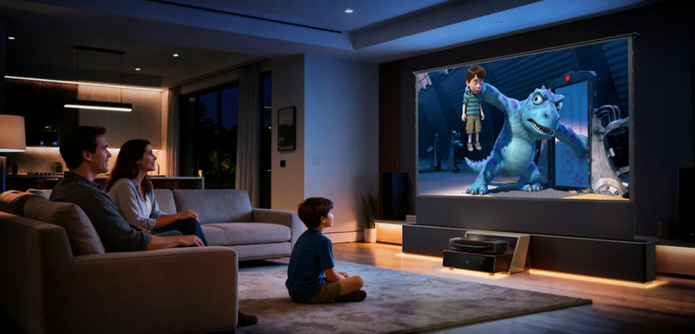

Stepping into the world of massive screens can feel incredibly overwhelming, especially when you are suddenly bombarded with endless technical jargon and aggressive marketing claims. For decades, folks usually settled for whatever standard flat panel television they could physically wrestle into the back of their car. But as technology has rapidly advanced, the dream of having a true hundred inch display in your house has become incredibly accessible. If you are sitting on your couch wondering where to even begin, you are definitely not alone. A solid home theater projector buying guide should ideally strip away the confusion and focus entirely on what actually impacts your daily viewing experience. Figuring out how to choose a projector is rarely about buying the absolute most expensive box on the shelf. Instead, it is entirely about finding the specific piece of equipment that naturally compliments your unique living space and viewing habits. By keeping a few core concepts in mind, you can easily bypass the anxiety and build a breathtaking cinematic setup right inside your house.
Understanding the Specs That Actually Matter
Manufacturers love throwing massive numbers and complicated acronyms all over their packaging, which usually just leaves buyers scratching their heads. Let us get the most confusing projector specifications explained right out of the gate so you can shop with total confidence. You really only need to pay attention to a handful of core metrics to ensure a fantastic picture. Once you grasp what these numbers actually mean in the real world, comparing different models becomes a total breeze.
Brightness, Resolution, and Throw Distance
The overall brightness of the image is measured in lumens, and this is arguably the single most critical factor for most buyers. If you buy a unit that is simply too dim for your environment, your favorite movies will look incredibly washed out and muddy. Contrast ratio is closely tied to this, as it determines the difference between the absolute brightest whites and the darkest blacks the lens can produce. If you love watching gritty detective shows or deep space epics, a high contrast ratio ensures those shadowy scenes look rich and immersive rather than glowing a milky, distracting gray.
Resolution dictates how beautifully sharp the picture is on the wall. While ten eighty p used to be the absolute gold standard for homes, current media consumption heavily favors ultra high definition. The leap to a four k image means you can sit much closer to a massive screen without ever seeing individual pixels, creating a smooth, window-like effect that completely draws you into the story. Finally, throw distance simply refers to how much physical space must sit between the lens and your wall. Traditional long throw units need to sit all the way at the back of the room to beam a large image, which often involves tricky ceiling mounts and running cables through your walls. Conversely, short throw models can sit comfortably on a regular media console just a few inches away from the wall, making them incredibly convenient for everyday spaces.
Matching the Projector to Your Room
You can purchase the absolute most incredible piece of hardware on the market today, but if it fundamentally fights the physical characteristics of your room, you will inevitably end up frustrated. Assessing your environment honestly is the real secret to a flawless setup. Light is the natural enemy of any projected image, and controlling it dictates how much money you actually need to spend to get a good picture.
Living Room Versus Dedicated Theater
A basement cave with zero windows and dark painted walls is the traditional cinematic environment. In a space exactly like that, you can easily get away with a lower lumen count because there is absolutely no ambient light competing with the image on the screen. When light hits a standard white ceiling, it scatters back down onto the screen, killing your contrast. Dedicated spaces use matte dark gray or navy paint to absorb that rogue light. However, finding the best projector for living room viewing requires a completely different approach entirely.
These multi-purpose gathering spaces usually feature stark white walls, plenty of large windows, and a whole lot of ambient daytime light. You cannot exactly paint your main gathering space pitch black without making the house look a bit strange. If you are building a living room home theater, you absolutely must prioritize sheer brightness and consider pairing the unit with a specialized ambient light rejecting screen. This specific combination ensures the colors remain wonderfully punchy and the contrast stays deep, even when you are watching afternoon football with the window blinds wide open.
Budget, Features, and What to Skip
Once you understand your room constraints and the core numbers, it is time to look at where to actually spend your hard-earned cash. It is remarkably easy to overspend on bells and whistles that you will probably never actually use in your day to day life. For instance, many units heavily advertise their built-in smart operating systems. While these are somewhat convenient right out of the box, these internal interfaces often become sluggish or outdated after a couple of years. You are almost always better off ignoring the built-in software and just plugging in a dedicated external streaming stick that you can cheaply upgrade down the line.
Furthermore, please do not let fancy internal speaker systems eat up your budget. Even the best onboard audio sounds a bit thin and hollow when paired with such a massive, cinematic image. You will naturally want to route your sound through a dedicated soundbar or a full surround receiver anyway. Instead, put the bulk of your money toward a vastly superior light source. Upgrading from a traditional lamp model to a 4K RGB laser UST projector represents a massive leap in overall quality and convenience.
Traditional bulbs slowly dim over time, meaning the image you see on day one is noticeably brighter than the image you get a year later. You also have to factor in the hidden, annoying cost of buying replacement lamps every few thousand hours. Laser light sources, on the other hand, maintain their peak brightness for virtually their entire lifespan and last for tens of thousands of hours. You will essentially never have to climb up on a ladder to replace a burnt-out bulb ever again. They also deliver an incredibly wide color gamut, providing a mesmerizing, deeply saturated picture that instantly makes every single penny feel completely justified. Taking the time to understand exactly what you need ensures your home theater remains a favorite gathering spot for years to come.