
In today’s competitive business environment, organizations rely heavily on data to make informed decisions. However, raw data alone is not enough. Businesses need statistical tools to interpret data effectively and reduce uncertainty in decision-making. One of the most important tools in this regard is standard deviation. It helps organizations measure variability, understand risk, and make decisions with greater confidence.
Understanding the Role of Standard Deviation in Data Analysis
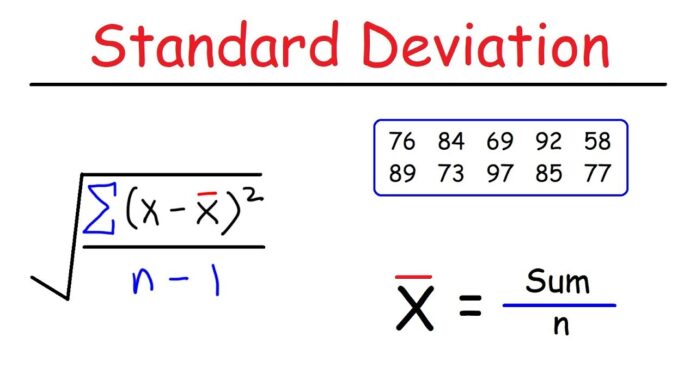
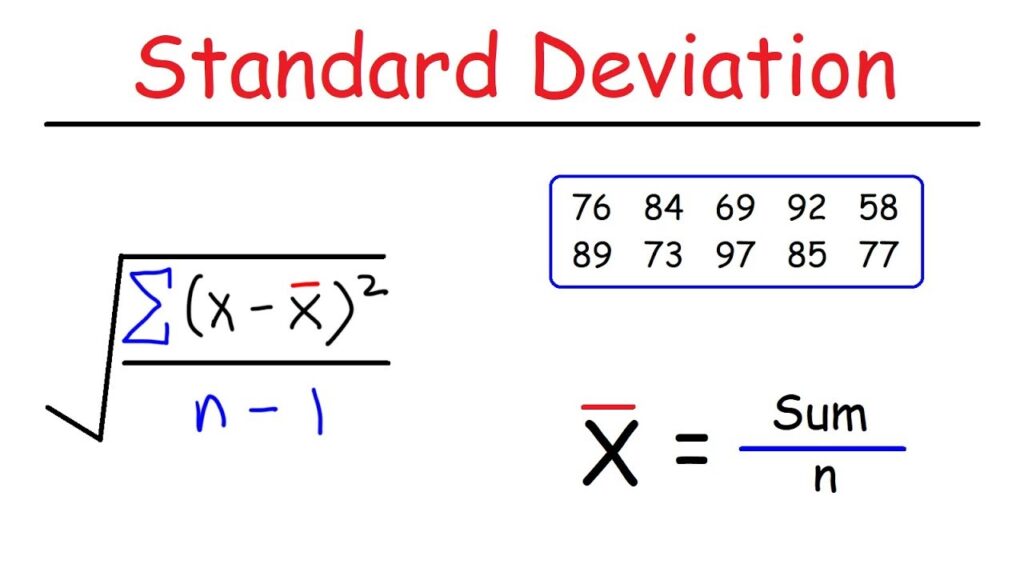
Before diving into its business applications, it is important to understand what standard deviation represents. In simple terms, standard deviation measures how spread out data values are from the mean (average). A low standard deviation indicates that data points are close to the mean, while a high standard deviation shows that data is widely spread.
This measure is essential because it provides deeper insights beyond averages. For example, two departments may have the same average sales, but their performance consistency may differ significantly. Standard deviation helps reveal that difference.
When organizations analyze performance, trends, or customer behavior, they do not just want to know the average outcome—they want to know how reliable and consistent that outcome is.
Why Variability Matters in Business Decisions
Every business decision involves some level of uncertainty. Whether it is forecasting sales, evaluating employee performance, or assessing financial risk, variability plays a key role.
Standard deviation helps quantify that variability. For example:
- In finance, it shows the volatility of stock prices.
- In marketing, it reveals fluctuations in customer engagement.
- In manufacturing, it identifies inconsistencies in product quality.
By understanding variability, organizations can reduce risk and avoid decisions based solely on misleading averages.
Practical Business Applications of Standard Deviation
1. Financial Risk Management
In finance, standard deviation is widely used to measure investment risk. A stock with a high standard deviation is considered more volatile, meaning its price changes dramatically over time. Investors use this information to balance their portfolios and choose investments that match their risk tolerance.
Financial analysts also use standard deviation to evaluate mutual funds, bonds, and other financial instruments. This helps organizations and individuals make safer investment decisions.
2. Quality Control in Manufacturing
Manufacturing companies rely heavily on consistency. If a product varies too much in size, weight, or performance, it may lead to customer dissatisfaction.
Standard deviation helps quality control teams identify inconsistencies in production processes. For instance, if the diameter of a manufactured component has a high standard deviation, it indicates a problem in the production line. This allows engineers to make adjustments and maintain quality standards.
3. Human Resource Performance Analysis
Organizations also use standard deviation to evaluate employee performance. Instead of only looking at average performance scores, HR departments analyze variability to understand consistency.
A team with low variability in performance is generally more reliable, while a team with high variability may require additional training or support. This insight helps managers make better staffing and training decisions.
4. Marketing and Customer Behavior Insights
Marketing teams use standard deviation to analyze customer engagement, sales conversions, and campaign performance. For example, if website traffic shows high variability, it may indicate inconsistent marketing effectiveness.
By studying these fluctuations, marketers can adjust strategies, optimize campaigns, and improve customer targeting.
How Standard Deviation Enhances Decision Confidence
One of the biggest advantages of using standard deviation is improved confidence in decision-making. Instead of relying on uncertain averages, organizations can evaluate the stability of data.
For example, two sales strategies may produce the same average revenue. However, if one has a low standard deviation and the other has a high one, the first strategy is more reliable and predictable. This reduces risk and helps businesses choose safer options.
Standard deviation also supports predictive analytics. When combined with other statistical tools, it helps forecast future trends with better accuracy.
Interpreting Data Distribution in Real Scenarios
Understanding how data is distributed is crucial in business analytics. Standard deviation helps identify whether data is tightly clustered or widely spread.
For instance:
- In customer satisfaction surveys, a low standard deviation means most customers share similar opinions.
- A high standard deviation indicates mixed feedback, requiring deeper investigation.
This interpretation helps organizations take targeted actions rather than generalized decisions.
The Mathematical Insight Behind Standard Deviation Symbol:
The concept of variability is closely tied to mathematical representation. The widely used notation for standard deviation is an important part of statistical communication. The term Standard Deviation Symbol: represents the notation used to express this concept in mathematical and analytical contexts, ensuring clarity when working with formulas and datasets.
Understanding this notation helps analysts interpret statistical reports correctly and apply formulas accurately in data-driven environments.
Standard Deviation in the Era of Big Data
With the rise of big data, standard deviation has become even more valuable. Organizations now process massive datasets from multiple sources, including social media, customer transactions, and IoT devices.
Standard deviation helps simplify this complexity by summarizing variability in a single measure. This allows data scientists to quickly identify patterns, detect anomalies, and improve machine learning models.
In predictive analytics, standard deviation is often used to normalize data and improve algorithm performance. Without it, data interpretation would become significantly more difficult and less reliable.
Limitations and Considerations
While standard deviation is a powerful tool, it is not without limitations. It assumes that data follows a normal distribution, which is not always the case in real-world scenarios. In highly skewed datasets, standard deviation alone may not provide a complete picture.
Therefore, organizations often use it alongside other statistical measures such as variance, range, and interquartile range to get a more accurate analysis.
Conclusion
Standard deviation is a fundamental statistical tool that plays a vital role in modern data-driven decision-making. From finance and manufacturing to marketing and human resources, it helps organizations understand variability, reduce risk, and improve consistency.
By analyzing how data is spread around the mean, businesses gain deeper insights into performance and reliability. This leads to more informed decisions and stronger strategic planning.
In a world where data is constantly growing in volume and complexity, standard deviation remains one of the most trusted methods for turning raw information into meaningful insights.