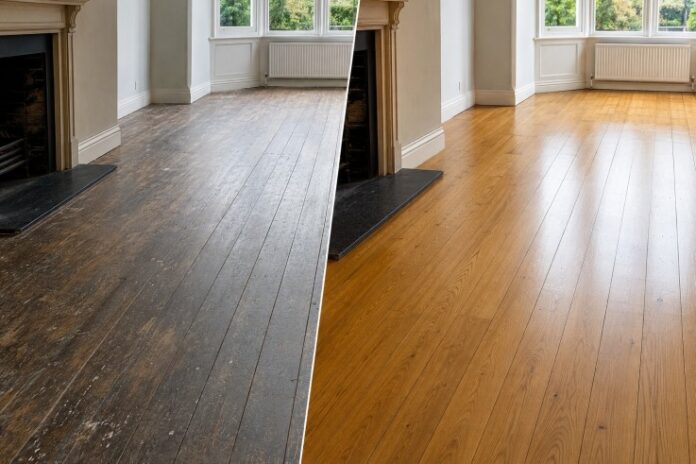

Wooden flooring can be one of the most distinctive features of a property. Original pine boards, engineered oak, decorative parquet and commercial timber floors all bring warmth and character to an interior.
Even a well-installed floor will eventually show signs of use. Scratches, faded finishes, gaps, stains and damaged boards can make an attractive room look tired. In busy Ilford homes, offices, schools, shops and hospitality venues, frequent foot traffic can accelerate this wear.
Professional restoration offers an effective alternative to replacing timber that remains structurally sound. Through inspection, controlled sanding, targeted repairs and a suitable finish, a worn floor can regain a smooth and consistent appearance.
Why Do Wooden Floors Become Worn?
Dirt and grit carried indoors can gradually scratch the protective finish. Moving furniture may leave deeper marks, while sunlight can alter the colour of exposed timber.
Changes in temperature and humidity may also cause boards to expand and contract. Small gaps can become more noticeable, particularly in older pine floors, while loose fixings or subfloor movement may affect stability.
Common signs that a floor may need restoration include:
- scratches, scuffs and furniture marks;
- dull, faded or uneven coatings;
- worn areas in entrances and corridors;
- peeling lacquer or depleted oil;
- small gaps between floorboards;
- loose, split or damaged boards;
- localised staining or rough grain.
Many of these problems affect only the finish or upper layer of timber. If the boards and supporting structure remain sound, restoration can preserve the existing material and avoid complete replacement.
What Does Professional Floor Restoration Involve?
A successful restoration begins with a detailed inspection. The specialist assesses the timber species, board construction, previous coating, level of wear and areas requiring repair. This ensures that the sanding method and finishing products suit the floor’s actual condition.
The assessment is especially important for engineered flooring. Solid timber can often be sanded several times, whereas engineered boards have a real-wood wear layer over a supporting core. Whether they can be restored safely depends on the thickness of that layer.
Before sanding begins, loose boards and raised fixings are secured. Damaged sections may be repaired or replaced, while suitable gaps can be filled. Professional sanding machines then remove the deteriorated coating and a controlled amount of timber. Progressively finer abrasives refine the surface and prepare it for staining, oiling or lacquering.
Modern extraction systems collect much of the sanding dust at source, helping to reduce airborne particles and disruption.
How Does Restoration Vary by Floor Type?
The correct technique depends on the timber, construction and pattern.
Solid and engineered wood: Solid oak, walnut and other hardwood floors can often be restored more than once. Engineered flooring may also be sanded if its wear layer is sufficiently thick.
Parquet flooring: Herringbone, chevron and basket-weave parquet contain blocks laid in different grain directions. Specialist sanding is required to avoid cross-grain scratches and preserve the pattern.
Traditional pine boards: Pine is softer than most hardwoods and requires controlled sanding to prevent depressions and unnecessary material removal.
Commercial floors: Schools, offices, restaurants, gyms and shops require finishes suited to frequent use and regular cleaning. Restoration may combine repairs with a hard-wearing protective system.
How Should the New Finish Be Chosen?
Sanding prepares the timber, but the finishing system determines its final appearance, protection and maintenance needs.
Hardwax oil enhances the natural grain and creates a warm surface. It may also simplify localised maintenance. Lacquer forms a durable protective layer and is often selected for busy homes or commercial interiors. Stains and coloured oils can adjust the tone without concealing the timber’s texture.
The finish should be compatible with the wood and suitable for the room’s use. A lightly used bedroom will have different requirements from a restaurant, school corridor or retail space.
Drying and curing times must also be respected before furniture and regular foot traffic return.
Why Can DIY Sanding Be Risky?
Hiring a sanding machine may appear economical, but producing an even result requires experience. Rental equipment can be difficult to control on soft pine, uneven boards, engineered flooring and patterned parquet.
Common mistakes include:
- deep drum marks or depressions;
- damaged edges and corners;
- visible abrasive scratches;
- incomplete coating removal;
- excessive removal of timber;
- uneven absorption of stains or finishes.
These defects may become more visible after the finish is applied. Removing too much timber can also shorten the floor’s useful life and reduce the possibility of future restoration.
Professional Floor Restoration in Ilford
Homeowners, landlords and businesses considering FloorOx services in Ilford can access sanding, restoration, repairs, gap filling, staining and refinishing for solid, engineered, parquet and softwood floors.
Each project should be planned around the floor’s age, construction, condition and expected use. A property-specific assessment helps establish which repairs are required, whether the floor can be sanded safely and which finish will provide the right balance of appearance and durability.
How Should a Restored Floor Be Maintained?
Correct maintenance protects the new finish and delays the need for further sanding. Dust and grit should be removed regularly, spills cleaned promptly and protective pads placed beneath furniture legs.
Excessive water and harsh cleaning chemicals should be avoided. Oiled floors may require periodic maintenance oil, while lacquered surfaces can sometimes be recoated before wear reaches the exposed timber.
Why Restore Instead of Replace?
A scratched, faded or uneven floor does not necessarily need to be removed. When the boards and subfloor remain structurally sound, professional restoration can remove years of surface wear, repair localised defects and renew the protective finish.
For homes and commercial spaces in Ilford, restoring existing timber can preserve original character, reduce material waste and avoid the cost and disruption of installing a comparable new floor. With accurate assessment, skilled sanding and a suitable finishing system, worn wooden flooring can regain its natural detail, stability and long-term performance.