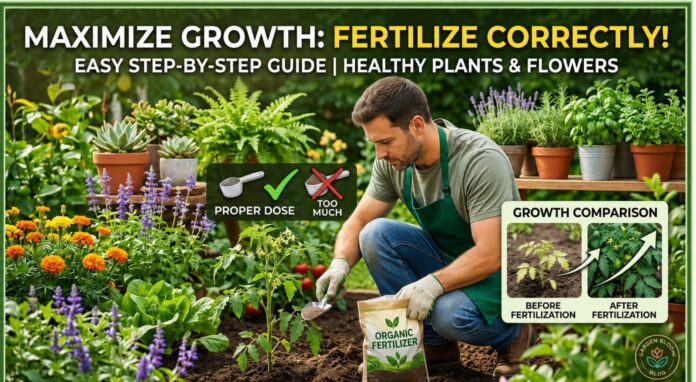

Growing healthy plants isn’t just about watering and sunlight. Fertilizer plays a critical role in providing essential nutrients that plants need to thrive. However, one of the most common gardening mistakes is applying too much or too little fertilizer.
Understanding proper fertilizer dosing can help plants grow faster, produce more flowers and fruits, and maintain strong roots without risking nutrient burn or environmental damage.
In this guide, you’ll learn exactly how much fertilizer plants need, how to calculate the right dosage, and how to avoid common fertilization mistakes.
Why Fertilizer Matters for Plant Growth
Plants require nutrients to complete vital biological processes such as photosynthesis, root development, and flower production. While soil naturally contains nutrients, these reserves gradually become depleted over time.
According to the USDA Natural Resources Conservation Service, healthy soil fertility is essential for sustainable plant growth and crop productivity.
The three primary nutrients found in most fertilizers are:
| Nutrient | Function |
| Nitrogen (N) | Promotes leafy growth |
| Phosphorus (P) | Supports root development and flowering |
| Potassium (K) | Enhances overall plant health and disease resistance |
How Much Fertilizer Do Plants Actually Need?
There is no universal fertilizer amount that works for every plant. The correct dosage depends on several factors:
- Plant type
- Growth stage
- Soil quality
- Fertilizer formulation
- Growing environment
As a general rule, most plants perform best when fertilizer is applied according to manufacturer recommendations.
The University of Minnesota Extension recommends following label directions carefully because fertilizer concentrations vary significantly between products.
General Fertilizer Guidelines
| Plant Type | Typical Frequency |
| Houseplants | Every 2–4 weeks during active growth |
| Vegetables | Every 2–6 weeks depending on crop |
| Flowering Plants | Every 2–4 weeks |
| Trees and Shrubs | 1–2 times annually |
| Lawns | 2–4 applications per year |
Understanding Fertilizer Labels
One of the easiest ways to determine proper dosage is by reading fertilizer labels.
For example:
10-10-10 Fertilizer
This means the fertilizer contains:
- 10% Nitrogen
- 10% Phosphorus
- 10% Potassium
The remaining percentage consists of fillers and secondary nutrients.
The Environmental Protection Agency (EPA) encourages proper fertilizer use to minimize nutrient runoff and environmental pollution.
How to Calculate Fertilizer Amounts
If a label recommends:
1 pound per 100 square feet
And your garden bed measures:
50 square feet
You would apply:
0.5 pounds of fertilizer
Always measure carefully rather than estimating.
Signs You’re Using Too Much Fertilizer
Many gardeners believe more fertilizer means faster growth. Unfortunately, overfertilization often causes the opposite effect.
Common signs include:
- Brown leaf tips
- Yellowing leaves
- Wilting despite adequate watering
- Salt buildup on soil surface
- Stunted growth
- Root damage
Research from Penn State Extension notes that fertilizer burn occurs when excessive salts draw water away from plant roots.
Pros and Cons of Higher Fertilizer Rates
| Pros | Cons |
| Faster initial growth | Root damage |
| Increased foliage | Nutrient burn |
| Temporary greening | Environmental runoff |
| Short-term boost | Reduced flowering in some plants |
Signs Your Plants Need More Fertilizer
Underfertilization can also slow plant development.
Common symptoms include:
- Pale green leaves
- Poor flowering
- Slow growth
- Small fruits
- Weak stems
Before adding fertilizer, consider testing your soil.
The Cooperative Extension System provides resources for soil testing and nutrient management.
Seasonal Fertilizer Dosing Tips
Plants use nutrients differently throughout the year.
Spring
This is usually the most important fertilization period.
Plants begin active growth and benefit from balanced fertilizers.
Summer
Continue feeding actively growing plants but avoid excessive applications during extreme heat.
Fall
Reduce fertilizer use for many ornamental plants as growth slows.
Winter
Many plants enter dormancy and require little or no fertilizer.
The Royal Horticultural Society recommends adjusting fertilizer schedules according to plant growth cycles.
Expert Tips for Proper Fertilizer Application
Always Water Before Fertilizing
Moist soil helps reduce the risk of root burn.
Apply Evenly
Uneven distribution can create nutrient hotspots.
Use Slow-Release Fertilizers
Slow-release products provide nutrients gradually and reduce application frequency.
Test Soil First
A soil test can reveal nutrient deficiencies and prevent unnecessary fertilization.
You can learn more about soil testing from the USDA Natural Resources Conservation Service.
Common Fertilizer Dosing Mistakes
Avoid these frequent errors:
- Applying fertilizer too often.
- Ignoring package instructions.
- Fertilizing dry soil.
- Using the wrong fertilizer type.
- Assuming all plants have identical nutrient needs.
- Applying excessive fertilizer during dormancy.
Correcting these mistakes can significantly improve plant health and reduce wasted fertilizer.
Frequently Asked Questions
1. Can plants survive without fertilizer?
Yes. Many plants can survive in nutrient-rich soil, but fertilizer often improves growth, flowering, and productivity when nutrients become depleted.
2. How often should I fertilize indoor plants?
Most houseplants benefit from feeding every 2–4 weeks during active growth periods.
3. Is liquid fertilizer better than granular fertilizer?
Both can be effective. Liquid fertilizers provide quick nutrient availability, while granular fertilizers often offer longer-lasting feeding.
4. What happens if I accidentally overfertilize?
Flush the soil thoroughly with water and stop fertilizing until the plant recovers.
5. Should I fertilize newly planted plants?
Wait until plants establish roots unless the planting instructions specifically recommend immediate fertilization.
Conclusion
Knowing how much fertilizer plants need is one of the most important skills for successful gardening. The right dosage supports healthy roots, lush foliage, and abundant flowers or harvests, while excessive fertilizer can damage plants and waste money.
Always follow product instructions, consider soil conditions, and monitor plant health before adjusting fertilizer rates. With a balanced approach, you’ll provide exactly what your plants need for steady, sustainable growth.
Ready to improve your garden? Start by checking your fertilizer label, testing your soil, and creating a seasonal feeding schedule tailored to your plants.