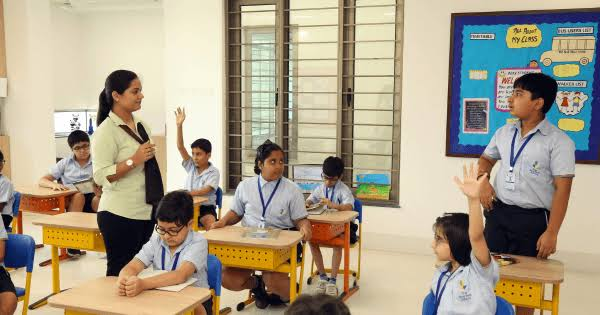

Children remember far more from doing than from listening, and that simple fact shapes how good primary classrooms are actually run. Hands-on learning, where kids build, test, and physically work through a concept rather than just reading about it, strengthens problem-solving, memory, focus, and communication skills all at once. Research on active learning consistently shows better retention and deeper understanding compared to lecture-style teaching alone. For parents comparing schools, how much genuine hands-on time a classroom offers is one of the clearer signals of teaching quality you can actually observe during a visit.
This is not a minor detail either. Once you start comparing Primary Schools in Thailand, you will notice that the ones with strong reputations tend to build hands-on activity into daily lessons rather than treating it as an occasional science fair project.
Hands-on learning helps primary-age children develop stronger problem-solving, memory, and focus by engaging multiple senses and letting them apply concepts directly rather than absorbing them passively. Studies on active learning show noticeably better retention compared to lecture-based teaching. In practical terms, this means classrooms that build, experiment, and test ideas tend to produce children who understand concepts more deeply and recall them more easily later on.
Why Hands-On Learning Matters So Much At Primary Age
Young children are still developing the abstract thinking needed to fully grasp concepts from text or explanation alone. Physically manipulating objects, testing an idea, and seeing the result firsthand gives a concrete anchor for abstract lessons, which is exactly why the early primary years are such a critical window for this kind of teaching.
Research on active learning has found that students retain significantly more information when they physically practise a concept compared to when they only hear about it. That gap widens further when children get to apply what they have learned almost immediately after being taught it, which is precisely how well-run hands-on lessons are structured.
What Skills Hands-On Learning Actually Builds
It is easy to assume hands-on learning is mainly about keeping children entertained, but the skill development runs much deeper than that. A well-designed hands-on activity builds several skills simultaneously rather than isolating them into separate lessons.
| Skill Area | What Hands-On Learning Builds | Example Classroom Activity |
| Problem-solving | Working through steps to reach a solution independently | Building a simple machine or structure with limited materials |
| Focus and self-regulation | Planning, patience, and managing frustration | Multi-step science or coding projects |
| Communication | Explaining reasoning and working with others | Group projects with a shared outcome |
| Memory and retention | Stronger recall through multi-sensory engagement | Physical experiments tied to a lesson concept |
How This Looks Inside A Primary Classroom
A hands-on primary classroom does not need elaborate equipment to work well, though schools with dedicated project spaces do tend to offer more variety. At PBISS, younger students work through activities like hydroponic gardening, building projects, and simple coding tasks, giving lessons a physical, applied dimension rather than keeping everything confined to a worksheet.
Common Hands-On Activities In Primary Years
● Science experiments tied directly to that week’s lesson topic
● Building or construction tasks using simple materials
● Gardening or growing projects that teach patience and observation
● Early coding and robotics activities suited to younger age groups
What To Look For When Comparing Schools
International primary schools Thailand offers vary quite a bit in how much genuine hands-on time is built into a typical week, so it is worth asking directly rather than assuming from a prospectus. Request to see an actual lesson in progress during a school visit, since a classroom that talks about hands-on learning and one that actually practises it daily can look very different once you are standing inside it.
Among the best primary schools in Thailand, the strongest ones tend to treat hands-on time as core curriculum rather than an extra activity squeezed in when time allows. That distinction affects how consistently children build these skills across a full school year, not just in the odd standout lesson.
Choosing The Right Fit For Your Child
Private primary schools Thailand families choose often have smaller class sizes, which naturally supports more hands-on teaching since a teacher can realistically manage individual projects without losing control of the room. Larger classes can still offer hands-on learning, but it usually takes more deliberate planning to pull off well.
For expat families specifically, English-speaking primary schools Thailand has to offer are worth prioritising if you want hands-on activities explained and discussed entirely in a language your child is comfortable with, since instructions for building or experimenting can get confusing fast in an unfamiliar language.
British Curriculum Schools And Hands-On Teaching
British primary schools Thailand runs through the Cambridge Primary framework typically build inquiry and project-based tasks into the curriculum by design, not as an afterthought. This structure tends to make hands-on learning a consistent thread through the school week rather than something dependent on an individual teacher’s personal style.
FAQs
1. What age is best to start hands-on learning?
Hands-on learning benefits children from the earliest primary years onward, since young children rely heavily on physical, sensory experience to grasp new concepts.
2. Does hands-on learning replace traditional teaching methods?
No, it works best alongside structured teaching, giving children a chance to apply what they have just learned rather than replacing lessons entirely.
3. How can parents tell if a school genuinely uses hands-on teaching?
Ask to observe an actual lesson during a school visit, since a classroom that practises hands-on learning daily looks noticeably different from one that only does it occasionally.
4. Does hands-on learning help with academic subjects like maths and science?
Yes, physically working through maths and science concepts has been shown to improve problem-solving and deepen understanding compared to instruction alone.
5. Is hands-on learning only useful for practical subjects?
No, it can support language, reading, and even social skills when lessons are designed around active participation rather than passive listening.
6. What skills does hands-on learning build besides academics?
It strengthens focus, communication, teamwork, and self-regulation, all of which support a child’s overall development beyond exam results.
Final Thoughts
Hands-on learning is not a passing trend in education, it reflects how young children genuinely absorb and retain new concepts. Schools that build this into daily lessons, rather than treating it as an occasional extra, tend to produce children who understand material more deeply and hold onto it longer. PBISS builds this kind of applied, project-based learning into its primary years, giving children a foundation that goes well beyond memorising facts for a test.