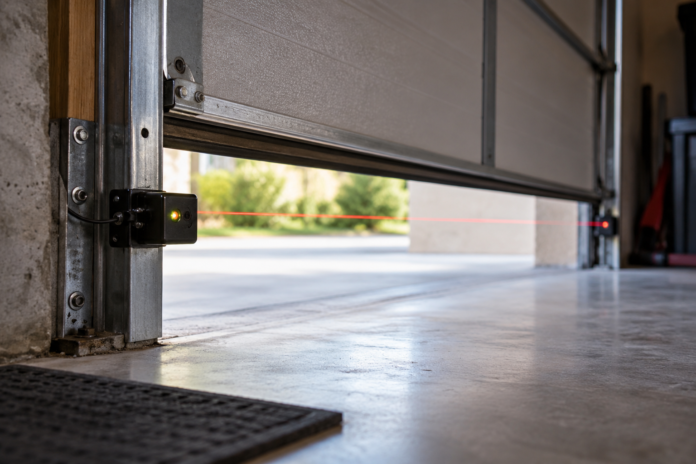

Introduction to Garage Door Safety Mechanisms
Think about your garage door. It moves a lot of weight every day. What if a child, a pet, or even your car is in its way? Accidents can happen quickly. This is why garage door safety sensors are so important. They act like watchful eyes, keeping homes in {CITY_STATE} and everywhere else safe. These devices stop serious accidents. They protect your loved ones and your property. We know how key these sensors are, and we want to help you understand how they work.
To learn more about keeping your entire garage door system in top shape, explore our main guide on garage door care. If you need help with your sensors, reach out for expert garage door safety sensor assistance.
Since 1993, all electric garage door openers sold in the U.S. must have safety sensors. This rule came from federal safety standards, like UL 325, which mandates entrapment protection. This change has cut down injuries and deaths from garage door accidents by over 90%, a remarkable achievement that, by September 2026, has safeguarded countless lives for over three decades. These sensors are key safety tools. They work by finding anything in the door’s path. If they sense an object, they make the door stop and open again automatically. This guide will show you what these sensors look like, how they find problems, how to fix common issues, and how to keep them working well.
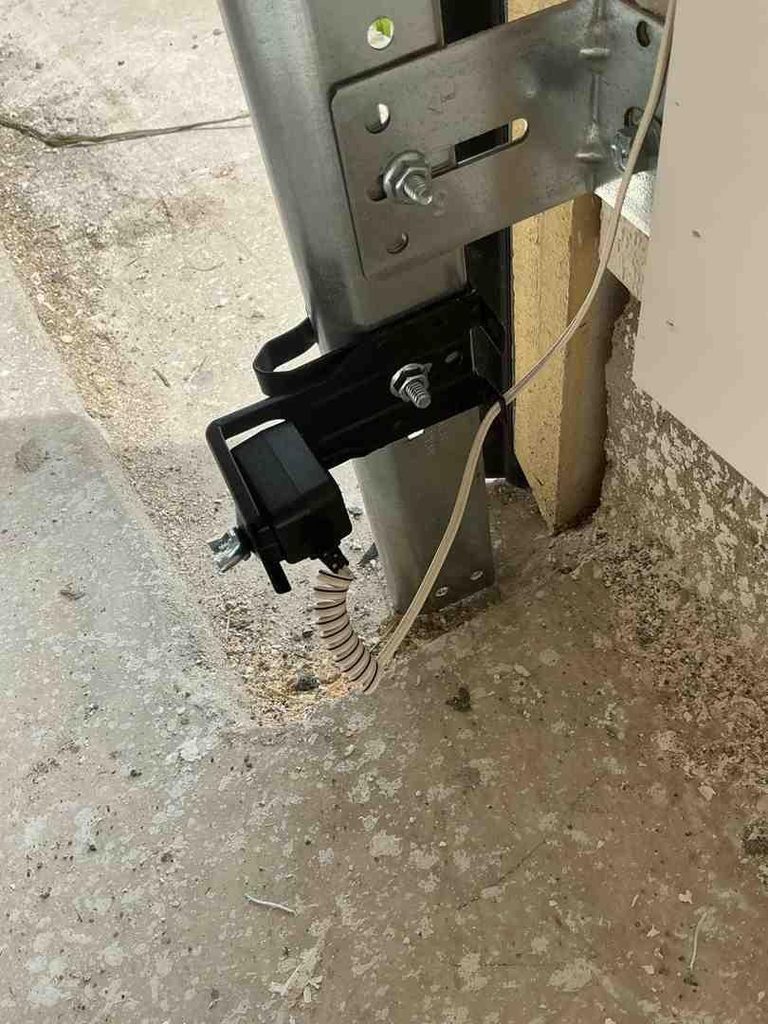
The core function of garage door safety sensors is to provide an invisible barrier across the door’s opening. Should this barrier be broken while the door is closing, the system’s logic board immediately triggers the automatic reversal mechanism. This swift response is crucial for preventing serious injury or damage. Without these mandated safety features, the inherent danger of a heavy, moving garage door would be significantly higher. Understanding their operation is not just about convenience; it’s about ensuring the safety of everyone who uses or passes near your garage door.
How Photoelectric Safety Sensors Operate and Transmit Signals
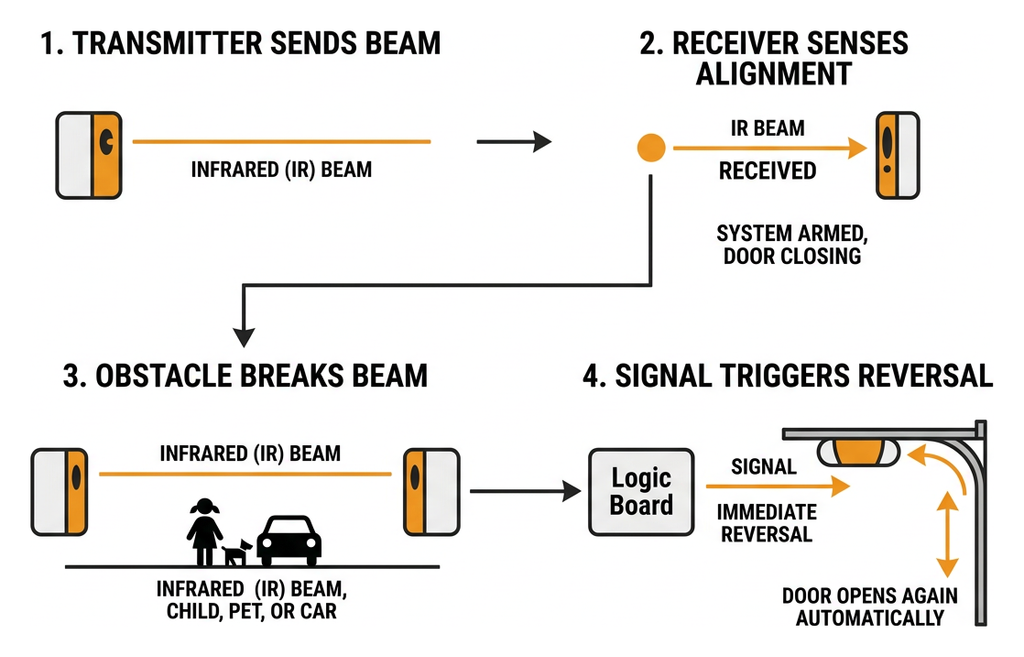
The most common type of garage door safety sensor, found in approximately 99% of residential garages, is the photoelectric sensor. These systems typically consist of two small units, often referred to as “eyes,” mounted on either side of the garage door track, usually four to six inches off the ground. One unit acts as a “sender” or “transmitter,” while the other acts as a “receiver.” The sender emits an invisible infrared (IR) beam of light directly across the garage door opening to the receiver.
As long as the receiver detects this continuous IR beam, it sends an “all clear” signal to the garage door opener’s logic board. This signal indicates that the path is unobstructed, allowing the door to close normally. However, if anything breaks this invisible beam—a child, a pet, a car bumper, or even a cardboard box—the receiver immediately loses the signal. This interruption is instantly communicated to the logic board, which then commands the garage door motor to stop its downward movement and reverse direction, lifting the door back to its fully open position. This reversal process is incredibly fast, often taking less than a second from the moment of beam interruption.
Physics of the Infrared Beam and Circuit Operation
At the heart of these sensors’ operation is the precise physics of the infrared beam. This beam operates on a dedicated wavelength, making it largely unaffected by normal garage lighting or even direct sunlight, although extreme conditions can sometimes cause interference. Many modern systems, especially those from leading manufacturers, don’t just send a steady IR beam. Instead, they use a pulsed DC voltage signal. This pulsing, often occurring every 6 to 6.5 milliseconds with brief off-periods, helps prevent interference from other IR sources and confirms to the opener that the signal is indeed from its designated sensor.
The two sensors are typically wired in parallel to the opener unit using low-voltage wiring, often just two wires. The opener supplies power, usually around 6V DC. The receiving sensor doesn’t just detect the beam; it actively modulates the electrical characteristics of the circuit when the beam is present. For instance, some systems work by the receiver pulling the voltage low (or shorting the power lines) when it detects the beam. If the beam is blocked, this voltage drop ceases, and the opener’s logic board detects this change. This method is a form of “missing pulse detection” for the opener’s internal circuitry. The opener’s logic board is sophisticated enough to interpret these voltage changes or the absence of the modulated signal as an obstruction, triggering the door’s reversal. This intricate electrical operation ensures reliable safety detection.
Different Types of Garage Door Sensor Systems
While photoelectric sensors are the most prevalent, several other types of safety mechanisms exist, each with its own functional nuances:
- Photoelectric Sensors (Through-Beam): As described, these use separate transmitter and receiver units. They are highly effective and the industry standard for residential garage doors.
- Retroreflective Sensors: Unlike through-beam photoelectric sensors, retroreflective sensors combine the transmitter and receiver into a single unit. They send out an IR beam that bounces off a special reflector placed on the opposite side of the garage door opening. If the reflected beam is interrupted, the sensor signals an obstruction. These are less common in residential garage doors but are sometimes used in commercial or industrial settings.
- Safety Edge Sensors: These are pressure-sensitive strips installed along the bottom edge of the garage door. When the door makes contact with an obstruction, the strip compresses, activating a switch that signals the opener to reverse. These are more common in commercial applications or older residential systems.
- Mechanical Auto-Reverse (Pre-1993): Before the 1993 federal mandate, garage door openers relied primarily on mechanical auto-reverse. These systems would reverse the door if they encountered significant resistance during closure. While better than no safety feature, they were less sensitive and slower to react than modern photoelectric sensors, leading to a higher risk of injury.
- Ultrasonic Systems / Camera-Based Systems: While not widely adopted as primary safety sensors for residential garage doors due to cost and complexity, some advanced systems incorporate ultrasonic sensors or even camera-based object detection for enhanced safety or smart home integration. These technologies could potentially become more common in the future.
The market for safety edge sensors alone is projected to reach $281 million by 2025, while the broader market for garage door tilt sensors was valued at USD 0.45 billion in 2024. These figures underscore the significant and growing investment in garage door safety and smart technology.
Sensor Type Description Advantages Disadvantages Photoelectric Separate transmitter and receiver units create an invisible IR beam across the opening. Highly reliable, sensitive, widely adopted, cost-effective. Can be misaligned, susceptible to dirt/dust, direct sunlight interference. Retroreflective Single unit sends beam to a reflector on the opposite side; detects interruption of reflected beam. Easier wiring (only one side needs power), less prone to misalignment. Reflector can get dirty or damaged, less common for residential use. Safety Edge Pressure-sensitive strip on the bottom of the door; reverses on physical contact with an obstruction. Provides direct contact detection, good for irregular obstructions. Requires physical contact to activate, more complex installation, higher cost. Mechanical Door reverses upon encountering significant resistance (pre-1993 standard). Simple, no external sensors. Slower reaction time, requires physical impact, less sensitive, higher injury risk. Common Causes of Sensor Malfunction and Failure Modes
Despite their robust design, garage door safety sensors are not immune to issues. Understanding the common reasons they malfunction can help you diagnose problems quickly and efficiently. When sensors fail, the garage door opener typically prevents the door from closing, often indicated by flashing lights on the opener unit or the sensors themselves.
Some of the most frequent culprits behind sensor problems include:
- Optical Obstruction: Even a small object like a leaf, cobweb, or piece of debris can block the infrared beam.
- Misalignment: The most common issue. If the sending and receiving units are not perfectly aimed at each other, the beam won’t connect, and the system will register an obstruction. This often happens if a sensor is bumped or its mounting bracket loosens.
- Dirty Lenses: Dust, dirt, moisture, or even paint overspray on the sensor lenses can obscure the infrared beam, preventing it from reaching the receiver.
- Wire Damage: The low-voltage wires connecting the sensors to the opener can be chewed by rodents, pinched, cut, or corroded, leading to an intermittent or complete loss of signal.
- Direct Sunlight Interference: While designed to resist it, intense, direct sunlight shining into the receiving lens at certain times of day can sometimes overwhelm the sensor, causing it to “think” the beam is broken.
- Power Surges: Although less common, a power surge can sometimes damage the delicate electronics within the sensors or the opener’s logic board.
- Loose Brackets: Over time, the screws or bolts holding the sensor brackets to the garage door track can loosen, allowing the sensors to shift out of alignment.
Diagnostic Techniques and Good Golly Safety Sensor Insights
When your garage door won’t close and the safety sensors appear to be the culprit, a systematic approach to diagnosis can save you time and frustration.
- Visual Inspection: Start by visually inspecting both sensor units. Look for any obvious obstructions, dirt on the lenses, or loose wires.
- The Cardboard Box Test: This is a quick and effective way to confirm sensor functionality. Place an empty cardboard box in the path of the closing door, ensuring it will interrupt the sensor beam. Attempt to close the door. If the sensors are working correctly, the door should stop and reverse before making contact with the box. If it doesn’t, do not attempt to close the door further until the issue is resolved.
- LED Diagnostics: Most sensors have indicator lights (LEDs). Typically, one sensor will have a steady green light (indicating power) and the other a steady amber or red light (indicating beam reception). If an LED is off, blinking, or dim, it signals a problem. For example, a blinking amber light on the receiver often means it’s not receiving a consistent beam. The opener unit itself may also flash its light a certain number of times to indicate a sensor error.
- Wire Continuity Check: If LED lights are off or erratic, and visual inspection yields no answers, you might need a multimeter to check for continuity in the sensor wires. Disconnect the wires from the opener and test them for breaks.
- Voltage Check: Using a multimeter, you can also check the voltage supplied to the sensors from the opener. A reading significantly lower than the expected 6V DC could indicate an issue with the opener’s power supply or a short in the wiring.
For more in-depth troubleshooting and practical advice on maintaining your garage door’s safety systems, you can find valuable resources and Good Golly safety sensor insights that delve into these topics further.
Environmental and Electrical Interference
Beyond physical obstructions and damage, environmental and electrical factors can also play a role in sensor malfunctions.
- Sunlight Blinding: As mentioned, strong direct sunlight can sometimes “blind” the receiving sensor, particularly if it hits the lens at a low angle. Repositioning the sensor slightly or adding a small shade can sometimes mitigate this.
- Radio Frequency Interference (RFI): This is a less common but significant issue. Strong radio signals, particularly from nearby AM radio stations, can interfere with the modulated digital signals used by modern garage door safety systems. This can cause erratic behavior or complete sensor failure. In some rare cases, an RFI trap installed on the sensor wires can resolve this specific type of interference.
- Dust Buildup: Over time, dust, pollen, and even fine sawdust (if you use your garage as a workshop) can accumulate on the sensor lenses, gradually obscuring the beam.
- Terminal Corrosion: In humid environments, the electrical terminals where the sensor wires connect to the opener or the sensors themselves can corrode, leading to poor electrical contact and signal loss.
- Mechanical Vibration: Constant vibration from heavy traffic, nearby construction, or even the garage door’s own operation can cause sensors to subtly shift out of alignment over time.
Essential Maintenance and Good Golly Safety Sensor Insights
Regular maintenance is key to ensuring your garage door safety sensors remain fully functional and reliable. Proactive steps can prevent frustrating malfunctions and uphold the safety standards of your home.
Step-by-Step Sensor Alignment and Cleaning
- Power Off: Always begin by unplugging your garage door opener or turning off its dedicated circuit breaker to prevent accidental operation during maintenance.
- Clean the Lenses: Gently wipe the lenses of both the sending and receiving sensors with a clean, soft microfiber cloth. Avoid using harsh chemicals or abrasive cleaners, as these can scratch or damage the plastic. If there’s stubborn grime, a slightly damp cloth followed by a dry one will suffice.
- Check Mounting Height: Ensure both sensors are mounted at the correct height, typically between four and six inches off the garage floor. This height is critical for detecting small children or pets.
- Align the Sensors:
- Visual Check: Look at the indicator lights on both sensors. The receiving sensor’s light should be steady (not blinking), indicating it’s receiving a clear beam.
- String Line Method: For precise alignment, you can use a string. Tie one end to the mounting bracket of one sensor and stretch it taut to the bracket of the other sensor. This will give you a visual reference for perfect horizontal alignment.
- Pivot Adjustment: Most sensor brackets allow for slight pivoting. Gently adjust the angle of the sensors until the receiving sensor’s indicator light glows steadily. Tighten any wing nuts or screws on the brackets to secure them in place once aligned.
- Perimeter Clearance: Ensure the area around the sensors is clear. Remove any stored items, tools, or debris that could obstruct the beam or prevent proper sensor adjustment.
Long-Term Care and Good Golly Safety Sensor Insights
Beyond routine cleaning and alignment, a few long-term practices can contribute to the longevity and reliability of your safety sensors:
- Wiring Inspection: Periodically inspect the low-voltage wiring running to the sensors. Look for fraying, cuts, or areas where the wire might be pinched or exposed. Repair or replace damaged sections promptly.
- Weatherproofing: If your sensors are exposed to the elements, ensure their connections are weatherproofed to prevent corrosion.
- Bracket Stabilization: If you notice that your sensor brackets frequently shift, consider reinforcing their mounting points or replacing damaged brackets.
- Safety Audit: Once or twice a year, perform a comprehensive safety audit of your entire garage door system, including the sensors, the force settings, and the manual release mechanism.
- Routine Testing: Make testing your sensors a monthly habit using the cardboard box method. This ensures they are always ready to react when needed.
When to Call a Professional Garage Door Technician
While many sensor issues can be resolved with basic troubleshooting and maintenance, there are times when calling a professional garage door technician is the safest and most efficient course of action. You should consider professional help if:
- Basic Troubleshooting Fails: You’ve tried cleaning, aligning, and checking wires, but the problem persists.
- Concealed Wiring Faults: If you suspect a wire break inside the wall or conduit, a professional has the tools and expertise to diagnose and repair it without causing further damage.
- Logic Board Failure: If the opener’s main logic board is faulty, it may not be correctly interpreting signals from the sensors or providing them with adequate power. This is a complex repair best left to experts.
- Counterbalance Spring Fatigue: While not directly a sensor issue, if your garage door’s springs are worn or broken, the door can become unbalanced and put undue strain on the opener, potentially affecting sensor operation or causing other safety hazards. Professionals can safely address spring-related problems.
- Motor Replacement: If the opener motor itself is failing, it can lead to erratic door operation that might seem like a sensor issue.
- Structural Track Misalignment: If the garage door tracks are bent or misaligned, it can cause the door to bind, creating an unsafe condition that even perfectly working sensors cannot fully compensate for.
- Age of the Opener: If your garage door opener is 15-20 years old and experiencing multiple problems, including sensor issues, it might be more cost-effective and safer to replace the entire unit rather than constantly repairing it. Professionals can advise on modern, compliant replacements.
Frequently Asked Questions About Garage Door Sensors
Why is my garage door sensor light blinking and the door won’t close?
A blinking sensor light, particularly on the receiving sensor, is the most common indicator of a problem. This typically means the sensor is not consistently detecting the infrared beam from its counterpart. The primary reasons for this include:
- Misalignment: The sensors are not perfectly aimed at each other.
- Dirty Lens: Dust, dirt, or debris is blocking the beam.
- Path Obstruction: Something is physically in the way of the beam (e.g., a broom, a spiderweb, a piece of cardboard).
- Direct Sunlight: Intense sunlight is overwhelming the receiving sensor.
- Damaged Wiring: A break or short in the low-voltage wires.
Your garage door opener’s main light may also flash a specific number of times (a diagnostic flash code) to indicate a sensor error, so consult your opener’s manual for its specific codes.
At what height should garage door safety sensors be installed?
Garage door safety sensors should be installed precisely four to six inches off the ground. This specific height is critical and mandated by federal safety regulations (UL 325). The reason for this precise measurement is to ensure that the sensors can detect small objects, children, or pets that might be in the path of the closing door. If sensors are mounted too high, a small child or pet could pass underneath the beam undetected, leading to a severe entrapment hazard. Most sensors come with brackets designed to facilitate installation at this standard height, typically attaching to the garage door track.
Can an automatic garage door operate safely without sensors?
No, an automatic garage door cannot operate safely without properly functioning safety sensors. Attempting to bypass or disable these sensors creates an extremely dangerous situation and is a direct violation of federal safety standards established since 1993. Without sensors, the garage door would lack its primary mechanism for detecting obstructions, significantly increasing the risk of serious injury or fatality from entrapment.
Modern garage door openers are designed with safety as a priority. If the sensors are disconnected, malfunctioning, or the beam is continuously blocked, the opener’s logic board will typically prevent the door from closing. In most cases, it will only allow the door to close if you hold down the wall button continuously, bypassing the automatic safety features, which is intended for emergency use only and not for regular operation. This “opener lockout” feature is a built-in safety measure to prevent unsafe operation. Therefore, operating a garage door without working sensors is not only a safety hazard but also a code violation, and we strongly advise against it.
Conclusion
Garage door safety sensors are unsung heroes of home safety, diligently protecting our loved ones and property from the immense power of a moving garage door. Since their mandatory inclusion in 1993, these small devices have dramatically reduced accidents, transforming garage doors into much safer components of our homes. Understanding how they work—from the invisible infrared beam and its pulsed signals to the logic board’s rapid reversal command—empowers us as homeowners.
By performing routine maintenance, such as cleaning lenses and ensuring proper alignment, we can significantly enhance their system reliability and prevent common malfunctions. While many issues are simple to resolve, knowing when to call a professional garage door technician for complex problems ensures that our garage door systems remain in optimal, safe working order. Proactive maintenance and a clear understanding of these essential devices provide invaluable reassurance, ensuring the automatic reversal mechanism is always ready to act when it matters most.