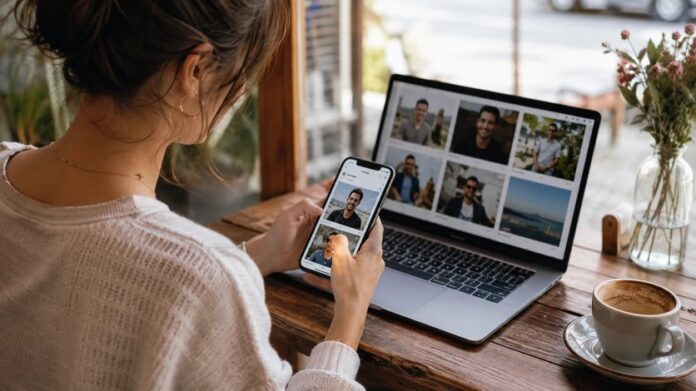

Dating profile pictures used to be a simple sorting problem. You picked the photo where your face looked clear, avoided the one with bad lighting, maybe asked a friend which picture felt less awkward, and called it done.
That version of online dating is fading. Photos now do more than show what someone looks like. They suggest how current a profile is, whether the person seems socially comfortable, what kind of life they might be inviting someone into, and whether the profile feels real enough to trust.
That makes dating profile pictures one of the most important parts of an online dating profile. Pew Research Center has reported that three in ten U.S. adults have used a dating site or app, and usage is much higher among adults under 30. On apps built around quick decisions, people rarely study every prompt before forming an impression. They react to the first few photos, then decide whether the rest of the profile is worth reading.
AI is changing that process, but not in the way many people expected. The strongest shift is not toward fake-looking portraits or fantasy versions of a person. It is toward better photo selection, cleaner visual storytelling, and more realistic ways to build a profile when someone does not already have a camera roll full of usable photos.
The first photo has become a filter
Most dating apps still work like a first-impression machine. A profile may include prompts, voice notes, interests, and verified badges, but the first image carries the most pressure.
Hinge’s Top Photo feature, updated in June 2026, uses machine learning to predict which profile photo is most likely to get a Like and can put that photo first. Tinder’s Photo Selector uses AI to help identify profile photos from a user’s camera roll based on signals such as lighting and composition. These features say something useful about where dating apps are going: photos are no longer treated as decoration. They are treated as performance signals.
That does not mean every photo should look optimized. In fact, that often backfires. A first photo that looks too polished can make someone hesitate. A blurry bathroom selfie does the same for a different reason. The middle ground is harder: clear, recent, approachable, and specific enough to feel like a real person.
That is why the best dating profile pictures in 2026 tend to look less like formal portraits and more like believable lifestyle photos. A coffee shop shot, an outdoor walk, a casual city photo, a hobby scene, a clean face photo, and one full-body image usually tell a more complete story than six versions of the same selfie.
AI is moving from editing to selection
For years, the default photo upgrade was editing. People brightened a picture, removed a distracting background, sharpened a face, or used a filter. That helped with surface quality, but it did not solve the bigger problem: most people simply do not have enough varied photos.
A profile built from three selfies and one old group picture can make a person look less interesting than they are. The issue is not their personality. It is the narrow evidence the profile gives. No one can infer much from a car selfie, a cropped wedding photo, and a dim picture from five years ago.
This is where AI dating photos have found a practical role. A tool can take current selfies and generate different realistic scenes, giving someone more options to test without booking a photographer or staging a full shoot. The useful version of this is restrained. It keeps the face recognizable, avoids plastic skin, and creates scenes that could plausibly belong in that person’s life.
For example, DatePhotos AI creates AI dating photos from user selfies for Tinder, Bumble, and Hinge, with sets across 40+ lifestyle scenes and a realness score that helps users filter out images that look too synthetic. Used carefully, that kind of tool is less about pretending to live a different life and more about solving the “I never have good photos of myself” problem.
Authenticity matters more because AI is visible now
The average app user has become better at spotting suspicious images. Over-smoothed skin, inconsistent hands, strange teeth, glossy lighting, and backgrounds that feel too perfect can make a dating profile feel less trustworthy.
Hinge has also been blunt about the risk of AI being used as a substitute for real presence. Its 2026 AI dating guidance encourages people to treat AI as support, not as a replacement for authenticity. That advice is especially relevant for photos. A profile picture does not need to show every flaw, but it does need to survive the first date test: will this person still look like the person in the images?
That is the line more people are learning to draw. Better lighting is fine. A cleaner background is fine. A stronger mix of scenes is fine. But changing facial structure, aging yourself down, inventing a body type, or using photos that feel disconnected from your real life creates a mismatch that apps, matches, and dates will notice.
The strongest dating profile pictures are improved, not imaginary.
A good profile now needs a photo system
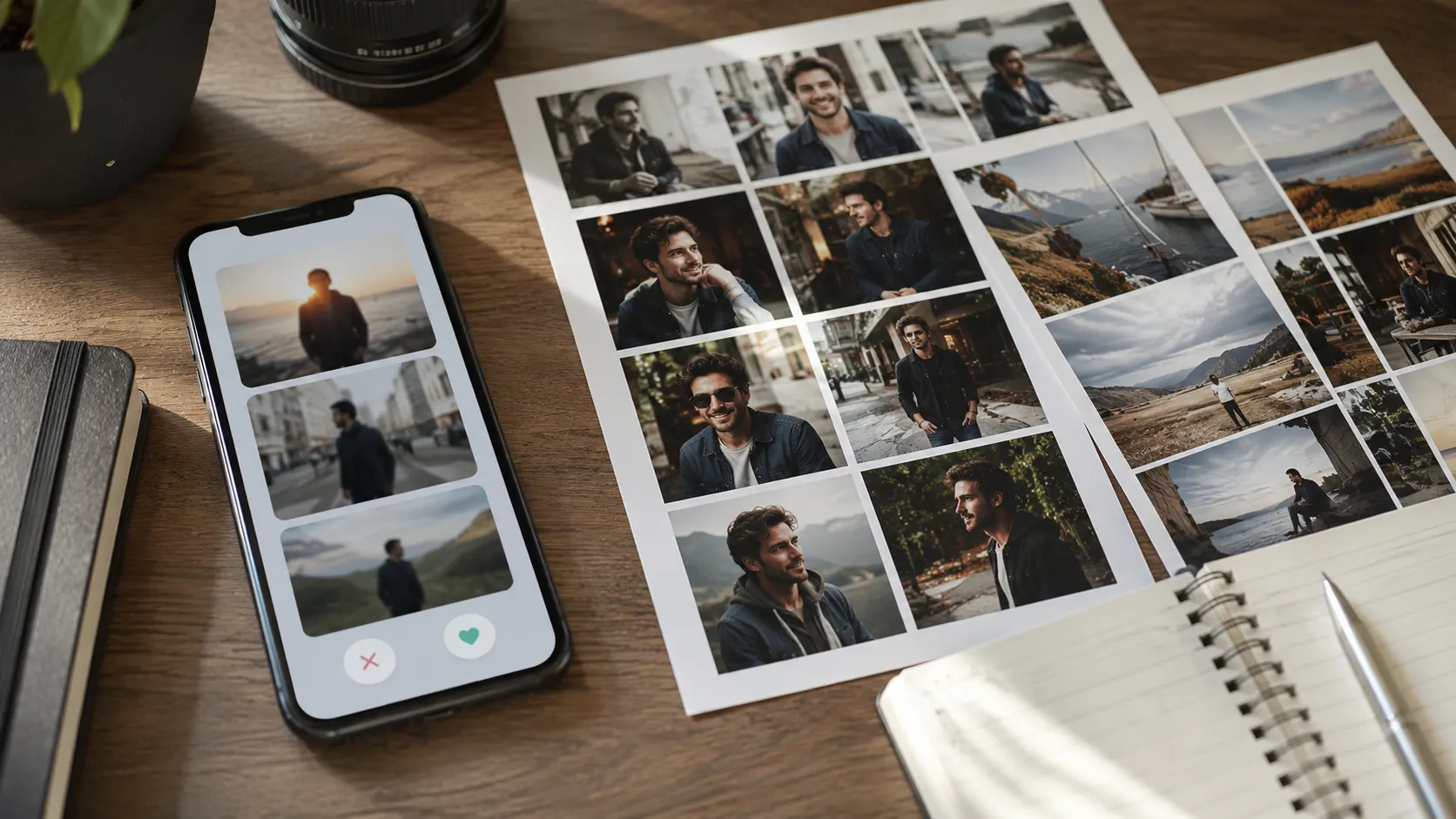
One good picture is rarely enough. Dating apps crop images differently, show profiles in different contexts, and reward different kinds of attention. Tinder tends to put more pressure on fast visual impact. Hinge gives more room for story and prompts. Bumble often benefits from photos that feel confident but approachable.
That is why the best profiles are starting to look more intentional as a set. The first photo answers, “What do you look like?” The second and third answer, “What kind of person are you?” The rest add trust: full-body context, everyday style, hobbies, travel, pets, work-adjacent confidence, or social warmth.
This does not require a perfect life. It requires variety. A person who hikes once a month should not build a whole profile around mountains, but one outdoor photo can say more than another mirror selfie. Someone who likes coffee shops, comedy nights, bookstores, gyms, beaches, or city walks can use those scenes to make the profile feel easier to respond to.
The shift is subtle but important. Dating profile pictures are becoming less about looking flawless and more about giving someone enough visual context to start a conversation.
The old photos are often the biggest problem
Many profiles fail because the photos are stale. People keep using the same pictures because they technically still look like them, even though the haircut, style, city, or confidence level has changed.
That matters. Outdated photos create small moments of doubt. A match may not consciously think, “This looks old,” but they can sense when a profile feels frozen. The clothes look from another era. The lighting feels like an old phone. The same vacation shot has appeared for years. The profile starts to feel unattended.
AI has made refreshing a profile easier, but the better habit is not to regenerate an entire identity every month. It is to keep the profile visually current. Use recent source photos. Choose scenes that match how you actually spend time. Rotate weak images out. Avoid photos that would make a date feel misled.
The best AI-assisted profile still needs human judgment. A tool can produce options. It cannot decide which version of you feels most honest.
What this means for online dating in 2026
Dating profile pictures are moving into a new phase. They are still personal, but they are also increasingly shaped by recommendation systems, photo-ranking features, AI tools, and users who know what over-edited images look like.
That creates a strange tension. People want better photos, but they do not want to feel tricked. They want a profile that stands out, but not one that looks staged. They want help, but they still want the person on the screen to be the person who shows up.
The practical answer is not to avoid AI altogether. It is to use it with limits. Keep the face accurate. Keep the scenes plausible. Keep the photo set varied. Keep the first image clear. Remove anything that looks fake, even if it is flattering.
In that sense, AI is not replacing dating profile pictures. It is changing the standard for them. The winners will not be the profiles that look the most polished. They will be the profiles that look current, believable, and easy to start a conversation with.