
Key Takeaways
- Reliable workflows reduce avoidable delays, rework, and manual strain.
- Feed delivery and waste removal should be planned as connected barn systems.
- Automation delivers the most value when it fits a clear need and the farm layout.
- Controls and sensors should make tasks easier to monitor and adjust.
- Phased upgrades can control risk, cost, and training demands.
- Worker safety, animal comfort, maintenance, and backup plans remain essential.
Reliable dairy workflows are not simply about finishing chores faster. They make daily work more predictable, help teams respond to problems earlier, and support cleaner, safer barns. Farms considering custom farm automation systems should begin with the process itself, not the equipment list. The best solution is one that removes a real bottleneck without adding unnecessary complexity. Feed delivery, manure handling, maintenance, and animal observation are closely connected. A delay in one area can create extra labor, uncomfortable cows, cluttered alleys, or missed management tasks elsewhere. A dependable workflow gives workers more time to focus on herd health and sound operational decisions.
Why Reliable Workflows Matter
Small disruptions add up quickly on a dairy. A missed feed push, a slow conveyor, a scraper that stops midway through an alley, or repeated trips for ingredients can push every later task behind schedule. Consistency helps protect labor time, barn cleanliness, record keeping, and animal comfort. It also makes unusual changes easier to recognize because the normal routine is clear.
How To Find Daily Farm Bottlenecks
Before changing equipment, observe a typical day from start to finish. Time each step, ask the people doing the work where they are frustrated, and note every place where materials, equipment, or workers wait. For example, a farm may assume its mixer is too slow, only to learn that the actual delay comes from moving feed between distant buildings.
- Track loading, mixing, delivery, and cleanup time.
- Record clogs, spills, repeated trips, and hand-moving tasks.
- Review when alleys, pumps, scrapers, and conveyors need attention.
- Identify jobs that create the most physical strain or safety risk.
Building A More Consistent Feed Routine
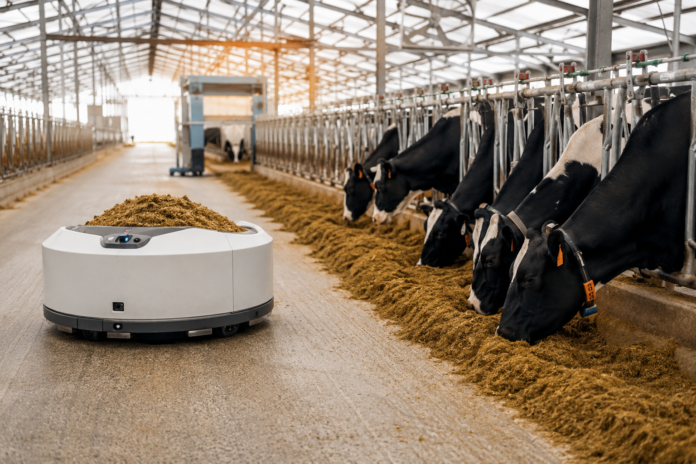
Consistency in feed timing, ingredient handling, ration mixing, and bunk management can reduce shrink and make intake changes easier to spot. The right approach depends on herd size, ration type, travel distance, available labor, and barn design. Mixers, conveyors, feed carts, pushers, and automated delivery tools can all play a role, but no single option fits every operation.
Practical Feed Workflow Checklist
- Set clear loading, mixing, and delivery times.
- Keep high-use ingredients accessible and protected from spoilage.
- Reduce unnecessary travel across the farm.
- Check for uneven mixing, separation, and leftover feed.
- Review feed shrink on a regular schedule.
Improving Waste Removal And Barn Conditions
Timely manure removal supports cleaner walking surfaces, safer employee movement, and better barn conditions. Review the full waste path, including scrapers, collection points, pumps, conveyors, pits, storage, separation, and application planning. Fixing one restricted point is not enough if it creates a backup farther downstream. Consider freeze protection, cleaning access, overflow risk, and how the system will operate during an emergency.
Using Controls, Sensors, And Farm Data
Controls, timers, sensors, and alerts should turn routine information into quicker decisions, not create more screens to watch. Useful measures include runtime, motor starts, temperature or moisture readings, feed delivery timing, maintenance alerts, and power usage. USDA research on precision dairy technologies found higher average net returns among adopters of robotic milking and farms using multiple precision tools. However, each farm still needs to evaluate its own costs, labor needs, and management capacity.
Keeping People And Animals At The Center
Automation should support skilled workers, not remove human judgment. People still inspect equipment, notice changes in cow behavior, respond to alarms, and manage unexpected conditions. A recent university summary of dairy automation research also emphasizes that technology changes labor needs rather than eliminating them, especially for monitoring, repairs, and data review. Before installation, review emergency stops, guarding around moving parts, clear service access, safe walkways, worker training, and manual procedures for power or equipment failure. Animal flow, noise, floor conditions, and access to feed and water should be evaluated as carefully as mechanical performance.
Measuring Costs, Savings, And Payback
Judge a system by total operating value rather than purchase price alone. Include installation, electrical or structural work, training, software, replacement parts, energy use, service agreements, and possible downtime. Then track hours saved, reduced feed shrink, fewer stoppages, cleaner work areas, and more consistent task completion. Maintain a before-and-after record for at least three to six months to separate actual gains from seasonal variation.
Creating A Practical Upgrade Plan
- List workflow problems and rank them by frequency, cost, and safety risk.
- Check whether a layout or scheduling change can solve the issue first.
- Compare manual, semi-automated, and automated options.
- Schedule installation around the farm calendar and train workers beforehand.
- Review performance, document lessons, and adjust before expanding.
Questions To Ask Before Choosing Equipment
- Will it fit the current barn layout and future expansion plans?
- What happens during a power, water, communication, or mechanical failure?
- How easy is it to clean, inspect, and service?
- Which parts wear first, and how quickly is support available?
- Which measurements will prove the system is working?
Conclusion
Better dairy workflows come from thoughtful planning, not from buying the most advanced equipment available. A successful upgrade should begin with the farm’s actual daily routines, recurring bottlenecks, labor demands, animal-care requirements, and long-term production goals. When feed delivery, manure handling, controls, maintenance, safety, and animal care are considered together, farms can build more dependable systems that work as a coordinated whole. Equipment should make necessary tasks easier, safer, and more consistent rather than adding unnecessary complexity or creating new maintenance demands. It is also important to consider operator training, spare parts, service availability, energy use, and system performance during peak periods. The strongest 2026 upgrade plan solves a real bottleneck, supports the people using it, improves day-to-day efficiency, and leaves enough flexibility for future changes in herd size, technology, or farm operations.