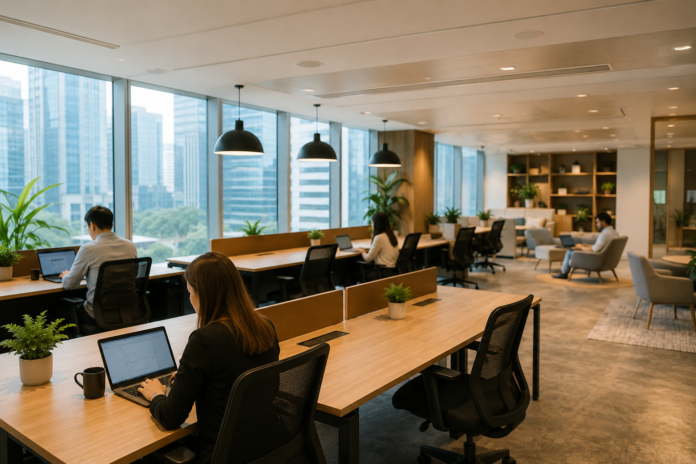

The way people work has changed significantly in recent years. Professionals increasingly want more freedom over where they work, while businesses are searching for practical ways to manage office costs and changing team structures. In Singapore, where the business environment is fast-paced and highly competitive, flexible workspaces have become an important solution. Among these options, hot desks offer a convenient way for professionals to access a productive workplace without committing to a permanent workstation.
A hot desk Singapore arrangement allows individuals to use an available desk within a shared professional environment whenever they need it. Instead of having a fixed workstation assigned to one person, several users can access the same workspace at different times. This approach provides flexibility while maintaining many of the benefits associated with a professional office.
How Hot Desking Works
Hot desking is straightforward. Instead of reserving a particular desk permanently, a user arrives at the workspace and chooses an available workstation. Depending on the provider, users may have access to open desks, quiet areas, meeting rooms, private booths, lounges, and other facilities.
The concept is particularly useful for people who do not need an office every day. A consultant who works at client locations during the week may only need a desk occasionally. Similarly, a remote employee may prefer to work from a professional environment when they need a change from their home office.
This flexible arrangement means workspace can be used according to actual requirements rather than remaining empty when someone is working elsewhere.
An Alternative for Remote Workers
Remote work provides convenience, but it is not perfect for everyone. Home environments can contain distractions, limited working space, or interruptions that make it difficult to concentrate.
A hot desk provides another option. Professionals can maintain a remote working schedule while having access to a dedicated business environment whenever they need greater focus.
The physical act of traveling to a workspace can also help establish a routine. Once at the desk, professionals can concentrate on their responsibilities without the distractions associated with home.
For hybrid employees, this creates a balance between flexibility and structure.
Benefits for Freelancers
Freelancers often operate independently and may not have enough work to justify renting a private office. However, they still need a reliable environment for completing assignments and communicating with clients.
Hot desks provide an affordable alternative. Freelancers can work in a professional environment without having to purchase office furniture, manage utilities, or handle maintenance.
The shared nature of the workspace can also help reduce the isolation that sometimes comes with independent work. Being surrounded by other professionals creates opportunities for casual conversations, collaboration, and networking.
For a freelancer looking to grow a professional network while maintaining flexibility, this can be a valuable advantage.
Supporting Startups and Entrepreneurs
Startups often need to remain financially flexible during their early stages. Spending heavily on a permanent office can reduce the resources available for product development, marketing, hiring, and customer acquisition.
Hot desking gives entrepreneurs the opportunity to establish a professional working base without making a large investment in office infrastructure.
It can also support business growth. A startup may begin with one or two people using shared desks and later require dedicated workstations or private offices as the team expands.
This ability to adjust workspace requirements makes flexible offices particularly attractive to businesses that are still developing.
Encouraging Collaboration
A major feature of shared workspaces is the variety of professionals who use them. People from different industries can work alongside one another, creating an environment where new ideas and connections can develop.
A technology entrepreneur may meet a marketing specialist who can help promote a new product. A designer may connect with a startup that needs branding services. A consultant might meet another professional who becomes a future business partner.
These connections do not necessarily require formal networking events. They can happen naturally through conversations, shared facilities, or community activities.
Important Facilities for Hot Desk Users
The quality of a hot desk experience depends heavily on the facilities provided. Modern professionals require more than a chair and table.
Reliable internet should be a basic requirement because most businesses depend on online communication, cloud applications, video meetings, and digital collaboration.
Meeting rooms are useful for presentations, interviews, client discussions, and team meetings. Private booths can provide additional privacy for important calls.
Other facilities such as printing, storage, pantry areas, comfortable lounges, and reception services can further improve convenience.
Before choosing a workspace, users should evaluate whether the available facilities match their daily professional requirements.
Location and Accessibility
Location is particularly important in a city like Singapore. A workspace that is easy to reach can reduce commuting time and make it simpler to meet clients and colleagues.
Professionals should consider proximity to MRT stations, bus routes, major business districts, restaurants, and other useful amenities.
A convenient location can also make flexible work more practical. If a workspace is difficult to reach, professionals may be less likely to use it regularly.
Hot Desks and Business Efficiency
Hot desking can also provide advantages for companies managing hybrid teams. Businesses do not necessarily need a permanent desk for every employee if many workers spend part of their time remotely.
By adopting flexible workspace arrangements, companies can make better use of available office resources. Employees can use desks when they are working in person while continuing to work remotely when appropriate.
This can help businesses develop workplace strategies that are better aligned with actual employee attendance.
Selecting the Right Workspace
Choosing the right hot desk Singapore solution requires more than looking at the lowest membership price. Professionals should consider the location, workspace design, available facilities, internet quality, privacy, access hours, and overall atmosphere.
It is also useful to think about future requirements. A freelancer may eventually need a dedicated desk, while a startup could require a private office after expanding its team.
A flexible workspace that offers multiple options can make it easier to adjust without starting the search for a new location from scratch.
A Flexible Future for Singapore Professionals
The modern workplace is becoming more adaptable. Employees may divide their time between home, company offices, client locations, and shared workspaces. Entrepreneurs and freelancers may also choose different environments depending on the task they need to complete.
Hot desks fit naturally into this evolving model. They provide a professional environment without requiring users to commit to a permanent workstation.
For freelancers, entrepreneurs, remote workers, consultants, and businesses with hybrid teams, hot desking can provide a practical combination of flexibility, convenience, productivity, and networking.
As Singapore continues to develop as a major global business hub, flexible workspaces are likely to remain an important part of its professional landscape. The ability to choose where and how to work gives modern professionals greater control over their working day while helping businesses adapt to changing workplace demands.