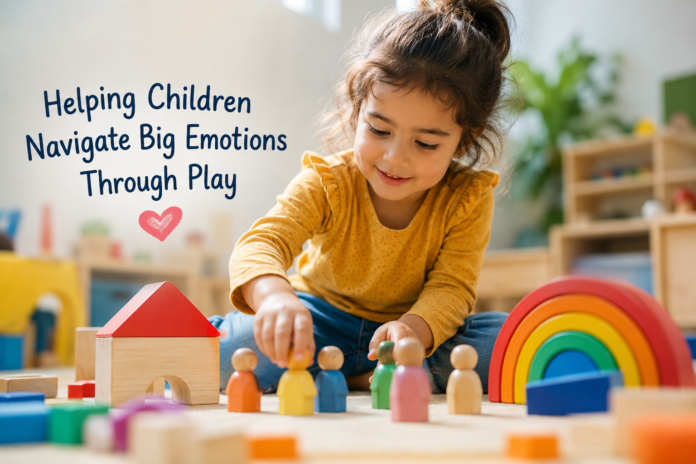

Children have big feelings. Sometimes, those feelings seem to appear out of nowhere. One minute they are smiling and having fun. The next minute they are upset because their favourite toy is missing. That can be confusing for parents. It can also be confusing for children.
The truth is very simple.
Young children are still learning about emotions. They are still figuring out what different feelings mean. They are also learning how to handle those feelings in a healthy way. That is not always easy.
This is where play comes in.
Most people think play is just about having fun. Fun is definitely part of it. However, play does much more than keep children entertained. It helps them learn, grow, and understand their emotions.
That is why play is such an important part of early childcare in Western Sydney.
Play Gives Children A Safe Space
One of the best things about play is that it feels natural. Children do not see it as a lesson. They do not see it as work but as fun. That makes a huge difference.
When children play, they often express emotions freely. They do not worry about saying the right thing. They do not feel pressured to explain themselves perfectly.
For example, a child might use toy animals to act out a situation that happened earlier in the day. Another child might create an imaginary story that reflects something they are feeling.
It may look like simple play.
However, there is often much more happening beneath the surface.
Children use play to process experiences. They use play to understand emotions. They use play to explore solutions to problems.
Imagination Can Work Wonders
Children have amazing imaginations.
One minute they are explorers, the next minute they are superheroes. A few moments later they are running a pretend café or teaching a classroom full of stuffed animals. These games are not just entertaining.
Pretend play allows children to step into different roles. They begin to see situations from different perspectives. They learn how others might feel. They learn how different actions affect people around them.
That is a big deal.
A child pretending to care for a sick teddy bear may be learning empathy. A child acting as a teacher may be learning patience. A child pretending to solve a problem may be building confidence.
Moving The Body Helps The Mind
Have you ever noticed how children seem happier after running around outside? There is a good reason for that.
Physical activity helps release built-up energy. It also helps release stress and frustration. Many children struggle to sit still when they feel emotional. Their bodies want movement.
- Running helps.
- Jumping helps.
- Dancing helps.
Even a simple game of chase can make a difference.
Physical play gives children a healthy outlet for big emotions. It allows them to release tension in a positive way. After moving around, many children feel calmer and more relaxed.
Art Can Speak When Words Cannot
Not every child enjoys talking about feelings. Some children prefer to show how they feel instead. That is where creative activities become so valuable. Even simple craft activities can help children express emotions.
A child might draw a picture that reveals how they are feeling. They might choose certain colours that reflect their mood. They might create characters that represent experiences from their day.
Adults often learn a lot by paying attention to children’s artwork.
The same idea applies to music.
Children love singing songs. They love dancing. They love making up silly tunes. These activities allow them to express themselves in ways that feel comfortable and enjoyable.
Playing With Friends Teaches Important Lessons
Children learn a lot from each other. Sometimes those lessons come easily, and sometimes they do not.
Playing with friends teaches valuable social and emotional skills. Children learn how to share. They learn how to cooperate. They learn how to solve disagreements.
Of course, conflicts happen, but that is completely normal.
Young children are still developing these skills. They are not expected to get everything right straight away.
A disagreement over a toy can actually become a learning opportunity. Children begin to understand compromise. They learn how to listen. They learn how to consider another person’s feelings.
Those lessons are incredibly valuable.
How Educators And Parents Can Help
Adults have an important role to play. The good news is that helping does not need to be complicated. Sometimes, the best thing adults can do is simply pay attention.
- Watch how children play.
- Listen to their stories.
- Notice the themes that appear in their games.
These small observations can reveal a lot about what children are thinking and feeling.
Support also matters.
When children experience big emotions, adults can acknowledge those feelings without rushing to fix everything immediately. Children often benefit from feeling understood. Simple reassurance goes a long way.
Many families searching for Childcare in Western Sydney look for centres that understand the value of emotional development through play. They want environments where children feel supported while learning important life skills.
That makes perfect sense.
Final Thoughts
Children experience all kinds of emotions every day. Some feelings are easy to handle, whilethers can feel overwhelming. That is a normal part of growing up.
Fortunately, play offers a wonderful way to help.
Through games, creativity, movement, and imagination, children gradually learn how to manage emotions in healthy ways. They become more resilient. They become more confident. They become better equipped to handle life’s little challenges.
That is why it remains such a powerful tool in early childhood development.
Many parents looking for Childcare in Western Sydney appreciate centres, such as Brighton Recreational, that embrace play-based learning. They understand that play is much more than fun and games. It is one of the best ways to help children grow into happy, confident, and emotionally strong individuals.