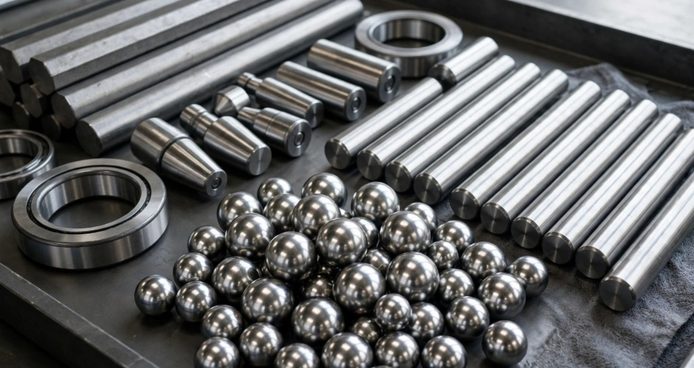

100Cr6 is a high-carbon chromium alloy steel widely used to manufacture bearings and precision engineering components. Known for its hardness, wear resistance and ability to withstand repeated contact, this material is suitable for applications where reliability and dimensional accuracy are important.
Understanding 100Cr6 steel’s properties helps engineers, manufacturers, and purchasing teams choose the right material for their requirements. From bearing balls and rollers to other precision components, its performance depends on the correct steel specification, machining process and heat treatment.
What Is 100Cr6 Steel?
100Cr6 is a through-hardening bearing steel with a high carbon and chromium content. It is designed to achieve high hardness throughout a component rather than relying solely on a hardened surface layer. This makes it suitable for bearing applications involving repeated rolling contact and demanding operating conditions.
The material is commonly associated with the European designation EN ISO 683-17 and material number 1.3505. It is also closely associated with the internationally recognised AISI 52100 bearing steel grade.
What Is the Chemical Composition of 100Cr6?
The chemical composition of 100Cr6 contributes to its mechanical properties and suitability for bearing manufacture. Carbon supports hardness, while chromium improves hardenability and contributes to wear resistance.
Its typical composition includes:
- Carbon: Approximately 0.93–1.05%, supporting high hardness after heat treatment.
- Chromium: Approximately 1.35–1.60%, improving hardenability and wear resistance.
- Manganese: Approximately 0.25–0.45%, contributing to strength and hardenability.
- Silicon: Approximately 0.15–0.35%, supporting strength and steel processing.
These values represent typical specification ranges. The precise composition should always be checked against the relevant material standard and supplier documentation.
What Are the Main Properties of 100Cr6?
The principal properties of 100Cr6 make it particularly useful for components exposed to continuous movement and contact stress. When correctly processed, the steel can achieve high hardness, good resistance to wear and the strength required for demanding mechanical applications.
Its performance is influenced by the component’s size, manufacturing method and final heat-treated condition. Although hardness is an important advantage, the material should not be selected on hardness alone. Toughness, fatigue resistance, dimensional stability and operating conditions must also be considered.
How Does Through-Hardening Improve 100Cr6?
Through-hardening involves heating steel under controlled conditions, followed by quenching and tempering as required. The process develops the required microstructure and mechanical properties through the component, rather than hardening only its outer surface.
For 100Cr6, suitable heat treatment helps achieve the hardness needed for bearing components and improves resistance to repeated contact. Accurate temperature control and appropriate processing are essential because incorrect treatment can affect dimensional stability, residual stresses and the finished component’s performance.
What Are the Common Applications of 100Cr6?
100Cr6 is primarily used in applications where low-friction movement, wear resistance and consistent performance are important. Common uses include ball bearings, roller bearings, bearing rings and other precision components.
The material can also be considered for selected wear-resistant engineering parts, measuring equipment and tooling applications where its properties meet the required specification. The final choice depends on the loads, operating speed, working environment and expected service life of the component.
Why Is 100Cr6 Used in Bearing Manufacturing?
Bearings operate under repeated contact stresses and require materials that maintain shape and performance over time. 100Cr6 is widely used because it can achieve high hardness and good resistance to rolling contact fatigue when properly manufactured and heat-treated.
Its established use in bearing production also makes it a familiar option for engineers and component manufacturers. However, lubrication, surface finish, cleanliness, installation and operating conditions remain important factors in the service life of a finished bearing.
Is 100Cr6 the Same as EN31 or AISI 52100?
100Cr6 is commonly compared with EN31, AISI 52100 and the Japanese grade SUJ2. These designations refer to similar high-carbon chromium bearing steels and may be considered when assessing alternative material specifications.
However, equivalent grades should not automatically be treated as identical. Differences in standards, chemical limits, manufacturing requirements and delivery conditions may affect suitability. Always confirm the applicable specification before substituting one grade for another.
What Should You Consider When Selecting 100Cr6 Steel?
Selecting the correct bearing steel requires more than checking its designation. Buyers and engineers should consider the component dimensions, required hardness, machining requirements and intended working conditions.
It is also important to establish the required delivery condition, material certification and traceability. If a component will undergo additional machining or heat treatment, the material supplied must be suitable for those processes. Consulting a specialist steel supplier can help clarify technical requirements before an order is placed.
How Should 100Cr6 Steel Be Stored and Maintained?
Although 100Cr6 offers good wear resistance, it is not stainless steel and can corrode when exposed to moisture. Appropriate storage, protective packaging, and suitable corrosion-prevention measures are therefore important, particularly before assembling components or putting them into service.
Finished bearing components should also receive appropriate lubrication and maintenance. The correct approach depends on the operating environment, exposure to contaminants and the manufacturer’s recommendations.
Where Can You Source 100Cr6 Bearing Steel?
100Cr6 steel is widely used in bearing manufacturing and precision engineering due to its high hardness, wear resistance and durability. These properties make it suitable for components that require reliable performance under repeated contact and demanding operating conditions.
Choosing the right 100Cr6 bearing steel involves understanding its composition, heat treatment requirements and intended application. Selecting a suitable grade helps businesses achieve consistent component quality, long service life and dependable performance.