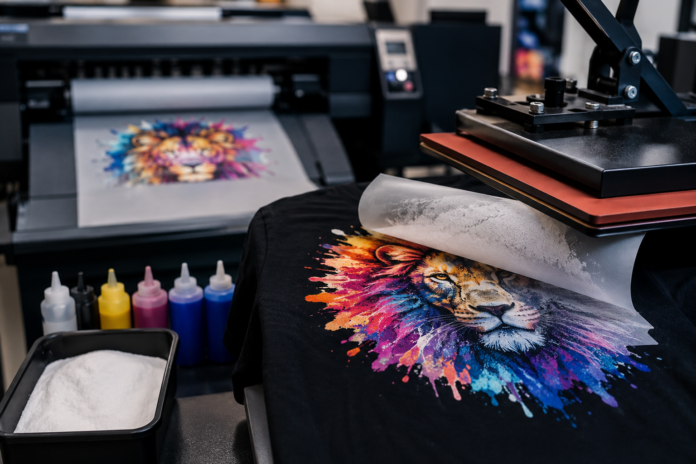

The custom apparel industry has been revolutionized by Direct-to-Film (DTF) printing. It enables companies to develop vibrant and long-lasting patterns on various textiles. But as with any printing press, DTF printers can have problems at times.
There are common issues that can impact printing quality, manufacturing rate, and company productivity. For users, these issues are barriers to finding a solution as quickly as you want and to ensuring your results are consistent. This is a helpful guide to some frequent DTF printing issues along with their applicable solutions.
What’s causing DTF printing issues?
There are multiple steps in the DTF printing process. These include the design process, film printing, powder application, curing, and transfer heating. If there is an error in any of the steps, the outcome will be incorrect.
Common causes include:
- Incorrect printer settings.
- Poor-quality materials.
- Improper maintenance.
- Wrong temperature settings.
- Incorrect handling procedures.
Many of the problems that can occur in printing can actually be avoided by making routine checks. Information presented in print is often not clear. The quality of print is inadequate.
Problem 1: Poor Print Quality
Symptoms include:
Blurry images.
Missing details.
Uneven colors.
Low-resolution prints.
Possible Causes
Low-quality artwork.
Dirty print heads.
Incorrect color settings.
Poor-quality ink.
Solutions
Use high-resolution designs.
Regularly clean the print head.
Check printer settings.
Problem 2: Ink Not Sticking to Film
Maintaining it well enhances the quality and clarity of images and consistency. Make sure the ink level is high enough to contact the film.
Occasionally, ink is not secured to the transfer film. This can have an impact on the transfer process.
Possible Causes
Wrong film type.
Low-quality film.
Incorrect ink settings.
Surface contamination.
Solutions
Deliver using compatible DTF film.
Store film correctly.
Adjust ink settings.
Maintain a clean work surface for printing.
Quality materials = better results!
Problem 3: White Ink Problems
White ink is crucial to DTF printing.
It is a ground colour upon which a range of colours can be used.
Some typical problems with white ink are:
Uneven white layers.
White ink blockage.
Poor color brightness.
Possible Causes
Ink settling.
Poor circulation.
Infrequent printer use.
Solutions
Shake ink bottles before using.
Maintain an adequate flow of white ink.
Regularly clean the ink system.
Run maintenance cycles.
Many problems can be prevented by proper handling of white ink. For individual business requirements, they can check out the dft printers for sale to see the available options.
Problem 4: Powder Adhesion Problems
The adhesive powder ensures the bond between designs and cloth. It is important to apply the powder properly, or durability may be reduced.
Symptoms
Peeling prints.
Weak transfers.
Uneven texture.
Causes
Too much powder.
Too little powder.
Incorrect curing temperature.
Solutions
Be sure to use the proper powder quantity.
Remove excess powder.
Hire a dog who has been trained according to the proper curing conditions. Nevertheless, by properly handling powder, print strength is enhanced.
Problem 5: Prints Cracking After Transfer
If not printed correctly, the DTF printing process can cause cracking.
Possible Causes
This can be caused by an incorrect heat press configuration.
Poor-quality film.
Insufficient curing.
Low-quality materials.
Solutions
Check temperature and pressing time.
Note: Only use good transfer film.
Ensure proper curing.
Follow manufacturer instructions.
When using the right settings, durability can be improved.
Problem 6: Colors Look Different
The colour accuracy is crucial for any printing that is done for professional reasons.
Actually, final prints may not necessarily match what you have designed.
Possible Causes
Incorrect color profiles.
Poor-quality ink.
Wrong software settings.
Solutions
Using correct ICC profiles.
Calibrate colors.
Use trustworthy ink suppliers.
Check printer settings.
Color management ensures better results.
Film becomes wrinkled when being printed. When a piece of film is being printed, it becomes wrinkled.
Problem 7: Film Wrinkles During Printing
Causes
Incorrect film placement.
Humidity problems.
Poor storage conditions.
Solutions
Keep film in a dry location.
Load film correctly.
Ensure appropriate working practices.
Prevent problems in film with proper handling.
Problem 8: Printer Nozzle Clogging
The nozzle clogging problem can impact print quality.
Symptoms include:
Missing lines.
Uneven colors.
Incomplete designs.
Causes
Dried ink.
Poor maintenance.
If not used for a long time.
Solutions
Wash printheads/heads-onely.
Run cleaning cycles.
Use quality inks.
Don’t turn the printer off.
Prolongs the useful life of printers with regular maintenance.
Problem 9: Transfer Does Not Stick to Fabric
Sometimes the design does not properly attach to the garment.
Possible Causes
Pressing out at a temperature that’s too high or too low.
Incorrect pressure.
Poor fabric preparation.
Solutions
Adjust heat settings.
Apply correct pressure.
Ensure fabric compatibility.
Waste can be prevented with pre-production testing.
Choosing Reliable DTF Equipment
Proper use of high-quality equipment can minimize many of the printing problems. Consider the reliability of the machines; they provide better stability, accurate printing, and easier maintenance.
Technical guidance and support are also provided by a trusted supplier. There are many professionals who take advantage of dtflinko.com to acquaint themselves with the DTF technology and printing solutions.
Preventive Maintenance Tips
A lot of common problems can be avoided by preventing them with regular maintenance.
Here are some easy things to do:
- Be sure to clean print heads often.
- Use recommended inks.
- Store materials properly.
- Check machine settings.
- Ensure a good workspace environment.
- Do periodic test prints.
Prevention means minimising the loss of working time and maximising productivity.
When Should You Contact Technical Support?
Services of a professional assistant are needed for some problems.
Contact support when:
- Printer errors continue.
- Hardware problems appear.
- Ink systems fail.
- Maintenance does not affect print quality.
- Court help further equipment damage.
Conclusion
Many problems occur in the process of DTF printing, but with correct knowledge and maintenance, many of these issues can be solved. Whether it’s ink issues or printing transfer failures, keeping things at an optimum quality, it helps in grasping the possible causes.
Reliable equipment, quality material, and correct printing techniques help to improve performance. As such, with regular maintenance and troubleshooting, the designability of DTF can help ensure that businesses can create consistent, lasting, and professional garments.