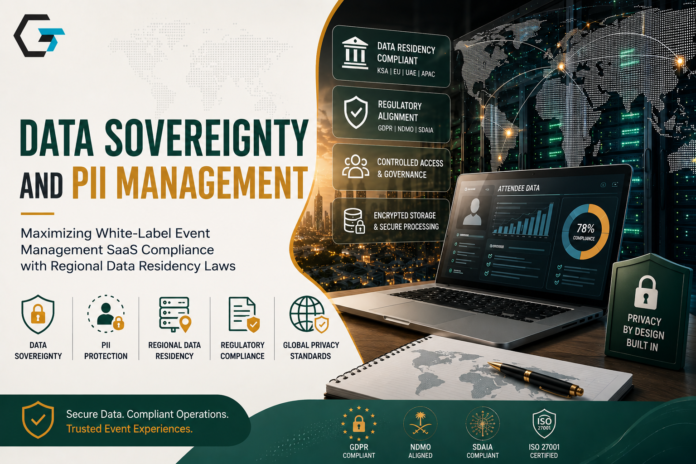

Enterprise events increasingly depend on digital registration ecosystems that collect, process, and store significant volumes of personally identifiable information (PII). Registration records, identity documents, payment information, travel details, accreditation data, and attendee communications are now central components of modern event operations. As a result, event organizers, government entities, and multinational corporations face growing regulatory obligations related to data sovereignty, privacy protection, and regional data residency requirements.
Organizations deploying a white-label event management SaaS platform must consider more than functionality and user experience. They must evaluate where attendee data is stored, how it is processed, which jurisdictions govern access to information, and whether cross-border data transfers comply with applicable laws.
The complexity becomes even greater for international conferences, government forums, smart city initiatives, and multinational exhibitions involving attendees from multiple countries. Enterprise registration workflows must be designed to support privacy requirements across various regulatory environments while maintaining operational efficiency and user trust.
Alongside internationally recognized regulations such as GDPR, organizations operating in the Middle East increasingly evaluate compliance with regional governance frameworks including the National Data Management Office (NDMO) standards and the Saudi Data & Artificial Intelligence Authority (SDAIA) regulatory ecosystem. These frameworks place significant emphasis on data classification, privacy governance, and local data management requirements.
This article explores how organizations can strengthen data compliance solutions within event registration platforms by implementing robust data residency strategies, privacy controls, and governance frameworks that support both regional and international compliance obligations.
Core Architectural Workflows
Data Sovereignty Architecture Planning
Data sovereignty begins at the system design stage.
Organizations must first identify:
- Data collection requirements
- Processing locations
- Storage jurisdictions
- Regulatory obligations
- Cross-border transfer needs
- Third-party integrations
- Retention requirements
These assessments help establish a governance model that aligns enterprise registration workflows with applicable legal requirements.
Without clear data mapping, organizations often struggle to demonstrate compliance during audits or regulatory reviews.
Attendee Data Lifecycle Management
A modern event platform processes information throughout multiple operational stages.
Common lifecycle phases include:
Registration Phase
- User account creation
- Contact information collection
- Identity verification
- Consent management
Accreditation Phase
- Credential validation
- Document review
- Security screening
- Approval workflows
Event Operations Phase
- Attendance tracking
- Access management
- Communication delivery
- Session participation monitoring
Post-Event Phase
- Reporting generation
- Data archival
- Retention management
- Secure deletion procedures
Each phase requires clearly defined privacy controls and governance mechanisms.
Regional Data Residency Frameworks
Many jurisdictions now require specific categories of information to remain within defined geographic boundaries.
Data residency architectures frequently support:
- Localized database hosting
- Regional cloud environments
- Jurisdiction-specific processing
- Controlled replication policies
- Geographic storage restrictions
For multinational event organizers, this often means deploying infrastructure capable of maintaining separate data environments while preserving operational visibility.
Organizations implementing white-label event management SaaS platforms increasingly favor region-specific deployments that align with local regulatory expectations.
Cross-Border Data Transfer Controls
International conferences often require information sharing between stakeholders located in different countries.
Examples include:
- Event organizers
- Government agencies
- Venue operators
- Security providers
- Travel coordinators
- Accreditation teams
Cross-border transfers should be governed by structured controls including:
- Transfer authorization policies
- Encryption requirements
- Data minimization procedures
- Access restrictions
- Processing agreements
Organizations should document all transfer pathways to improve accountability and audit readiness.
Privacy-by-Design Registration Workflows
Privacy-by-design principles integrate compliance controls directly into operational processes.
Recommended workflow controls include:
- Explicit consent collection
- Granular permission management
- Purpose limitation policies
- Data minimization practices
- Automated retention controls
- User rights management
These controls help reduce compliance risks while improving transparency for attendees.
Identity and Access Management
Strong access governance remains essential for protecting attendee information.
Access controls typically include:
- Role-based permissions
- Multi-factor authentication
- Administrative segregation
- Activity monitoring
- Session management
- Access logging
Organizations should ensure that personnel only access information necessary for their operational responsibilities.
Data Classification and Governance
Frameworks such as NDMO emphasize structured data classification methodologies.
Typical classification categories may include:
- Public information
- Internal information
- Confidential information
- Restricted information
- Sensitive personal information
Classification policies support appropriate security controls throughout the data lifecycle.
Hardware and Technical Specifications
Regional Hosting Infrastructure
Data residency strategies often require infrastructure deployed within approved geographic locations.
Key infrastructure components include:
- Regional cloud environments
- Localized storage systems
- High-availability databases
- Backup facilities
- Disaster recovery environments
- Geographic redundancy controls
Organizations should verify the physical location of all primary and backup data repositories.
Database Security Requirements
Attendee databases contain high-value information requiring comprehensive protection.
Recommended specifications include:
- AES-256 encryption
- Database activity monitoring
- Tokenization capabilities
- Secure backup encryption
- Automated audit logging
- Granular access controls
Strong database security improves both compliance and operational resilience.
Identity Management Infrastructure
Enterprise registration workflows depend on secure authentication systems.
Core technical capabilities include:
- Single sign-on integration
- Multi-factor authentication
- Federated identity support
- Session monitoring
- Privileged access controls
- User lifecycle management
Identity governance helps prevent unauthorized access to sensitive information.
Monitoring and Audit Systems
Compliance-focused environments require extensive monitoring capabilities.
Recommended features include:
- Security event logging
- Administrative activity tracking
- Access audit reports
- Configuration monitoring
- Compliance reporting dashboards
- Real-time alerting
Monitoring systems improve accountability and simplify audit preparation.
Data Backup and Recovery Systems
Resilient event platforms should support:
- Encrypted backups
- Automated replication
- Recovery testing
- Backup retention controls
- Regional recovery options
- Business continuity integration
Recovery capabilities ensure operational continuity during disruptions.
Compliance, Security, and Governance
GDPR Compliance Considerations
Organizations processing information related to European attendees should evaluate GDPR requirements covering:
- Lawful processing
- Consent management
- Data subject rights
- Breach notification
- Processing transparency
- Accountability obligations
GDPR compliance remains a critical consideration for international event operations.
NDMO Governance Requirements
The National Data Management Office framework promotes comprehensive governance practices focused on:
- Data classification
- Information governance
- Data quality management
- Privacy protection
- Data sharing controls
- Risk management
Organizations operating within Saudi Arabia increasingly align data management practices with these standards.
SDAIA Privacy Framework Alignment
The Saudi Data & Artificial Intelligence Authority plays an important role in supporting national data governance initiatives.
Relevant considerations include:
- Personal data protection
- Responsible data processing
- Privacy controls
- Security governance
- Data lifecycle management
- Regulatory accountability
Alignment with SDAIA-supported governance principles strengthens organizational compliance readiness.
Vendor Risk Management
White-label platform deployments often involve multiple technology providers.
Organizations should evaluate:
- Hosting providers
- Payment processors
- Identity verification vendors
- Communication platforms
- Analytics systems
Third-party assessments help identify potential compliance risks.
Governance and Audit Frameworks
Strong governance programs should include:
- Compliance ownership structures
- Internal audits
- Policy reviews
- Risk assessments
- Incident response planning
- Regulatory reporting procedures
Governance oversight supports long-term compliance effectiveness.
Operational Conclusion and Next Steps
As privacy regulations continue to evolve globally, event organizers must prioritize data sovereignty and information governance as core components of platform selection and operational planning. Modern white-label event management SaaS environments process significant volumes of sensitive attendee information, making compliance a strategic requirement rather than a technical afterthought.
Organizations can strengthen enterprise registration workflows by implementing regional hosting strategies, privacy-by-design controls, structured access governance, and comprehensive audit capabilities. Equally important is aligning platform architectures with recognized regulatory frameworks such as GDPR, NDMO governance standards, and SDAIA-supported privacy requirements.
By investing in resilient data compliance solutions that address both regional and international obligations, organizations can improve regulatory readiness, reduce operational risk, and build greater trust among attendees, sponsors, government stakeholders, and event partners. Future-ready event ecosystems will increasingly depend on platforms capable of balancing operational flexibility with strong privacy and data residency controls.