
Introduction
Choosing the right oven can have a major impact on cooking results, from how evenly food is baked to how quickly meals are prepared. With many modern kitchens offering different appliance options, understanding the difference between a Convection Oven vs Conventional Oven can help homeowners make a more informed decision. Although both ovens use heat to cook food, the way they distribute that heat creates noticeable differences in cooking performance, texture, and efficiency.
A convection oven uses moving air to improve heat circulation, while a conventional oven relies on natural heat movement inside the cooking chamber. In this guide, we will compare how both oven types work, how they perform with different foods, and which option may better suit various cooking styles and kitchen needs.
What Is a Convection Oven and How Does It Work?
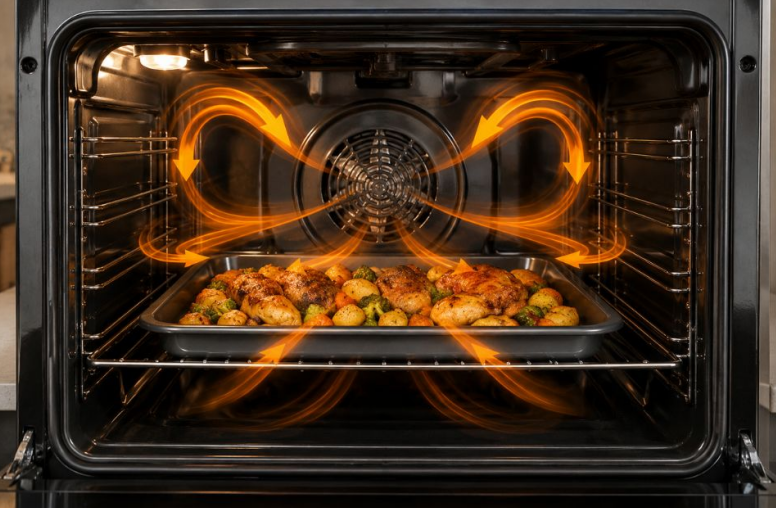
A convection oven is an oven that uses a built-in fan to circulate hot air throughout the cooking area. Unlike traditional ovens that allow heat to move naturally, convection technology actively pushes warm air around the food, helping maintain a more consistent temperature. This improved airflow allows heat to reach different areas of the oven more evenly, which can reduce uneven cooking and create better results.
For everyday cooking, this means convection ovens can be useful when preparing foods that benefit from consistent heat, such as roasted vegetables, cookies, and crispy baked dishes. The moving air helps remove surface moisture, which can improve browning and create a more textured finish. Because heat transfers more efficiently, many convection recipes require slightly lower temperatures or shorter cooking times compared with traditional oven settings.
What Is a Conventional Oven and How Does It Work?
A conventional oven is the traditional type of oven commonly found in many homes. It uses heating elements located at the top, bottom, or both areas of the oven to generate heat. Instead of using a fan to move air, a conventional oven relies on natural heat circulation, where warm air rises and cooler air falls to create a cooking environment.
Many home cooks continue to prefer conventional ovens because they are familiar, simple to operate, and suitable for a wide range of recipes. Traditional baking methods for cakes, bread, and other delicate foods were often developed around this type of heating system. Since the heat remains more stable and gentle compared with forced airflow, some recipes may achieve better results when prepared using conventional settings.
While conventional ovens may take slightly longer to cook certain foods, they remain a reliable choice for people who value straightforward operation and consistent results. The right option ultimately depends on cooking habits, preferred recipes, and the type of results a homeowner wants to achieve in the kitchen.
Convection Oven vs Conventional Oven: Key Differences
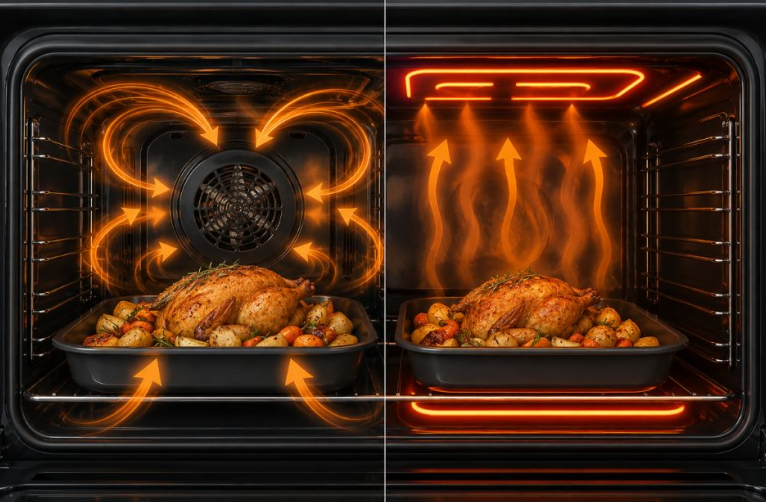
Understanding the Convection Oven vs Conventional Oven differences can make it easier to choose the right appliance for your cooking style. While both ovens use heat to prepare food, their heating methods, cooking speed, and overall performance are different.
| Feature | Convection Oven | Conventional Oven |
| Heating method | Uses a fan to circulate hot air | Uses natural heat from heating elements |
| Heat distribution | More even throughout the oven | May have hot and cool spots |
| Cooking speed | Usually cooks faster | Often requires longer cooking times |
| Temperature settings | Often needs lower temperatures | Uses standard recipe temperatures |
| Browning | Creates better crisping and browning | Provides moderate browning |
| Moisture retention | Removes surface moisture faster | Retains more moisture during cooking |
| Energy efficiency | Can use less energy due to shorter cooking times | May require more cooking time |
| Ease of use | Requires some recipe adjustments | Familiar and simple operation |
One of the biggest differences is airflow. A convection oven’s fan continuously moves hot air around the food, helping it cook more evenly and often reducing cooking time. This makes it useful for roasting, baking multiple trays of cookies, and preparing foods where a crisp exterior is desired.
A conventional oven, on the other hand, provides a more traditional cooking environment. Because it does not force air movement, it can be better suited for recipes that require gentle and steady heat, such as certain cakes, custards, and delicate baked goods.
Another important factor is temperature adjustment. Many convection ovens allow users to cook at lower temperatures because circulating air transfers heat more efficiently. Conventional ovens typically follow standard recipe temperatures, making them easier for beginners who prefer familiar cooking instructions.
Ultimately, neither oven type is universally better. The ideal choice depends on cooking preferences, recipe requirements, and whether speed, simplicity, or traditional results are the main priority.
Cooking Performance Comparison: Which Oven Produces Better Results?
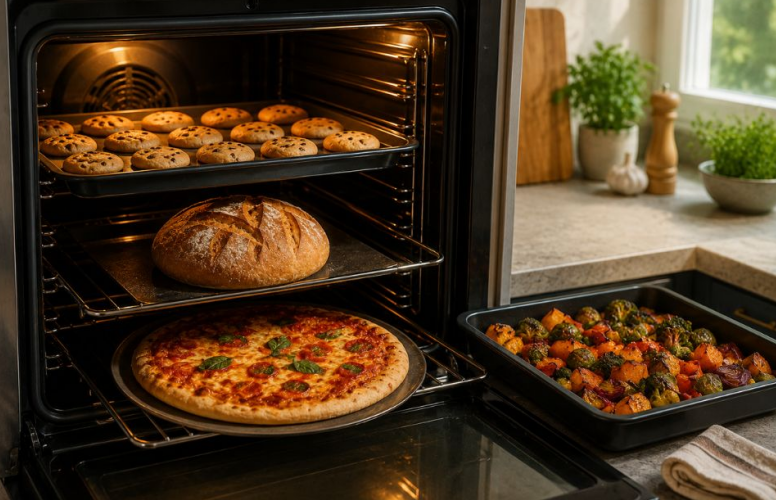
The cooking performance of a convection oven and a conventional oven can vary depending on the type of food being prepared. While both can deliver excellent results, their different heating methods affect texture, moisture, and cooking time. Understanding these differences can help home cooks choose the right setting for specific recipes.
Cakes:
Conventional ovens are often preferred for delicate cakes because they provide steady, gentle heat without strong airflow that could affect the structure of the batter. However, convection ovens can also bake cakes successfully when temperatures are adjusted properly. Reducing the temperature slightly can help prevent uneven browning while maintaining a soft texture.
Cookies:
A convection oven can be a strong choice for cookies because circulating air helps remove surface moisture and encourages even browning. It is especially useful when baking multiple trays at once because heat reaches different areas more consistently. Conventional ovens can still produce excellent cookies but may require rotating trays for more even results.
Bread:
Both oven types work well for bread, but convection cooking can help create a crispier crust by improving air circulation around the dough. Conventional ovens may provide a softer baking environment that works well for certain bread recipes requiring more moisture retention.
Pizza:
For pizza, convection ovens often have an advantage because improved airflow helps develop a crisp crust and better browning. However, a conventional oven can also produce great results when using high temperatures and proper baking techniques.
Overall, the best oven depends on the recipe and desired outcome rather than one option being better for every type of cooking.
Advantages of a Convection Oven
A convection oven offers several benefits that make it appealing for modern kitchens. Its built-in fan circulates hot air around food, helping maintain more consistent temperatures and reducing uneven cooking. This improved heat distribution can shorten cooking times and may help save energy during longer cooking tasks.
Convection ovens are especially useful for foods that benefit from crisp textures and even browning. Roasted vegetables, cookies, meats, and baked dishes often develop better surface color because moving air removes excess moisture. They are also helpful when preparing multiple dishes at once because the circulating heat allows different areas of the oven to cook more evenly.
Key advantages include:
- Faster cooking performance
- More consistent heat distribution
- Better browning and crisping
- Efficient multi-rack cooking
Advantages of a Conventional Oven
Conventional ovens remain a popular choice because they provide a simple and familiar cooking experience. Since they use traditional heating methods without forced airflow, they create a stable environment that works well for many classic recipes. This makes them especially useful for home cooks who prefer following standard cooking instructions without adjustments.
A major advantage of conventional ovens is their ability to provide gentle, steady heat. This can be beneficial for delicate foods such as cakes, custards, and soufflés that may require a controlled baking environment. They are also generally more affordable and easier to operate, making them a practical option for many households.
Key advantages include:
- Simple operation
- Familiar cooking method
- Reliable results for traditional recipes
- Usually lower upfront cost
Which Oven Is Better for Your Kitchen?
Choosing between a convection oven and a conventional oven depends on your cooking habits, preferred recipes, and the results you want to achieve. Since both oven types have unique advantages, there is no single option that works best for every kitchen.
A convection oven can be a better choice for people who often roast vegetables, bake cookies, prepare larger meals, or want faster cooking performance. Its improved airflow helps create even heat distribution and crispier textures. On the other hand, a conventional oven may be more suitable for traditional bakers who prepare delicate desserts or prefer familiar cooking methods without temperature adjustments.
Modern kitchen appliance brands such as ciarra gadgets focus on practical solutions for different cooking needs. However, the right oven choice should depend on your available space, cooking style, budget, and daily requirements. Selecting an oven that matches your lifestyle will help you achieve more consistent cooking results.
Common Mistakes When Choosing Between Oven Types
Selecting an oven based only on price is one of the most common mistakes homeowners make. While budget is important, the cheapest option may not provide the cooking performance or features needed for everyday use. It is better to consider how often you cook, what foods you prepare, and which features will provide long-term value.
Another mistake is assuming that one oven type is always better than the other. Convection ovens offer advantages like faster cooking and improved airflow, but conventional ovens may still be better for certain baking methods. Ignoring recipe requirements can lead to disappointing results.
Many buyers also overlook kitchen space, energy usage, and ease of operation. An oven should fit both the physical space available and the cooking habits of the household. Taking time to compare these factors helps ensure a more practical and satisfying choice.
Conclusion
Choosing between a convection oven and a conventional oven depends on your cooking style, recipe preferences, and kitchen requirements. Convection ovens provide benefits such as improved heat circulation, faster cooking, and better browning, making them useful for many modern cooking tasks. Conventional ovens remain a reliable choice because of their simplicity, familiarity, and ability to handle traditional recipes effectively.
Rather than focusing on which oven is universally better, consider how each option fits your daily cooking habits. Think about the foods you prepare most often, the results you want, and the features that matter most in your kitchen. By understanding the differences between both oven types, you can make a confident decision and choose an appliance that supports your cooking needs for years to come.
FAQ
What is the difference between a convection oven and a conventional oven?
The main difference between a convection oven and a conventional oven is how heat circulates. A convection oven uses a fan to move hot air around the food, creating more even cooking and faster results. A conventional oven relies on natural heat movement from heating elements without forced airflow.
Is a convection oven better than a conventional oven?
A convection oven is not always better because the right choice depends on cooking needs. Convection ovens are often preferred for faster cooking, roasting, and crisp textures, while conventional ovens are useful for traditional baking and recipes that require steady heat.
Can I bake cakes in a convection oven?
Yes, cakes can be baked in a convection oven, but temperature adjustments may be needed. Since convection ovens circulate heat more efficiently, lowering the temperature slightly can help prevent excessive browning and maintain a soft texture.
Does a convection oven use less electricity than a conventional oven?
A convection oven may use less electricity because it often cooks food faster and can operate at lower temperatures. However, energy savings depend on cooking time, temperature settings, oven size, and how frequently the appliance is used.
Which oven is better for everyday cooking?
Both convection and conventional ovens can work well for everyday cooking. A convection oven may suit people who want faster cooking and better browning, while a conventional oven may be better for those who prefer simple operation and traditional cooking results.