
Table Of Contents
- Common Motorcycle Crash Injuries
- What To Do Immediately After A Crash
- Medical Care And Documentation
- Evidence That May Matter
- Insurance Challenges After A Las Vegas Crash
- Fault And Shared Responsibility In Nevada
- Documenting Financial And Personal Losses
- Mistakes To Avoid
- Moving Forward After A Motorcycle Collision
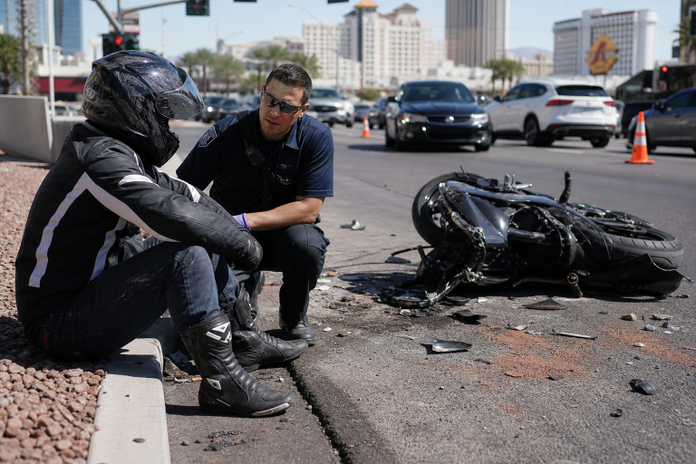
A motorcycle crash can turn an ordinary ride through Las Vegas into a medical, financial, and legal problem within seconds. Heavy traffic near the Strip, high-speed freeway travel on I-15 and U.S. 95, intense summer heat, and busy intersections can all complicate a collision and its aftermath. Riders facing treatment, repairs, and insurance calls may benefit from seeking help from a Las Vegas motorcycle accident lawyer after they have addressed immediate safety and medical needs.
Motorcycles offer little physical protection in a crash, so an impact that might produce vehicle damage alone in a passenger car can cause serious bodily harm to a rider. The days after the collision also matter. Symptoms can emerge later, evidence can disappear, and statements made to an insurer may affect how fault and losses are evaluated.
Common Motorcycle Crash Injuries
The severity of a motorcycle injury depends on speed, point of impact, protective gear, roadway conditions, and whether the rider is thrown from the bike. Even a low-speed crash can cause a painful injury when a rider strikes pavement, a vehicle, a curb, or a fixed object.
Head, Neck, And Back Injuries
Concussions and other traumatic brain injuries may cause headaches, confusion, nausea, dizziness, memory problems, sensitivity to light, or unusual fatigue. Neck and back injuries can include strains, herniated discs, fractures, or spinal cord damage. Some symptoms do not fully appear until hours or days after the impact, which is one reason prompt evaluation is important.
Broken Bones, Road Rash, And Soft-Tissue Damage
Fractures to the legs, ankles, wrists, arms, ribs, and pelvis are common concerns when a motorcycle falls or a rider braces for impact. Road rash can range from a superficial abrasion to a deep wound requiring extensive cleaning, treatment, or skin grafting. Torn ligaments, muscle injuries, and joint damage may also limit mobility long after visible cuts have healed.
Protective equipment cannot prevent every injury, but it can reduce risk. Federal motorcycle safety guidance emphasizes wearing a DOT-compliant helmet, using protective clothing, staying visible, and riding sober. These habits are especially relevant in Las Vegas, where bright sunlight, nighttime glare, and sudden traffic changes can make visibility difficult for riders and drivers alike.
What To Do Immediately After A Crash
Safety comes first. Call 911 when anyone is injured, traffic is blocked, or there is a risk of another collision. If you can move safely, get out of active traffic, but do not move a person with a possible serious neck or spinal injury unless leaving them in place creates an immediate danger.
- Remain calm and avoid arguing about who caused the crash.
- Exchange names, contact details, insurance information, driver’s license details, and vehicle information.
- Ask witnesses for their names and phone numbers before they leave.
- Take photographs of vehicle positions, damage, roadway markings, signals, debris, weather, and visible injuries when possible.
- Preserve the helmet, clothing, gloves, boots, and damaged motorcycle in their post-crash condition.
Medical Care And Documentation
Do not assume that adrenaline, soreness, or a lack of obvious wounds means there is no injury. A medical professional can identify problems that may not be apparent at the scene and create a record connecting reported symptoms to the collision. Follow discharge instructions, attend recommended follow-up appointments, and describe all symptoms accurately.
Keep copies of emergency records, imaging results, prescriptions, therapy notes, medical bills, and mileage or transportation receipts. A simple daily journal can also help document pain levels, sleep disruption, missed activities, and changes in the ability to work or manage household responsibilities.
Evidence That May Matter
Motorcycle crash claims often involve competing versions of events. A driver may say they never saw the motorcycle, while a rider may report that the vehicle turned, merged, or changed lanes without enough space. Physical and digital evidence can help clarify what occurred.
- Police reports and officer observations
- Photos of damage, skid marks, road conditions, and sight lines
- Witness statements and contact information
- Traffic-camera, business-security, dashcam, helmet-camera, or phone video
- Motorcycle repair estimates and inspection findings
- Phone, navigation, or vehicle data when lawfully available
Video footage may be overwritten quickly, particularly at businesses along major Las Vegas corridors. It is wise to make written notes about the location, direction of travel, traffic signal, and sequence of events while the details remain fresh.
Insurance Challenges After A Las Vegas Crash
Insurance adjusters may request a recorded statement, medical authorization, photographs, or a quick settlement. Providing basic identifying and crash information is different from guessing about fault, speed, injury severity, or future recovery. A rider should read every authorization, release, and settlement document carefully before signing it.
Early offers may not reflect the full cost of future treatment, time away from work, motorcycle repairs, or lasting physical limitations. Coverage questions can also become difficult when the other driver is uninsured, underinsured, working at the time of the crash, driving a borrowed vehicle, or covered by multiple policies.
Fault And Shared Responsibility In Nevada
Fault may be evaluated using evidence such as right-of-way rules, lane markings, traffic signals, speed, impairment, distracted driving, damage patterns, witness accounts, and available video. A police report can be useful, but it is not necessarily the final determination of responsibility.
Nevada uses a comparative-negligence framework. Under Nevada law, a person’s own share of fault can affect whether and how much they may recover. In practical terms, claims can become more complex when an insurer argues that a rider was speeding, lane splitting, following too closely, or was difficult to see.
Documenting Financial And Personal Losses
A complete claim may involve more than the motorcycle repair bill. Keep an organized file with medical expenses, pay stubs, employer letters showing missed work, repair estimates, towing bills, replacement-gear receipts, and communications with insurers. Record how the injury affects commuting, sleep, recreation, family care, and routine tasks.
Deadlines can apply to insurance claims and lawsuits, and the appropriate deadline may depend on the facts, the parties involved, and the type of claim. Addressing those timing questions early can help preserve available options.
Mistakes To Avoid
- Delaying medical care because pain initially seems manageable.
- Admitting fault or making assumptions before the facts are known.
- Posting crash details, activities, or recovery updates on social media.
- Repairing, selling, or discarding the motorcycle and damaged gear before documenting them.
- Ignoring treatment recommendations or failing to keep medical records.
- Accepting a settlement before understanding the extent of injuries and losses.
Moving Forward After A Motorcycle Collision
After a Las Vegas motorcycle crash, the most important priorities are safety, medical attention, careful documentation, and measured communication. Preserving evidence and tracking the full effect of an injury can make an already difficult process more manageable. Taking prompt, informed steps gives riders a stronger foundation while they focus on recovery.