
Key Takeaways
- Proper caster selection directly impacts safety, efficiency, and productivity in various settings.
- Critical factors to evaluate include load capacity, floor type, wheel material, and environmental conditions.
- Ergonomic features and regular maintenance can significantly enhance both performance and equipment lifespan.
When it comes to enhancing workplace safety and operational efficiency, selecting the appropriate casters is a critical yet often overlooked decision. Casters do much more than allow equipment and furniture to roll smoothly; they also contribute significantly to workplace ergonomics, safety, and productivity. Making the proper choice can protect your floors, reduce worker strain, and even extend the life of your valuable equipment. For environments where durability and load-bearing capacity are essential, reviewing specific options like heavy duty plate casters can be an excellent starting point.
Every work environment comes with unique demands, from the type of loads being moved to the conditions the casters must withstand. Selecting the wrong caster type can result in frequent breakdowns, unnecessary repairs, and even workplace accidents. By understanding the different factors that go into caster selection, facilities can improve safety, protect investments, and support smoother day-to-day operations.
Understanding Load Capacity and Safety Factors
One of the most vital components in caster selection is understanding load capacity. This figure indicates the amount of weight each caster can safely support and is essential for preventing structural failure and equipment damage. To determine the optimal load capacity per caster, add up the total expected equipment and load weight, divide by the number of casters in use, and then factor in a safety margin. For example, a piece of equipment weighing 1,200 pounds supported by four casters should ideally have casters rated for at least 600 pounds each. This calculation ensures durability and safety, helping to avoid costly workplace accidents. Reference guidance on safety margins and load calculations is available through well-known authorities such as OSHA.
Matching Wheel Material to Floor Type
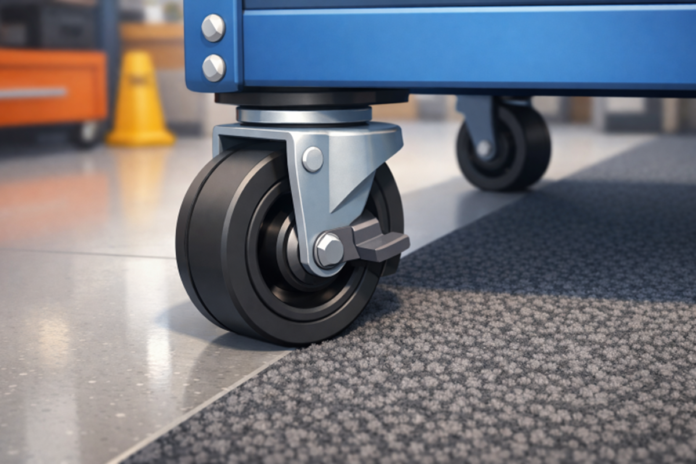
Choosing the suitable wheel material not only impacts how smoothly equipment moves but also whether it damages your flooring. For hard surfaces like tile, hardwood, or laminate, soft wheels made of rubber or polyurethane are recommended. These materials mitigate scratches and reduce noise transfer, which is particularly beneficial in settings where quiet operation is desirable. Conversely, harder wheel materials such as nylon perform best on carpeted surfaces, as they are less likely to get bogged down by pile and offer lower rolling resistance. Improper wheel and floor pairing leads to premature wear, floor damage, and increased replacement costs, so this factor deserves careful assessment. Additional wheel selection tips can be found in large industry resources, such as The Home Depot’s Caster & Wheel Guide.
Considering Environmental Conditions
Environmental conditions, such as exposure to chemicals, excessive moisture, temperature fluctuations, or abrasive debris, all play a significant role in determining which casters to use. For example, industrial labs or food service facilities often demand equipment that can withstand corrosion. In these cases, stainless steel caster frames and synthetic wheels like polyurethane or nylon are best, as they resist rust and chemical breakdown. If equipment will be used outside or in freezers, selecting casters tested for both lower and higher temperatures ensures consistent performance.
Wheel Size and Maneuverability
Wheel size has a direct impact on how easily equipment can be moved and navigated across different surfaces. Larger wheels enable equipment to roll over uneven surfaces, door thresholds, and small debris with less effort. This increases maneuverability and can save time, but larger wheels also raise the equipment’s center of gravity, which can be a drawback in settings that require maximum stability or in low-profile carts. Choose a wheel size that balances ease of movement and stability, keeping the specific needs of the workplace in mind.
Ergonomic Considerations
Ergonomics should never be ignored during caster selection. Casters with features such as precision ball bearings, soft tread materials, and shock absorption reduce the amount of force required to start or stop movement. When equipment is easier to push or pull, workers are less susceptible to repetitive strain injuries and fatigue. Investing in ergonomic caster options improves employee safety and satisfaction, ultimately boosting productivity and reducing downtime due to workplace injuries.
Maintenance and Longevity
Routine maintenance is vital for keeping casters in optimal working condition. This preventative step involves regularly checking for flat spots, excessive wear, and debris accumulation. Lubricating swivel bearings, axles, and wheel surfaces helps ensure smooth operation, while timely replacement of damaged casters prevents sudden breakdowns that could halt operations or lead to injuries. Establishing a consistent inspection and maintenance schedule extends the life of your equipment and supports safe operations.
Conclusion
Choosing the right casters for workplace safety and efficiency is a comprehensive task that requires evaluating load requirements, floor compatibility, environmental conditions, ergonomic features, and maintenance routines. Making informed decisions in these areas can protect both employees and equipment, improve operational efficiency, and save costs over time. By prioritizing these critical factors, any organization can create a safer and more productive work environment.