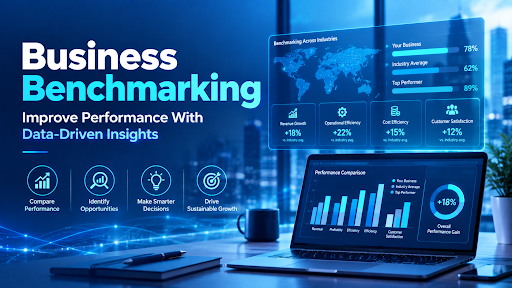

Organizations need more than internal performance data to understand whether their operations are delivering competitive results. Business benchmarking provides a structured way to compare performance, identify gaps, uncover improvement opportunities, and establish realistic targets. By comparing costs, productivity, service levels, and operating practices against relevant peers, organizations can make more informed transformation and investment decisions.
What Is Business Benchmarking?
Business benchmarking is the process of comparing an organization’s performance, costs, capabilities, and processes against external peers, industry standards, or high-performing organizations. It provides leaders with an objective view of where performance is strong, where gaps exist, and which improvements can create measurable business value.
Benchmarking in Business
Benchmarking in business helps organizations move beyond assumptions by using comparative data to evaluate performance. Leaders can identify whether differences in cost, productivity, staffing, service quality, or process efficiency indicate opportunities for improvement and determine where targeted interventions can deliver the greatest impact.
Benchmarking in Business Strategy
Benchmarking in business strategy gives executives evidence to support strategic priorities and investment decisions. By comparing current performance with relevant benchmarks, organizations can establish realistic targets, prioritize improvement initiatives, allocate resources more effectively, and align operational changes with broader business objectives.
How Benchmarking Supports Business Transformation
Effective benchmarking provides a foundation for Business transformation by identifying performance gaps before organizations redesign processes or invest in new technologies. Comparative insights help leaders understand what leading organizations achieve and determine which capabilities, operating models, and processes should be improved.
Identifying Performance Gaps
Benchmarking can reveal gaps that may remain hidden when organizations evaluate performance using internal targets alone. Comparing cost structures, productivity, cycle times, service levels, and organizational metrics provides a clearer understanding of competitive position and highlights areas requiring focused improvement.
Establishing Realistic Performance Targets
External benchmarks help organizations establish targets based on actual market performance rather than arbitrary internal expectations. Leaders can use comparative data to determine achievable improvement levels, develop business cases, and create measurable objectives for cost optimization, productivity enhancement, and service improvement.
Functional Business Benchmarking
Different business functions have distinct performance drivers, making functional benchmarking particularly valuable. Comparing function-specific costs, productivity, organizational structures, service levels, and process maturity allows leaders to identify targeted opportunities while understanding how individual functions contribute to overall enterprise performance.
Finance Benchmarking
Finance benchmarking compares finance costs, staffing, productivity, transaction volumes, process performance, and service delivery against relevant peers. These insights can help finance leaders identify opportunities to improve efficiency, streamline processes, optimize organizational structures, and redirect resources toward higher-value activities.
GBS Benchmarking
GBS benchmarking evaluates the performance of global business services across cost, productivity, service quality, scope, and operating model effectiveness. Organizations can use these comparisons to identify opportunities to improve service delivery, optimize locations, increase standardization, and strengthen the value delivered by GBS operations.
HR Benchmarking
HR benchmarking provides comparative insights into HR costs, staffing, productivity, service delivery, and process efficiency. These insights can help HR leaders identify operational gaps, improve employee services, optimize resources, and determine where automation or process redesign can strengthen overall HR effectiveness.
IT Benchmarking
IT benchmarking compares technology costs, staffing, productivity, service levels, and operational performance with relevant organizations. IT leaders can use these insights to identify efficiency opportunities, evaluate technology spending, improve service delivery, and determine where modernization or operating model changes may generate greater value.
Benchmarking Across Enterprise Operations
Benchmarking can extend across critical enterprise functions to create a comprehensive view of operational performance. Cross-functional comparisons help organizations identify differences in efficiency and maturity while enabling leaders to prioritize initiatives that can generate measurable improvements across interconnected processes.
Payroll Benchmarking
Payroll benchmarking evaluates payroll costs, staffing, productivity, transaction volumes, and service performance against relevant peers. Organizations can identify opportunities to streamline payroll operations, improve process efficiency, optimize technology usage, and determine whether service delivery models are achieving competitive performance levels.
Procurement Benchmarking
Procurement benchmarking compares procurement costs, staffing, productivity, process efficiency, and service performance. These insights can help procurement leaders identify opportunities to improve sourcing effectiveness, increase process automation, optimize organizational structures, and strengthen the value generated from procurement operations.
Supply Chain Benchmarking
Supply chain benchmarking provides comparative insights into supply chain costs, productivity, service levels, inventory performance, and operational efficiency. Organizations can use these findings to identify performance gaps, strengthen planning and execution, improve resilience, and prioritize investments that support more effective supply chain operations.
Shared Services Benchmarking
Shared services benchmarking evaluates service delivery costs, productivity, staffing, process performance, and organizational effectiveness against comparable operations. Leaders can use the findings to assess operating model performance, identify standardization opportunities, improve service quality, and build stronger business cases for shared services transformation.
Turning Benchmarking Insights Into Action
Benchmarking delivers the greatest value when comparative findings translate into specific improvement initiatives. Organizations should move beyond identifying performance gaps by understanding their underlying causes, evaluating improvement opportunities, defining target outcomes, and developing actionable roadmaps that connect insights with measurable business results.
From Data to Business Performance Management
Business performance management becomes more effective when leaders have reliable external benchmarks alongside internal performance data. Comparative insights enable organizations to monitor progress, validate improvement initiatives, identify emerging gaps, and maintain accountability for achieving strategic and operational performance targets.
Building a Continuous Improvement Culture
Benchmarking should not be treated as a one-time assessment. Regular comparisons allow organizations to monitor progress, reassess priorities, and identify new opportunities as business conditions change. Continuous benchmarking creates an evidence-based approach to performance improvement and helps sustain gains over time.
Accelerate Performance Improvement With The Hackett Group®
Benchmarking becomes more valuable when organizations can translate comparative data into practical business decisions. The Hackett Group® helps organizations understand their performance relative to relevant peers, identify improvement opportunities, establish realistic targets, and develop actionable strategies for closing performance gaps.
From finance and HR to IT, procurement, supply chain, payroll, GBS, and shared services, benchmarking can provide the insights leaders need to optimize operations and strengthen business performance. By combining benchmarking insights with transformation planning, organizations can prioritize investments, improve operating models, and focus resources on initiatives with measurable potential.
Ready to understand how your organization compares with leading peers? Use benchmarking to uncover performance gaps, identify improvement opportunities, and build a focused roadmap for sustainable business transformation.