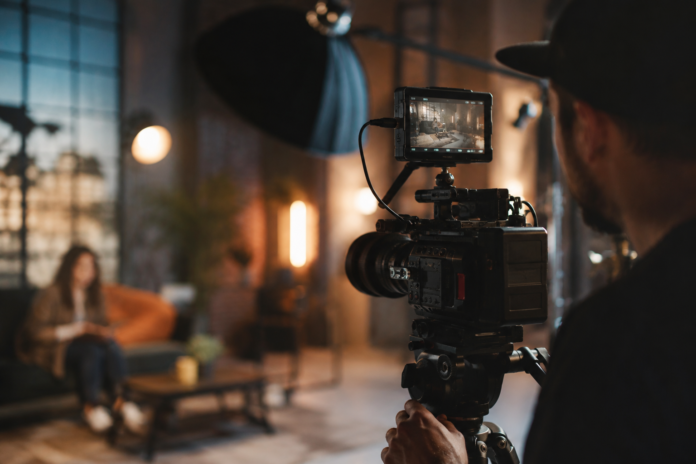

What if your passion for creating videos could become a practical creative skill and a pathway into a growing range of professional opportunities?
Video has become an important part of how businesses, organisations, creators and individuals communicate. From social media campaigns and weddings to corporate productions, documentaries, events and online education, quality video can capture attention and tell stories in ways that still images and text often cannot.
For anyone interested in turning an interest in cameras and storytelling into a practical skill, a videography course can provide a structured introduction to the creative and technical side of video production.
The Australian industry also offers evidence of an established professional environment. Jobs and Skills Australia reports that 3,300 people are employed as Film and Video Editors, while the broader Information Media and Telecommunications industry employs around 178,100 people. The industry also includes 34,300 workers in Motion Picture and Video Activities, demonstrating the scale of Australia’s wider media landscape.
However, professional videography involves much more than pressing record. You need to understand cameras, exposure, lenses, composition, lighting, sound, movement, storytelling and editing.
1. Learn what makes a video effective
A strong video is not necessarily the one with the most expensive camera.
Professional-looking footage comes from making deliberate creative and technical decisions.
A videographer needs to consider what the audience should see, hear and feel. The camera is simply the tool used to communicate that idea.
During a videography course, beginners can start developing an understanding of the relationship between technical settings and creative outcomes.
For example, changing the camera’s aperture can affect depth of field, while shutter speed can influence how motion appears. Frame rate can change the feeling of movement, while focal length affects how a subject appears within the frame.
Once these concepts become familiar, you can stop relying entirely on automatic settings and begin making decisions based on the story you want to tell.
2. Understand your camera
Your camera is one of the most important tools in your kit, but knowing how to operate it effectively takes practice.
A good starting point is understanding the main controls and how they affect your footage.
These include:
- Aperture
- Shutter speed
- ISO
- Frame rate
- Resolution
- White balance
- Focus
- Picture profiles
- Exposure
It is easy to become overwhelmed by camera menus, particularly when you are starting out. Structured learning can make the process much more manageable.
Instead of memorising every setting, focus on understanding why you would change a particular setting.
For example, you might select a different frame rate to create a specific motion effect or adjust aperture when you want greater separation between your subject and background.
This knowledge gives you greater creative control and makes it easier to adapt when shooting in different environments.
3. Master exposure for video
Exposure is one of the foundations of good videography.
If footage is severely overexposed, important details can disappear in bright areas. If it is underexposed, shadows can become excessively dark and difficult to recover during editing.
Learning to control exposure means understanding how aperture, shutter speed and ISO work together.
You also need to understand that video exposure is not always about making an image as bright as possible. The goal is to create an exposure that works for the scene and preserves useful information.
An experienced videographer considers the available light, subject, environment and intended final look before pressing record.
With practice, checking exposure becomes part of your normal shooting routine rather than something you think about only after a problem appears.
4. Explore composition and framing
Composition determines how the viewer experiences the image.
A technically perfect video can still feel uninteresting if the framing lacks intention.
A videography course can introduce principles such as the rule of thirds, leading lines, symmetry, negative space, depth and visual balance.
You can also experiment with different shot sizes, including:
- Extreme wide shots
- Wide shots
- Medium shots
- Medium close-ups
- Close-ups
- Extreme close-ups
Each shot serves a different purpose.
A wide shot might establish where a story is taking place, while a close-up can communicate emotion or highlight an important detail.
Learning to combine different shot sizes allows you to create visual variety and gives your editing more flexibility.
5. Learn how to use movement intentionally
Camera movement can add energy and emotion to a production, but movement should have a purpose.
Simple techniques such as pans, tilts, tracking shots and handheld movement can dramatically change how a scene feels.
The important thing is not to move the camera simply because you can.
Ask yourself what the movement contributes to the story.
Does it reveal something? Follow a subject? Create excitement? Establish a location? Make the audience feel as though they are part of the scene?
When movement has a reason, it becomes part of the storytelling rather than a visual distraction.
A stable, carefully composed static shot can sometimes be more effective than an elaborate camera movement.
6. Understand the importance of lighting
Lighting can transform ordinary footage.
Two videos filmed with the same camera can look completely different depending on how the subjects are lit.
Natural light is an excellent starting point for beginners. Learning to observe the direction, intensity and quality of available light can help you make better decisions before reaching for additional equipment.
You can then explore artificial lighting and concepts such as:
- Key light
- Fill light
- Backlight
- Soft light
- Hard light
- Colour temperature
- Shadows
- Contrast
Lighting can influence the mood of a scene and draw attention towards particular elements.
For interviews, for example, thoughtful lighting can make a subject appear more professional and visually engaging.
For creative productions, lighting can become part of the storytelling itself.
7. Do not overlook sound
One of the biggest lessons for new videographers is that good video requires good audio.
Viewers may forgive an imperfect image, but distracting or unintelligible sound can make a production difficult to watch.
Learning about microphones, recording levels, background noise and monitoring can therefore be just as important as understanding cameras.
Different situations may require different microphones.
A shotgun microphone may be useful for certain directional recording situations, while a lavalier microphone can be practical for interviews and presentations.
You should also learn to listen carefully to the environment before recording.
Air conditioners, traffic, wind, conversations and electrical equipment can all affect the final recording.
Good videography is therefore partly about learning to listen.
8. Develop storytelling skills
Technical knowledge alone does not automatically make someone a great videographer.
The best productions usually have a clear purpose and story.
Whether you are filming a wedding, promotional campaign, event or short documentary, think about what the audience should understand or feel.
Before filming, consider questions such as:
- What is the main message?
- Who is the audience?
- What is the beginning?
- What needs to happen in the middle?
- What should the audience remember at the end?
- Which visuals can communicate the message without dialogue?
Storytelling also affects the footage you capture.
If you understand how the finished story might unfold, you can record supporting footage that makes the editing process much easier.
This is why learning to plan is just as valuable as learning to operate a camera.
9. Learn to capture B-roll
B-roll is additional footage that supports the primary action or interview.
For example, if you are filming an interview with a chef, the interview may be your main footage. B-roll could include the chef preparing ingredients, cooking, serving food or interacting with customers.
B-roll gives editors opportunities to hide cuts, establish context and make the production more visually interesting.
For beginners, learning to capture useful B-roll can dramatically improve the quality of their projects.
Think beyond simply recording the main subject.
Capture details, wide establishing shots, environmental footage, interactions and movement.
These additional clips can give your final edit rhythm and variety.
10. Understand video editing
Shooting footage is only one stage of production.
Editing is where individual clips are shaped into a coherent story.
A video editing workflow may include:
- Importing and organising footage
- Reviewing clips
- Selecting the strongest takes
- Creating a rough sequence
- Trimming unnecessary sections
- Adding B-roll
- Adjusting audio
- Adding music or sound effects
- Applying colour adjustments
- Exporting the final video
Good editing is not necessarily about adding as many effects as possible.
In many professional productions, effective editing is relatively subtle. Cuts, pacing, music and sound are carefully chosen to support the story rather than distract from it.
Learning editing also changes how you shoot.
Once you understand what editors need, you begin capturing footage with the final sequence in mind.
11. Learn colour correction and grading
Colour can significantly influence the appearance and mood of a production.
Colour correction is generally concerned with making footage consistent and technically balanced. Colour grading can then be used to create a particular visual style.
For example, a warm treatment might create a welcoming feeling, while a cooler look might contribute to a more subdued atmosphere.
However, colour grading should begin with properly exposed and balanced footage.
Beginners sometimes try to fix every problem through grading, but it is usually better to capture the strongest image possible in-camera.
Learning the fundamentals of colour gives you another creative tool while helping you produce footage that looks consistent from shot to shot.
12. Practise with real projects
Watching tutorials can help you understand concepts, but practical experience is where those concepts become skills.
A useful way to develop is to create small projects regularly.
You could film:
- A short travel video
- A café or restaurant profile
- A product demonstration
- A family event
- A short interview
- A behind-the-scenes video
- A social media reel
- A short documentary
Each project can focus on a different skill.
For one project, concentrate on composition. For another, focus on sound. Another could be dedicated to camera movement or storytelling.
This approach prevents you from trying to master everything simultaneously.
It also gives you a growing collection of work that can eventually become part of a portfolio.
13. Build a portfolio that demonstrates your range
If your goal is to work professionally, your portfolio can be more important than simply telling potential clients that you know how to use a camera.
A portfolio should show what you can actually create.
Rather than uploading every video you have ever made, select projects that demonstrate your strongest abilities.
For example, a portfolio might include:
- Corporate video
- Event coverage
- Interviews
- Social media content
- Promotional videos
- Lifestyle footage
- Short-form storytelling
Keep the presentation clean and easy to navigate.
You can also create a short showreel featuring your strongest shots.
As your skills improve, replace older work with better projects.
Your portfolio should evolve alongside your abilities.
14. Explore different career pathways
Videography can be applied across a wide range of industries.
Some people work independently, while others join production companies, marketing agencies, media organisations or internal content teams.
Potential areas include:
- Corporate video
- Weddings and events
- Social media content
- Commercial production
- Real estate
- Tourism
- Education
- Documentary production
- Music videos
- Promotional campaigns
The Australian Government’s Jobs and Skills Australia data shows that video-related roles sit across several industries, including Information Media and Telecommunications, Arts and Recreation Services, and Professional, Scientific and Technical Services.
This variety means videography skills can potentially be applied in different professional environments rather than being restricted to traditional film production.
15. Keep developing your skills
Technology changes quickly, but strong fundamentals remain valuable.
New cameras, editing software, stabilisation systems and production techniques continue to appear. However, someone who understands exposure, composition, lighting, sound and storytelling can adapt to new equipment much more easily.
Continuing education can also help you identify areas for improvement.
You might eventually specialise in a particular niche, such as wedding filmmaking, commercial videography, documentary work or social media content.
Specialisation can help you build a recognisable style and attract clients who specifically want the type of work you create.
A videography course can provide a structured starting point, but your development ultimately comes through continued practice and real-world experience.
16. Turn creativity into a professional skill
One of the most rewarding aspects of videography is the combination of creativity and technical knowledge.
You can start with a simple idea and transform it into a finished production through planning, filming, editing and sound.
That process can be incredibly satisfying.
You do not necessarily need the most expensive camera or a large production crew to begin. What matters initially is learning how to use the equipment available to you and understanding why certain techniques produce better results.
As your confidence grows, you can gradually invest in equipment that solves specific creative problems rather than purchasing gear simply because it is popular.
Start your videography journey
A career in video does not begin with owning the perfect camera. It begins with understanding how to tell a story and developing the skills needed to bring that story to life.
A structured videography course can help you build a foundation in camera operation, exposure, composition, lighting, sound, storytelling and editing. From there, regular practice can turn theoretical knowledge into practical ability.
The Australian Government’s current employment data also shows that film, video and media-related work forms part of a substantial creative and communications landscape in Australia. Jobs and Skills Australia reports 7,800 media producers and 3,300 film and video editors, alongside thousands of workers in motion picture and video activities.
You can also supplement structured learning with practical resources. For example, this videography basics tutorial on YouTube covers camera types, frame rates, resolution, exposure, white balance, lenses, stabilisation and other fundamentals.
Ultimately, the best way to become better at videography is to keep creating. Shoot often, review your footage, learn from mistakes and gradually challenge yourself with more ambitious projects.
So, are you ready to turn your passion for video into a skill that can tell stories, build a portfolio and potentially open new creative opportunities?