
Key Highlights
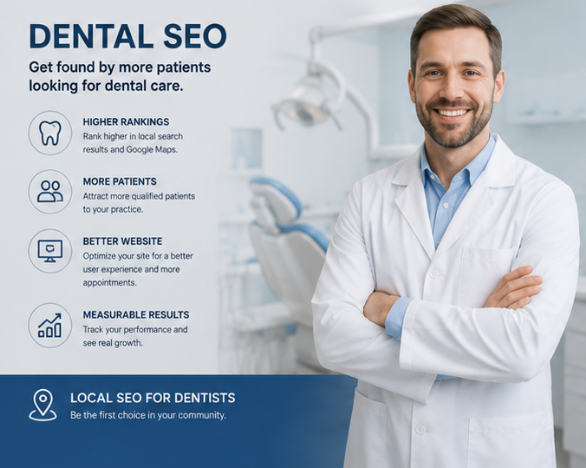
- Dental SEO helps your dental practice appear in search results when potential patients are ready to book.
- For Australian clinics, local SEO matters because most growth starts with nearby local searches.
- Better rankings can improve your online presence, bring stronger patient leads, and support steady revenue.
- Strong pages, technical fixes, reviews, and quality backlinks all shape results.
- A fast, clear website helps turn visits into booked appointments.
- Tracking calls, forms, and rankings shows what is working.
Introduction
If your dental practice is hard to find online, you are likely losing bookings to a clinic nearby. Dental SEO is search engine optimisation built for dentists who want more visibility, more calls, and more appointments. Done well, it helps your website show up when people search for treatments, compare options, and look for a trusted local provider.
Understanding Dental SEO for Australian Practices

Dental SEO is search engine optimisation and AI optimisation tailored to a dental clinic. It improves how your site appears in search results when people look for care, costs, or urgent help.
In Australia, that matters because many bookings begin with local searches. In a competitive dental industry, stronger visibility helps your clinic get found before the practice in the next suburb. The next two sections explain what makes this niche different.
What Sets Dental SEO Apart from General SEO
Dental SEO is not the same as a standard SEO strategy for a plumber, café, or retail shop. Google treats dental topics as high-trust content, so weak pages often struggle to gain online visibility.
That means your site needs stronger proof of experience, expertise, authoritativeness, and trustworthiness. Real clinical understanding, accurate treatment details, secure pages, and genuine reviews all support search engine rankings.
For example, a page about dental implants needs more than a keyword. It must show clear, trustworthy information that matches patient concerns. In the dental industry, trust is not a bonus. It is part of ranking.
How Dental SEO Drives More Patients to Your Clinic
Here is the short answer: dental SEO helps dentists get more patients by putting your clinic in front of people who are already looking for dental care. That makes search engine optimisation a direct growth channel, not just a branding task.
When your pages rank for useful searches, you earn organic traffic from people with intent. A parent searching for a family dentist or someone looking for an emergency appointment is already close to action.
- More visibility brings more potential patients to your site.
- Better content improves trust and lifts conversion rate.
- Local intent turns searches into calls, forms, and bookings.
Why SEO is Critical for Dentists in Australia
Most patients start with an online search, not a referral list. If your dental practice does not appear near the top, another clinic gets the first call.
That is why local SEO is so important in Australia. Search results often favour nearby, relevant providers, so stronger search engine results can mean more booked chairs. Let’s look at the practical gains first.
Benefits of Ranking Higher in Search Results
Higher placement in search results puts your clinic in front of people at the exact moment they need help. On Google search, that timing matters because patients often contact one of the first options they trust.
Better online visibility also helps you attract the right local patients, not random traffic. A clinic ranking for “emergency dentist open Sunday” can win urgent bookings that a generic homepage misses.
- Show up earlier when new patients compare nearby options.
- Capture urgent and treatment-specific searches with intent.
- Build trust faster through strong reviews and clear details.
How Dental SEO Increases Practice Revenue
Revenue grows when your SEO efforts bring in patient leads that are more likely to book. That is the real value of ranking: not traffic alone, but enquiries from people seeking specific dental services.
A cosmetic clinic, for instance, may attract people researching prices for months before acting. A general dental clinic may benefit more from “dentist near me” or same-day care searches.
Over time, those bookings support practice revenue without relying only on paid campaigns. Unlike short bursts from ads, strong visibility can keep feeding enquiries as your pages keep ranking.
Key Ranking Factors for Dental Websites
A dental website ranks well when the basics are solid, and the trust signals are clear. Search engine optimisation depends on content, speed, structure, and relevance.
You also need a way to measure movement. Keyword rankings, enquiries, and behaviour data in Google Analytics help show whether your search rankings are improving. The next sections break down the main factors.
On-Page SEO Essentials for Dentists
Start with the parts you control on your own site. Good web design helps, but pages also need strong keyword research, clear headings, and useful answers to patient questions.
A simple step-by-step process works best. First, fix technical SEO issues like slow pages and poor mobile layout. Then update core treatment pages with quality content that matches search intent.
- Write clear titles and meta descriptions for service pages.
- Build pages around actual patient searches, not guesses.
- Make treatment information easy to scan and understand.
- Keep contact details visible on every key page.
The Role of Off-Page SEO and Backlinks in Dentistry
Off-page signals tell Google whether others trust your clinic. That is where backlinks matter. A link from a respected healthcare directory or local publication can support search rankings far more than random mentions.
For dentists, quality beats volume. A few quality backlinks from relevant local sources are more useful than a pile of low-value links that do nothing for your online presence.
This is one reason some practices work with an SEO agency. The goal is not link chasing. It is earning trusted mentions that strengthen authority and support local discovery.
Optimising Your Website for Patient Conversion
Traffic alone will not fill your diary. Your dental website also needs to answer patient questions quickly and make the next step obvious.
A strong user experience improves conversion rate by removing friction. If someone lands from Google Business and cannot find your phone number, opening hours, or treatment page, you may lose them. Here is how to tighten that journey.
Building Trust with Patient-Focused Design
Patients judge trust fast. Your web design should feel clear, calm, and easy to use on mobile. If a page is cluttered or slow, confidence drops before they even read your offer.
Trust also grows through proof. Patient reviews, accurate treatment details, and consistent branding all support your online presence and reassure visitors that they are in the right place.
A practical example is a paediatric clinic. Parents want reassurance before booking, so service pages should explain the visit, show warmth, and make contact details easy to find.
Creating Clear and Engaging Service Pages
Strong service pages do one job well: they help visitors understand a treatment and take action. Each page should focus on one of your dental services, not several mixed.
This is where many sites lose patient leads. A generic page rarely answers the real concerns behind a search like “Invisalign cost” or “emergency dentist open Sunday”.
- Explain who the treatment is for and what happens next.
- Answer common worries in plain language with quality content.
- Add one clear booking action to help new patients convert.
Advanced Dental SEO Strategies for Growth
Once the basics are working, advanced tactics can open more growth. This is where a sharper SEO strategy supports broader digital marketing goals.
For many clinics, SEO works best alongside content marketing and, in some cases, Google Ads for immediate demand capture. The next two tactics are often skipped, yet they can create a real edge.
Schema Markup and Voice Search Optimisation
Schema markup gives search engines cleaner context about your business, services, and pages. It is part of technical SEO that patients may never see, but Google does.
Voice search also changes how people ask questions. They use longer, more natural phrases, especially for urgent needs or local intent. That means your SEO strategy should reflect real spoken queries.
A useful method is to pair service terms with local and problem-led language using Google Keyword Planner. For example, “emergency dentist open Sunday” is more actionable than a broad treatment keyword.
Leveraging AI Tools and New Trends in Dental SEO
AI search is changing how clinics get discovered, so your digital marketing cannot rely on old habits alone. Content built on real expertise and clear answers is more likely to surface in newer search experiences.
Use tools to spot gaps and refine decisions. Google Analytics shows behaviour, while Google Search Console highlights queries, clicks, and indexing issues. Blog posts can then target the exact topics patients keep asking.
Measuring Dental SEO Success and ROI
You cannot judge SEO success by rankings alone. Real return comes from better online visibility that leads to enquiries and bookings.
That is why search engine optimisation should be measured through website traffic, lead quality, and conversion actions. With the right data, you can see what is paying off and what needs work.
Using Analytics to Track Website Traffic and Leads
Start by connecting the basics. Google Analytics helps you see where website traffic comes from and which pages lead people towards action. Pair that with your Google Business Profile performance for a fuller local picture.
Then track the outcomes that matter. A page with fewer visits but more calls may be stronger than a page with lots of traffic and no enquiries.
- Measure phone calls, forms, and booking clicks.
- Compare conversion rate by page and traffic source.
- Review which SEO efforts lead to local enquiries.
Adjusting Your Strategy for Long-Term Results
SEO is not a one-off project. Your SEO strategy needs regular checks because keyword rankings shift, search features change, and competitors improve.
A sensible routine is to review technical health, top pages, and local signals each month. If one service page is gaining impressions in Google search but not clicks, rewrite the title and page intro.
Long-term growth comes from steady SEO efforts, not sudden overhauls. Small fixes, clear priorities, and consistent improvement help protect your online presence over time.
Conclusion
In conclusion, mastering dental SEO is essential for Australian practices aiming to enhance their online visibility and attract more patients. By understanding the unique aspects of dental SEO, employing effective strategies, and consistently analysing your results, you can significantly boost your practice’s ranking in search engine results. Remember, a well-optimised website not only increases traffic but also helps convert visitors into loyal patients. Start implementing these strategies today and watch your practice thrive.
Frequently Asked Questions
What is the best dental SEO strategy for a new practice in Australia?
For a new clinic, start with a local-first SEO strategy: optimise your dental website, build core service pages, and publish quality content based on real searches. If support is needed, a dental SEO agency can help improve online visibility without guesswork.
How long does it take to see results from dental SEO?
Most practices see meaningful movement from dental SEO in 3 to 6 months, with stronger gains in 6 to 12 months. Search engine optimisation builds over time, and Google Analytics helps you measure early signs of SEO success from organic search.
What common mistakes should dentists avoid with SEO?
Common mistakes include generic content, weak local SEO, ignored technical issues, and web design that hides key actions. Many dentists also rely on guesswork. Strong SEO efforts should match real patient searches on Google Search and make booking easy.