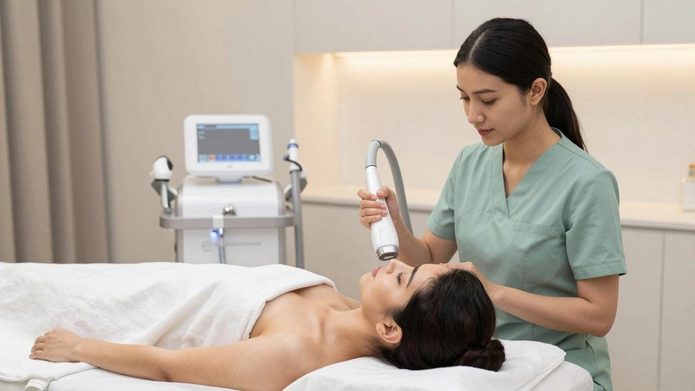

You’ve noticed silvery stretch marks on your thighs, a few dark patches on your shoulders, or skin that feels rougher than it used to. Then you search for treatments and find laser, radiofrequency microneedling, and a long list of procedures that all sound similar. Here is the short answer: body rejuvenation is not one treatment. It is a group of approaches, each aimed at a different concern, and none works for everyone. Matching the method to the actual concern, understanding its limitations, and knowing the risks matter more than picking the most popular option.
What Does Body Rejuvenation Actually Mean?
“Body rejuvenation” is a broad label, not a medical diagnosis. Clinics use it for procedures intended to change how body skin looks or feels, but the concerns underneath can be quite different.
Pigmentation involves color. Dark patches can develop after sun exposure or inflammation from a rash, injury, or breakout. Stretch marks are different: they are a form of scarring that develops when skin stretches or changes rapidly, so the concern involves the skin’s structure, not just its color.
Uneven texture, such as roughness or a crepey appearance, may overlap with either one. Skin laxity is another matter. It describes looseness associated with changes in the skin’s supporting structures and may require a different approach from treatments targeting pigment.
Because these concerns involve different processes and skin structures, a procedure that suits one may do little for another. That is why a useful starting question is “What exactly am I trying to change?” rather than “Which machine is best?”
Which Body Skin Concerns Can Professional Treatments Address?
People commonly ask about stretch marks, localized pigmentation, uneven texture, and, in some cases, mild skin looseness.
Stretch marks change over time. Newer ones may appear red, purple, pink, or darker than the surrounding skin, depending on skin tone. Older marks often become paler or silvery. Their age, appearance, and location can influence which treatment approaches a clinician considers appropriate.
It’s worth saying plainly that visible skin variation is normal. Stretch marks, uneven tone, and texture changes are common, and none automatically requires treatment. Choosing to address them is a personal preference, not an obligation.
Some changes also deserve medical assessment before any cosmetic procedure. A spot that is new, changing, bleeding, or irregular in color or shape should be examined by an appropriate medical professional rather than treated as ordinary pigmentation.
Consider two people with darker bands across the lower abdomen. One has flat post-inflammatory discoloration left by an old rash. The other has stretch marks that appear darker than the surrounding skin. They might look similar from a distance, yet the first is primarily a pigmentation concern while the second involves scar-like structural changes.
A treatment intended to target pigment may not improve the texture of stretch marks, and a procedure aimed at skin remodeling may not be appropriate for every pigmented patch. Assessment matters because the visible appearance alone doesn’t always reveal the underlying cause.
How Do Laser Treatments Work for Stretch Marks and Pigmentation?
Lasers deliver concentrated light energy to selected targets in the skin. Different technologies use different wavelengths, pulse characteristics, and treatment settings, so the intended effects vary.
Fractional laser treatments create small areas of controlled treatment within the skin while leaving surrounding areas untreated. Depending on the device, this may involve microscopic injury that stimulates a repair response. Such approaches are sometimes used to improve the appearance and texture of stretch marks, although results vary and complete removal cannot be promised.
Pigment-targeting lasers work differently. Certain devices use wavelengths and energy settings selected to interact with particular pigments in the skin. Depending on the technology and condition being treated, the aim may involve breaking pigment into smaller particles or affecting pigment-containing structures.
Not every dark patch responds to the same laser. Sun-related spots, post-inflammatory pigmentation, and other causes of discoloration can require different assessments. Some pigmented lesions should not be treated cosmetically without a diagnosis.
Skin tone is another important consideration. Melanin in the surrounding skin may also absorb laser energy, increasing the risk of unwanted changes when a treatment or its settings are unsuitable. These can include post-inflammatory hyperpigmentation, where treated skin becomes darker, or hypopigmentation, where it becomes lighter than surrounding areas.
A recently tanned area may also require different precautions. Practitioners need to consider the skin’s characteristics, the diagnosis, device selection, and treatment settings before proceeding.
Published clinic menus can help illustrate the range of approaches. For example, a service page describing body rejuvenation treatments in Singapore lists options named Stretch Mark Removal Laser and Whitening Laser.
These are service names, not guaranteed outcomes. “Removal” does not mean every stretch mark can disappear, and a treatment marketed for whitening should not be assumed suitable for every type of pigmentation or natural skin tone.
Where Does RF Microneedling Fit Into Body Rejuvenation?
Radiofrequency (RF) microneedling combines fine needles that penetrate the skin with radiofrequency energy delivered through the device. Depending on the system, energy is deposited at selected depths to produce controlled heating intended to stimulate tissue remodeling.
That is why RF microneedling is sometimes discussed for stretch marks and uneven skin texture. The aim is to influence the skin’s repair processes rather than simply change the color of a mark.
It differs from laser treatment in an important way. Laser devices use light energy, while RF microneedling physically introduces needles into the skin and delivers electrical energy that produces heat. It is an invasive medical procedure, not a gentle surface treatment.
Some providers offer RF microneedling under device-specific service names. Kelly Oriental’s body rejuvenation menu, for instance, lists Stretch Mark Removal SylfirmX. The name identifies an offered procedure, but it does not establish that the device is suitable for every patient or superior to every fractional laser approach.
Risks deserve attention. In October 2025, the U.S. Food and Drug Administration issued a safety communication about certain uses of RF microneedling. It described reports of serious complications, including burns, scarring, fat loss, nerve damage, and disfigurement.
These are reported potential complications, not a measured rate of occurrence. The communication also does not mean every patient will experience them or that every report involved one specific device.
RF microneedling requires careful patient selection, appropriate professional training, informed consent, and a clear discussion of possible complications.
What Results and Limitations Should You Expect?
The most realistic expectation is improvement, not elimination.
Professional treatments may make stretch marks less noticeable, but no treatment reliably erases them. The NHS explains that stretch marks often fade naturally over time and that available treatments may improve their appearance without removing them completely.
Results also vary from person to person. Newer stretch marks that still have a red or purple appearance may respond differently from older, paler marks. Their width, depth, location, and the person’s skin characteristics can also influence treatment planning.
A clinician may consider different approaches for an older stretch mark with visible texture than for a newer mark that has a stronger color component. That distinction does not mean one stage is always easier to treat or that a particular technology guarantees improvement.
More than one appointment may be considered, but the appropriate number depends on the individual and the treatment involved. Be cautious about promises of a fixed session count or a precise percentage of improvement before a proper assessment.
Pigmentation has its own limitations. Some discoloration may respond to selected treatments, while other conditions can be persistent or recur. Sun exposure, ongoing inflammation, and the underlying cause may influence what happens afterward.
A useful consultation should establish what a particular procedure might realistically improve, what it probably won’t change, and whether less intensive options or no treatment at all would be reasonable.
What Risks and Recovery Questions Should You Discuss?
Depending on the procedure, temporary redness, swelling, tenderness, or a sunburn-like sensation may occur. The expected intensity and duration vary with the technology, treatment settings, and individual skin response.
Other complications can be more serious. Unwanted pigmentation changes, burns, and scarring are possible with certain energy-based procedures. Treatments that break the skin may also carry infection-related risks.
For RF microneedling, the FDA has additionally highlighted reports of severe complications, including fat loss and nerve damage. These concerns should be discussed without assuming they occur with every treatment or device.
Recovery planning is particularly important when the treated area is exposed to clothing friction, sunlight, or repeated movement. Aftercare may involve instructions about cleansing, skincare products, sun protection, and activities to avoid. Requirements differ by procedure, so general advice cannot replace the treating clinician’s instructions.
Questions worth bringing to a consultation include:
- Which temporary reactions should I expect, and which complications require urgent attention?
- How might my skin tone and medical history affect the risks?
- What recovery period is realistic for the proposed procedure?
- Which skincare products, activities, or sun exposures should I avoid afterward?
- What should I do if the treated area becomes increasingly painful, swollen, or otherwise concerning?
Only an appropriately qualified professional who has assessed your skin and medical history can determine whether a specific procedure is suitable.
Be cautious of any description that promises a treatment will be completely painless, risk-free, or free from downtime.
How Should You Choose a Body Rejuvenation Provider?
Start with qualifications. Ask who will perform the procedure, what relevant training they have, and whether the treatment is provided under the appropriate medical and regulatory arrangements.
In Singapore, the Ministry of Health distinguishes regulated clinical aesthetic procedures from ordinary beauty services. It is reasonable to ask how a proposed treatment is classified and who is authorized to perform it.
A meaningful consultation should involve examining the concern, reviewing relevant medical history, and explaining why one approach may be preferable to another. Alternatives, limitations, possible complications, total costs, and follow-up arrangements should also be discussed.
Reviewing a clinic’s published services can help you prepare questions. For example, the overview from Kelly Oriental Aesthetic Clinic shows different aesthetic treatment categories that a prospective patient might want to understand before arranging a consultation.
A service catalogue tells you what a provider advertises. It does not independently confirm practitioner credentials, regulatory compliance, individual suitability, or treatment outcomes. Those details need separate verification.
Common Questions About Body Rejuvenation
Can stretch marks disappear completely after treatment?
Treatments may make stretch marks less noticeable, but complete removal should not be promised. Results depend on the marks, the person’s skin, and the selected procedure.
Is RF microneedling the same as laser treatment?
No. Lasers deliver light energy, while RF microneedling uses needles to deliver radiofrequency energy into the skin. Their mechanisms, potential uses, and risks differ.
Can laser pigmentation treatment work for every skin tone?
Not automatically. Suitability depends on the cause of pigmentation, skin characteristics, device selection, treatment settings, and professional assessment. Certain treatments may carry additional pigment-change risks for some skin types.
Conclusion
If you’re considering treatment for stretch marks, pigmentation, or uneven body texture, begin by identifying the concern rather than choosing a device name. Ask an appropriately qualified clinician what the proposed procedure can realistically improve, what alternatives exist, and which risks and recovery requirements apply to you.
Seek another professional opinion if the explanation is unclear or the promises seem excessive. Leaving your skin as it is remains a perfectly reasonable choice.
READ ALSO: The Nutrition Details Worth Checking Before Your Next Workout