
Table of Contents
- Importance of Preventive Maintenance
- Routine Inspection Checklist
- Lubrication Best Practices
- Alignment and Balancing
- Monitoring Vibration and Temperature
- Seal and Gasket Maintenance
- Training and Documentation
- Conclusion
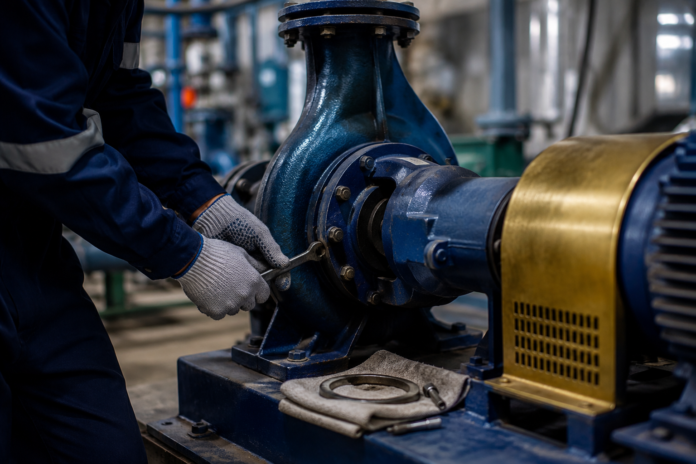
Industrial pumps play a pivotal role in critical sectors such as manufacturing, water treatment, and chemical processing. Without efficient pumps, entire operations can grind to a halt, leading to significant financial losses and potential safety hazards. To ensure these essential machines operate seamlessly, it is vital to implement a meticulous maintenance strategy that maximizes reliability and efficiency. Companies serious about operational excellence often turn to expert solutions, such as those available at Cbeuptime.com, for their pump system needs.
Neglecting proper maintenance can result in expensive repairs, unscheduled shutdowns, and even reduced equipment lifespan. On the other hand, a structured maintenance protocol not only safeguards investments but also drives productivity. For plant managers and maintenance teams, understanding and applying the latest best practices is a non-negotiable task in today’s competitive landscape.
Forward-thinking facilities integrate preventive maintenance schedules, real-time monitoring tools, and continuous staff training to address issues before they escalate proactively. Focusing on routine inspections and sound operational habits ensures that pump systems deliver consistent performance with minimal interruptions.
Learning from industry resources, such as the Chemical Processing Preventive Maintenance Guide, can further bolster in-house maintenance programs with proven strategies and expert insights.
Importance of Preventive Maintenance
Preventive maintenance lays the foundation for reliable and efficient industrial pump operation. By addressing wear and tear early, facilities can prevent catastrophic breakdowns and extend their equipment’s lifespan. Studies suggest that maintaining a consistent maintenance plan can push reliability rates over 98 percent, while plants relying on reactive repairs usually see only about 85 percent uptime. This not only helps minimize costly repair bills but also reduces the risk of product contamination and safety incidents.
Routine Inspection Checklist
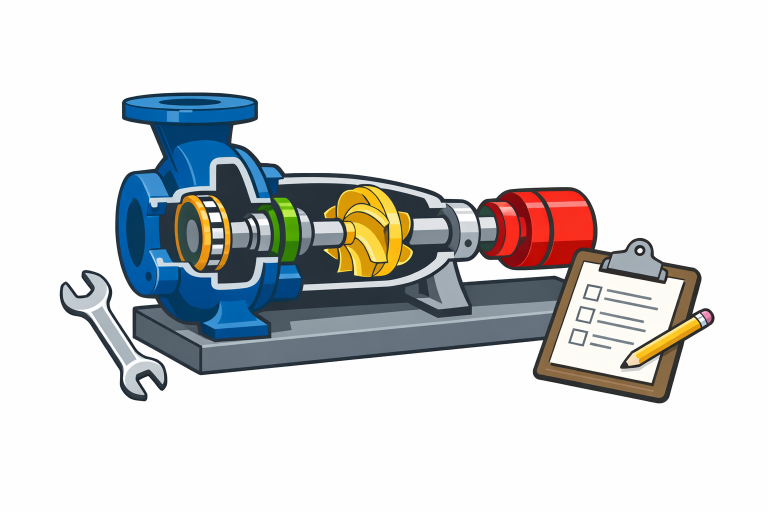
A disciplined inspection routine enhances early detection of emerging issues. Facilities should regularly assess the following pump components:
- Bearings: Inspect for overheating, vibration, or unusual noise.
- Seals and Gaskets: Look for visible leaks, wear, or signs of chemical attack.
- Impellers: Check for physical damage, clogging, or corrosion.
- Couplings: Ensure secure attachment and assess for misalignment or excessive play.
Using a structured maintenance checklist is instrumental in system reliability. Regular maintenance not only keeps equipment running smoothly but also provides documentation that helps identify recurring issues. Many industry leaders provide sample checklists that can serve as the foundation for custom protocols in your facility.
Lubrication Best Practices
Lubrication is crucial for reducing operational friction, minimizing wear, and preventing overheating of mechanical parts. Both over-lubrication and under-lubrication are common culprits behind pump bearing failures, each accounting for roughly 40 percent of issues. To optimize lubrication:
- Always use the manufacturer-specified lubricant for each pump model.
- Adhere to lubrication intervals based on pump duty cycles and operating hours.
- Thoroughly document each lubrication event for compliance and troubleshooting.
Following manufacturer recommendations and adopting a proactive approach can drastically reduce the risk of avoidable mechanical failures. For more guidance on industrial lubrication standards, see the Plant Engineering resource.
Alignment and Balancing
Precise alignment between pump assemblies and their driving motors is essential for consistent performance and extended service life. Misalignment increases vibration, accelerates component wear, and often results in premature seal and bearing failures. Using laser alignment devices provides accurate and repeatable results, especially after maintenance activities such as coupling replacement or equipment relocation. Periodic checks, even in the absence of recent adjustments, can catch early signs of alignment drift and prevent ongoing problems.
Monitoring Vibration and Temperature
Modern facilities increasingly rely on real-time monitoring systems to detect abnormal vibration or temperature trends before they lead to unscheduled outages. Excessive vibration may signal problems such as imbalance, cavitation, or misalignment, while abnormal temperature readings often precede bearing or seal failures. Utilizing tools like vibration analysis and thermal imaging enables early intervention, potentially saving thousands in damage and downtime costs. Predictive maintenance based on sensor feedback is becoming a cornerstone of advanced reliability programs. Integrating these monitoring capabilities with industrial automation can further improve how facilities detect problems, respond to changing conditions, and maintain equipment reliability.
Seal and Gasket Maintenance
Seals and gaskets are critical for maintaining system pressure, preventing leaks, and ensuring product purity. Regular visual inspections should look for signs of leaks, drips, or oil stains that may indicate seal degradation or damage. Over time, seals and gaskets can wear due to temperature fluctuations, chemical exposure, or mechanical stress. Facilities should replace these components at the intervals recommended by the manufacturers, or immediately upon the first sign of failure, to prevent system inefficiencies and safety hazards.
Training and Documentation
Proper training equips maintenance teams to spot potential issues and perform repairs safely and correctly. Personnel should be well-versed in original equipment manufacturer (OEM) manuals and follow legal and industry guidelines. Consistent record-keeping of inspections, repairs, and replacements helps identify patterns and root causes, ensuring continuous improvement in maintenance practices and compliance with audit requirements.
Conclusion
Prioritizing best practices in industrial pump maintenance is vital for any operation that relies on fluid-handling systems. Comprehensive inspections, careful lubrication, precise alignment, proactive monitoring, and ongoing training are critical to a successful maintenance program. By implementing these strategies, organizations benefit from increased uptime, reduced repair costs, and a robust return on investment, ensuring the dependability and longevity of their pump assets.