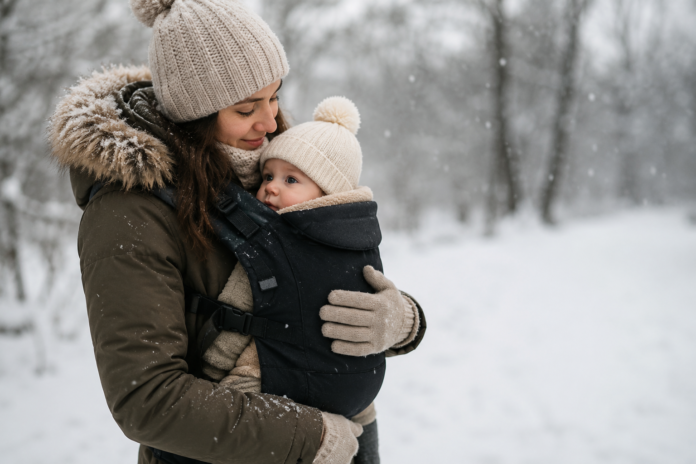

Winter outings can help both you and your baby leave the house comfortably. However, cold weather babywearing needs more planning than adding one thick snowsuit. Your body gives off heat, and the carrier adds another fabric layer around your baby. Wind and wet clothing can still lower body temperature quickly. Too many layers can also trap excess warmth around the chest.
A safer setup uses thin clothing and regular temperature checks. Your baby’s face must also remain completely visible throughout every outing. This guide explains layering, carrier choice, and winter warning signs. You will also learn when an indoor plan makes better sense.
Count Your Body and Carrier as Warmth
Your baby receives warmth from close contact against your torso. The carrier panel also covers part of their back and sides. Those two sources should influence every clothing choice you make.
The American Academy of Pediatrics suggests one extra layer for babies outdoors. Several thin layers work better than one thick item during cold conditions. Thin pieces also let you remove insulation when conditions change.
Build Layers From the Skin Outward
Begin with a close-fitting base layer against your baby’s skin. Add pants and a light sweater when temperatures need more warmth. Choose fabrics that stay dry during your planned outing.
Warm socks protect feet that receive little movement during babywearing. Mittens protect small fingers from cold wind exposure outside.
Avoid thick snowsuits inside a tightly fitted carrier whenever possible. Bulky fabric can change strap tension and reduce positioning control. It may also bunch behind the knees or near the airway.
Check footed clothing after placing your baby inside the carrier. Bent knees can pull tight fabric against toes during longer sessions. Choose separate socks when pressure develops around either foot.
These winter baby carrier tips work across many carrier designs. Your final layer count still depends on wind and moisture.
Keep the Face Completely Uncovered
Scarves and coat panels should never cover your baby’s face. Your view of their nose and mouth must remain clear. Thick collars can also press upward after several minutes outside.
CPSC guidance warns that young infants can suffocate inside poor sling positions. Babies younger than four months need particular care during every session. Premature babies and infants with breathing problems need medical advice first.
Place your baby high enough for an easy forehead kiss. Keep their chin separated from the upper chest throughout use. Reposition immediately when the head drops behind surrounding clothing.
A winter hat should fit without sliding across the eyes. Remove the hat after entering a heated indoor space. Extra outdoor clothing can trap heat quickly inside warm buildings.
Choose Shared Outerwear or Separate Protection
Many parents place the carrier beneath an oversized winter coat. This setup can shelter both bodies from wind and light snow. Your baby still needs thin clothing beneath the shared outer layer.
Never close a coat across your baby’s nose or mouth. Leave enough space for clear viewing and breathing checks. Open the coat when your baby grows hot or sweaty.
Another option places the carrier over your own winter coat. Bulky outerwear can change how straps tighten against your body. Use this arrangement only when product instructions allow secure adjustment.
A separate carrier cover can add protection around the outside. It must never block airflow or hide your baby’s face.
Choose Support Before Extra Fabric
The Best Baby Carriers for winter are products you can adjust correctly. Extra fabric provides little value when your baby slumps inside it. Your carrier must also match its listed age range.
Wraps place several fabric passes around you and your baby. Those passes add insulation, so lighter clothing may work underneath. Ring slings use less fabric and may need added outer protection.
Structured designs can simplify repeated setup during winter errands. Their waistbands and straps still need flat contact against you. Thick coats can interfere with reliable tightening and buckle placement.
Test your complete setup indoors before leaving the house. Walk for ten minutes while checking straps and body position.
Protect the Hip Position Beneath Clothing
Babywearing in winter should still support healthy hip placement. IHDI recommends bent hips with knees slightly above the bottom. Fabric should support each thigh toward the knee area.
Puffy clothing can make the legs harder to position correctly. Check that each knee bends without fabric pulling across the crotch. Lower legs need room for natural movement outside the panel.
Do not force wide positioning around thick winter clothing. Remove one bulky layer and reset the seat instead. Babies receiving hip treatment need guidance from their medical team.
Check Temperature at the Chest or Neck
Cold hands do not always mean your baby needs more clothing. Check the chest or back of the neck instead. NHS guidance notes that cool hands and feet can be normal.
Sweating and flushed skin can signal too much trapped warmth. A hot chest also suggests removing one clothing layer. The AAP lists sweating and flushed skin among overheating signs.
Complete a temperature check ten minutes after leaving home. Repeat after entering stores or public transportation during your outing.
Wet clothing needs prompt replacement during longer winter outings. Moisture from snow or sweat can increase heat loss later.
Use Wind Chill to Plan Your Route
The forecasted temperature does not tell the whole winter story. Wind increases heat loss from exposed skin during outdoor time. The National Weather Service provides wind-chill charts for planning outings.
At zero degrees with fifteen-mile winds, wind chill reaches minus nineteen. Under those conditions, exposed skin can freeze within thirty minutes.
Babies need shorter outings during severe cold or heavy wind. Choose a route near home with several indoor exit points. Skip long walks when weather alerts recommend limiting outdoor exposure.
Snow and ice also change your balance during babywearing. Wear footwear with reliable traction on cleared walking surfaces.
Plan Safe Car Seat Transitions
A winter carrier setup may include layers unsuitable for vehicle restraints. Thick coats can leave dangerous space beneath car seat harness straps. The AAP recommends thin layers beneath the approved harness.
Remove the carrier before placing your baby inside the car seat. Take off bulky clothing before tightening the harness correctly. Place a blanket over secured straps for additional warmth.
Never place thick fabric beneath your baby or the harness. Remove blankets when the vehicle cabin warms during travel.
Know When Your Baby Needs Immediate Help
Very low energy can indicate dangerous cold exposure in babies. Bright red and cold skin also requires urgent attention. CDC guidance treats hypothermia as a medical emergency requiring prompt care.
Move indoors and remove wet clothing when cold exposure concerns develop. Seek medical help immediately for possible hypothermia or breathing problems.
Safe winter babywearing depends on flexible plans and frequent checks. Choose thin layers and protect every exposed body area. Keep the airway visible and preserve proper hip positioning. A short winter walk can still provide valuable outdoor time.