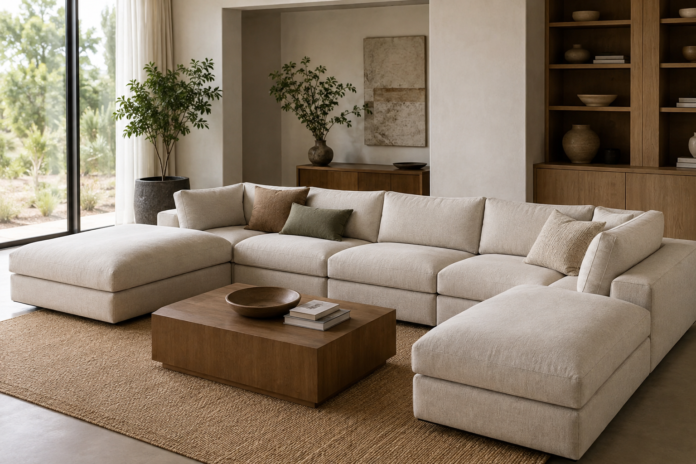

Few furniture purchases carry more excitement, or more risk, than a large-scale sectional. The idea is intoxicating. Choose a few pieces, click them together, and configure a living room exactly the way you want it. Rearrange when you move. Add a chaise when the family grows. Split the pieces when you rent a new apartment. The marketing writes itself. Yet the reality often looks different. Buyers routinely discover the sectional they loved online is too deep for the wall, too soft for daily use, or missing the specific corner piece they suddenly need six months later. What was supposed to be flexible feels awkward, and what was supposed to save money ends up costing more in returns and replacements. The good news is that most of these disappointments trace back to a small number of predictable errors made during the buying process. Understanding them in advance, rather than after delivery, is the difference between years of quiet enjoyment and expensive regret.
Miscalculating Your Space and Layout
Room measurements might sound like the least glamorous part of shopping, but they are the single most common source of buyer regret. Sectionals are designed to fill space generously, and even a small measurement error compounds visually once the piece is assembled. Before evaluating fabrics or configurations, resolve the practical geometry of your room in detail.
Overlooking Doorways and Traffic Flow
Every module has to travel from the delivery truck to your living room, which means passing through doorways, hallways, and possibly a staircase. Measure not just the sofa but the narrowest passage on the delivery route, including doorframes, tight turns, and any low overhangs. A generous modular sofa that arrives in separate pieces is far easier to maneuver than a one-piece design, but even individual sections have limits. Once inside, consider how the assembled configuration affects daily movement. A wraparound sectional feels luxurious until it blocks the shortest path to the kitchen and forces everyone to squeeze past it a dozen times a day. Sketch the layout on paper, or better, tape the exact footprint on the floor with painter’s tape and live with it for a few days before ordering.
Ignoring Ceiling Height and Sight Lines
The visual weight of a large sectional depends heavily on the room’s proportions. A low ceiling and a tall-backed sofa create a heavy, closed-in impression that no amount of styling can fully offset. Conversely, a low-profile piece in a room with soaring ceilings can feel dwarfed and lonely. Look at the sofa’s back height, seat height, and total depth in relation to your specific ceiling and window placement. Sight lines matter too. If the sectional will separate the living area from an open kitchen, choose a shorter back that preserves visual openness rather than blocking the connection between spaces.
Choosing the Wrong Configuration
Sectionals promise flexibility, but only if you actually plan for it. Buyers who choose configurations based on the current showroom photo, without imagining future rooms or life changes, often find themselves stuck with an arrangement that no longer fits their life within a year or two.
Forgetting Future Flexibility
A modular design is only as useful as the pieces you own. If you buy a fixed L-shape without any extra armless middle sections, you cannot expand or reconfigure the sofa later. Ask about the specific modules available in the collection, and think honestly about whether you might want to add a chaise, a corner, or an ottoman in the future. Some collections retire designs or fabrics after a few seasons, so verify the manufacturer’s approach to long-term availability before committing. If you rent or expect to move within a few years, prioritize configurations that can be rearranged into a smaller footprint, since a piece that fits your current home may not fit the next one.
Under- or Over-Committing to Modules
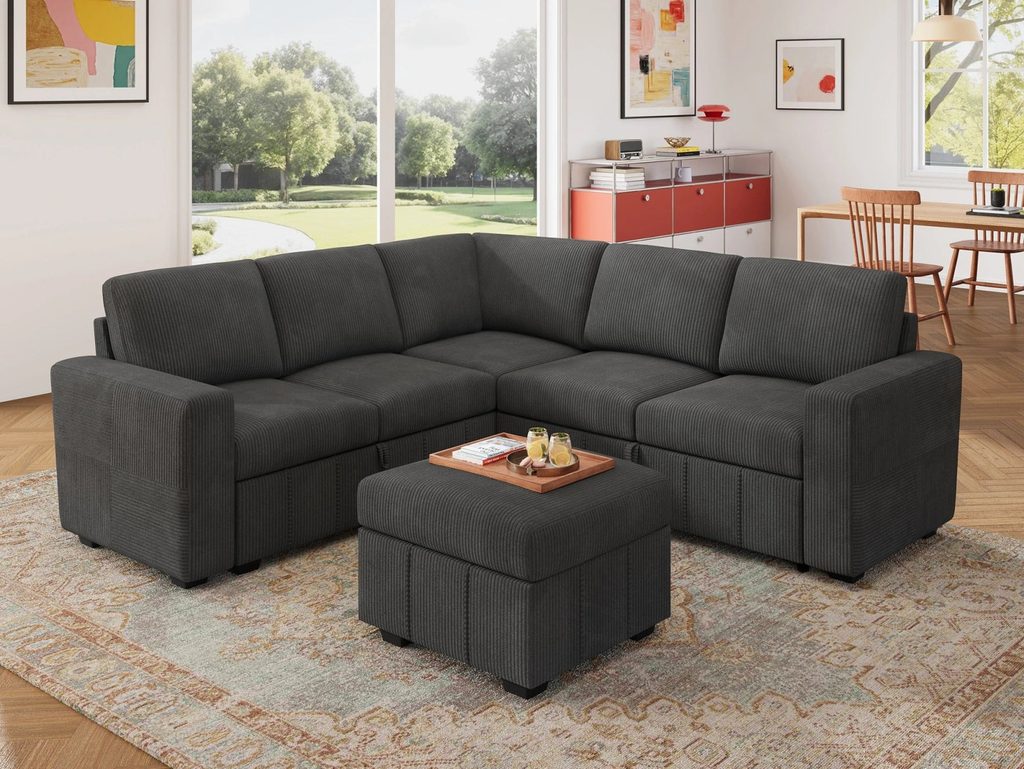
Buying too few pieces leaves you with an underwhelming footprint that feels like it should be larger. Buying too many overwhelms the room and makes daily movement awkward. The sweet spot is usually the configuration that comfortably seats your household plus one or two frequent guests, with room to add later if your circumstances change. Resist the urge to build the biggest possible arrangement simply because the modular system allows it. A sectional should feel generous, not oppressive, in the room it occupies. When in doubt, start with a slightly smaller configuration and add modules within the first year if you genuinely find yourself short of seating.
Compromising on Quality Details
Modular systems sometimes tempt buyers to prioritize the number of pieces over the quality of each one. That trade-off almost always disappoints. Frame construction, cushion fill, and fabric choice determine how the sofa performs after two years of daily use, and no amount of clever configuration can compensate for a poorly built module.
Frame and Cushion Construction
Ask specifically about frame material. Kiln-dried hardwood is the gold standard, with engineered wood or plywood as acceptable alternatives depending on price. Avoid pieces that rely heavily on particleboard, which loses structural integrity over time. Cushion fill matters equally. High-resilience foam cores wrapped in softer top layers offer the best combination of comfort and shape retention. Loose cushions filled entirely with down or fiber will collapse faster and require more frequent fluffing. Connection hardware between modules should be metal, not plastic, and should lock firmly enough that the sections do not drift apart during daily use. Well-engineered collections from manufacturers such as HONBAY illustrate what these standards look like in practice, offering a useful benchmark when comparing options.
Fabric and Long-Term Wear
Fabric decisions must reflect actual household use, not aspirational lifestyle photos. Households with children, pets, or heavy daily use benefit from performance fabrics, tightly woven synthetics, or removable and washable covers. Delicate materials like unprotected linen or fine velvet look beautiful in showrooms but reveal every spill and shed hair within weeks. Request fabric swatches to see how each option handles light, water, and wear in your actual home before finalizing the purchase.
Skipping the Practical Trials
The last, and perhaps most common, mistake is trusting the online photo without physically experiencing the sofa. Whenever possible, visit a showroom and sit on the specific model for at least fifteen minutes. Notice how the seat depth suits your height, how the cushion firms up under real weight, and how the back supports different postures. If a showroom visit is impossible, order a fabric swatch and read detailed reviews focused on long-term durability rather than first-impression comments. Confirm the return policy in writing, since even careful buyers occasionally receive a piece that feels wrong once assembled at home. A generous return window turns a risky purchase into a manageable one.
Buy Once, Live With It Well
Sectionals reward patience and punish haste. The buyers who love their modular systems years later are almost always the ones who measured carefully, chose configurations with future flexibility in mind, and refused to compromise on frame, cushion, and fabric quality. The buyers who regret their purchase almost always cite one of the mistakes above. Fortunately, none of these errors require deep design expertise to avoid. They require honest measurements, realistic assessments of household use, and a willingness to test the piece before committing. Take the extra week to plan the layout, request the swatches, and confirm the return policy. The reward is a piece of furniture that grows with you rather than one that reminds you daily of the corners you cut. A well-chosen sectional anchors a home for a decade or more, quietly supporting movie nights, birthdays, and countless ordinary afternoons in between. The initial effort is worth every minute.