
Key Takeaways
- Braces and clear aligners can both treat many orthodontic concerns.
- The best option depends on dental needs, lifestyle, budget, and treatment complexity.
- Clear aligners are removable but require consistent wear.
- Braces remain fixed and may suit more complex cases.
- Compare costs, care requirements, and retainer plans before treatment.
- A professional evaluation helps determine the appropriate option.
Choosing orthodontic treatment as an adult can feel like a major decision, especially when you are balancing work, family, travel, and everyday routines in Virginia Beach. Whether your goal is to reduce crowding, close spaces, make cleaning easier, or address a bite concern, exploring invisible teeth alignment in Virginia Beach can be a useful first step toward understanding which treatment approach best fits your needs. Braces and clear aligners can both move teeth gradually under professional supervision. The better choice is not automatically the least noticeable option. It is the option that matches your oral health, the complexity of your bite, your budget, and the habits you can realistically maintain from the first appointment through long-term retainer wear.
Why More Adults Seek Orthodontic Treatment
Orthodontic care is no longer viewed as something reserved for teenagers. Adults may seek treatment because their teeth have shifted over time. After all, an old retainer was lost, or they want to improve how their teeth meet when they bite and chew. The American Association of Orthodontists notes that one in three orthodontic patients today is an adult, reflecting how common adult treatment has become. For adults, age itself is usually less important than the condition of the teeth and gums. Cavities, active gum problems, missing teeth, crowns, and worn enamel can affect the timing and design of treatment. A complete exam helps identify whether those concerns should be managed before tooth movement begins.
How Braces and Clear Aligners Work
Traditional Braces
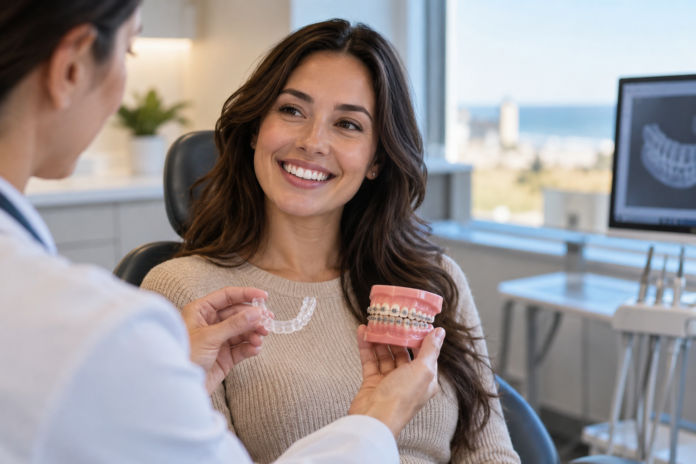
Braces use brackets attached to the teeth and wires that apply controlled pressure over time. Because the appliance stays in place, braces work continuously without requiring the patient to remember to put trays back in after meals. Metal brackets are common, while ceramic brackets can be less noticeable. Some patients may also be candidates for braces placed on the tongue-facing side of the teeth.
Clear Aligners
Clear aligners use a series of custom trays, with each set designed to make planned tooth movements. The trays are removable, but that convenience depends on consistent wear. They should generally be removed for meals and drinks other than water, then cleaned and returned promptly. Checkups remain important for monitoring progress and adjusting the plan when needed.
Braces vs. Clear Aligners: A Quick Comparison
- Appearance: Braces are visible, although ceramic options can blend in more. Clear aligners are often less noticeable in conversation and photographs.
- Removability: Braces remain attached throughout treatment. Aligners can be removed for eating, brushing, flossing, and certain activities.
- Meals: Braces may require avoiding hard, sticky, and chewy foods. Aligners allow normal food choices when trays are removed.
- Cleaning: Braces require extra care around brackets and wires. Aligners require cleaning both the trays and teeth before reinsertion.
- Daily responsibility: Braces eliminate decisions about wear time. Aligners require steady use, safe storage, and timely tray changes.
- Case complexity: Either option may be appropriate in many situations, but some movements or bite corrections may call for braces, attachments, elastics, or other techniques.
As the American Dental Association explains, removable aligners are another option for treating orthodontic problems when they are provided under direct professional supervision. A consultation is the right setting to compare options based on records, not just appearance or an advertised price.
How Each Option Fits Daily Life
Work, Social Events, and Travel
For adults who spend time in meetings, customer-facing roles, or social settings around the Oceanfront, aligners may appeal because they are less visible. Others prefer fixed braces because there is no need to manage trays during a busy day. A frequent traveler should ask how often in-person visits are expected, what happens if a tray is lost, and how refinements are handled.
Meals, Drinks, and Oral Hygiene
Braces can make brushing and flossing more detailed, especially after meals. Aligners simplify access to the teeth, but they also require trays to be removed before eating. With either choice, frequent consumption of sugary drinks and inconsistent cleaning can increase the risk of dental problems. Good home care and regular dental visits remain essential throughout treatment.
Sports, Hobbies, and Speaking
Adults who play contact sports should ask about a protective mouthguard. Musicians, singers, and public speakers may notice a short adjustment period with either appliance. Comfort varies from person to person, and temporary pressure after an adjustment or a new aligner is to be expected as teeth begin moving.
Which Treatment May Fit Different Cases?
Mild spacing, minor crowding, and relapse after prior orthodontic treatment may be manageable with multiple approaches. More involved bite concerns, substantial tooth rotations, jaw discrepancies, or dental restorations can make planning more complex. In some cases, an orthodontist may recommend braces or combine aligners with attachments, elastics, restorative care, or referral to another dental specialist. A photo, online quiz, or mail-order price cannot replace an in-person evaluation. Before choosing treatment, make sure the provider has reviewed the teeth, gums, bite, dental history, and diagnostic records.
Costs, Insurance, and Payment Questions
Orthodontic fees vary with the difficulty of the case, anticipated treatment time, appliance type, and the services included. Ask for a clear written estimate that explains whether it covers scans or X-rays, adjustment visits, aligner refinements, emergency visits, retainers, and replacement appliances. Dental insurance may offer an orthodontic benefit, and some patients can use funds from an eligible flexible spending or health savings account. Monthly payment plans can make care more manageable, but compare the total fee rather than focusing only on a low starting payment. It is also wise to ask what the financial implications are if treatment takes longer than estimated.
What to Ask at a Consultation
- What tooth and bite concerns need correction?
- Which treatment choices are appropriate for my case?
- How long might treatment take, and how often are visits needed?
- What changes will I need to make to eating, cleaning, or daily habits?
- Are refinements, retainers, and replacement appliances included in the quoted fee?
- Who should I contact if a wire, bracket, or aligner causes a problem?
Why Retainers Matter After Treatment
Finishing braces or aligners is not the end of orthodontic care. Teeth can shift after active treatment, which is why a retainer plan matters. Removable retainers must be worn, cleaned, and stored carefully. Fixed retainers are bonded behind certain teeth and still need regular cleaning and professional checks. Ask how long retainers should be worn and what replacement options are available.
A Simple Decision Checklist
- Choose clear aligners when: a discreet, removable option suits your routine, and you can wear trays consistently.
- Consider braces when: a fixed appliance better supports your treatment needs, or daily wear consistency may be difficult.
- Pause before deciding when: cavities, gum concerns, unclear fees, or limited supervision have not been addressed.
- Seek a second opinion when recommendations differ greatly, surgery is suggested, or the treatment plan feels rushed.
Conclusion
Adults in Virginia Beach have meaningful choices when considering orthodontic treatment in 2026. Both traditional braces and clear aligners can be effective when they are selected based on the patient’s specific dental needs, treatment goals, and overall oral health. Factors such as the complexity of tooth movement, appearance preferences, daily habits, treatment duration, and ability to follow care instructions may influence which option is more appropriate. A thorough evaluation with an orthodontic professional can help identify the available treatment choices and explain what each approach may involve. It is also important to discuss the expected costs, payment options, insurance coverage, and any additional fees before treatment begins. Planning for retainers and long-term follow-up can further help maintain the results after active treatment. With a clear understanding of the clinical recommendations, financial responsibilities, and ongoing care requirements, patients can make a more informed decision that fits their needs and circumstances.