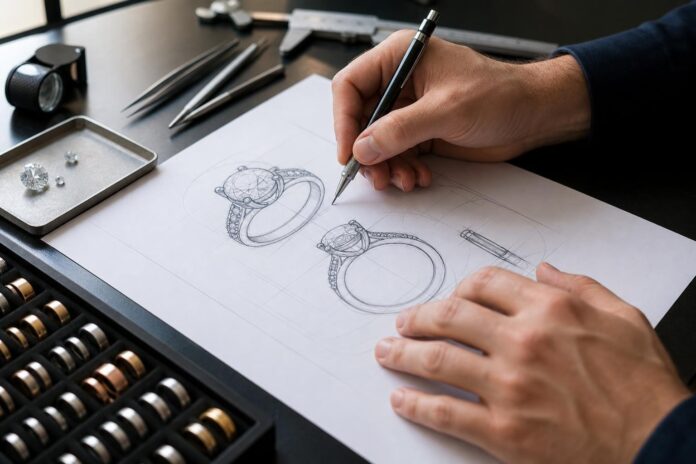

The Rise of Custom Engagement Rings
Designing a custom engagement ring is a deeply personal journey. It allows you to create a unique symbol of love that will last forever. This process can seem complex, but it doesn’t have to be.
We will guide you through each important step. We will cover selecting the perfect metal, like 18k white or yellow gold. We will also discuss understanding diamond quality, including carat weight, color, and clarity.
Further, we will explore different setting styles and their impact on value. We aim to empower you with the knowledge needed to craft a truly bespoke piece. You will learn how to make informed decisions about design, materials, and authenticity.
In an era of personalized aesthetics, the demand for custom jewelry, particularly engagement rings, has soared. Couples today seek not just a symbol of their commitment, but a unique reflection of their shared story and individual styles. This shift from mass-produced to bespoke pieces signifies a desire for heirloom creation, something that can be cherished across generations. The design flexibility offered by custom jewelry allows for the integration of specific preferences, from intricate filigree work to modern minimalist settings, ensuring the final product perfectly aligns with the wearer’s vision.
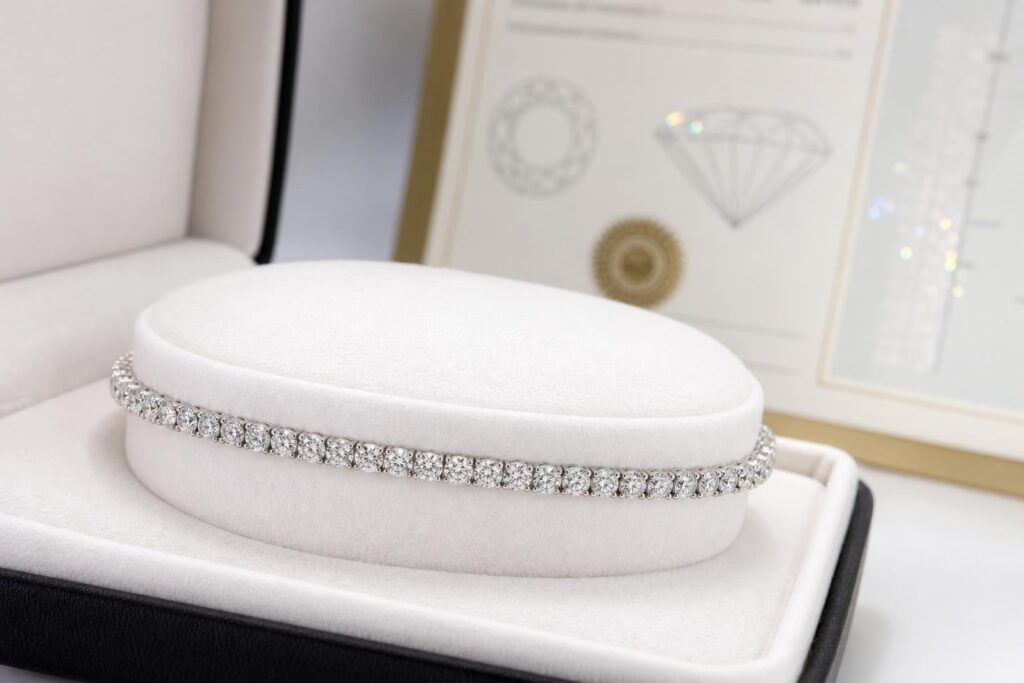
This trend extends beyond engagement rings to other significant diamond pieces, such as the ever-popular tennis bracelet. Just as a custom engagement ring tells a unique love story, a bespoke 18k tennis bracelet can be designed to celebrate personal milestones or mark special occasions with unparalleled elegance. The ability to choose specific diamond qualities, metal types, and setting styles means that every detail can be tailored, transforming a beautiful piece into a truly meaningful one. Consumer preferences are increasingly leaning towards items that carry personal significance and a distinct identity, making custom design a prevailing force in contemporary jewelry trends.
Key Benefits of Custom Engagement Rings
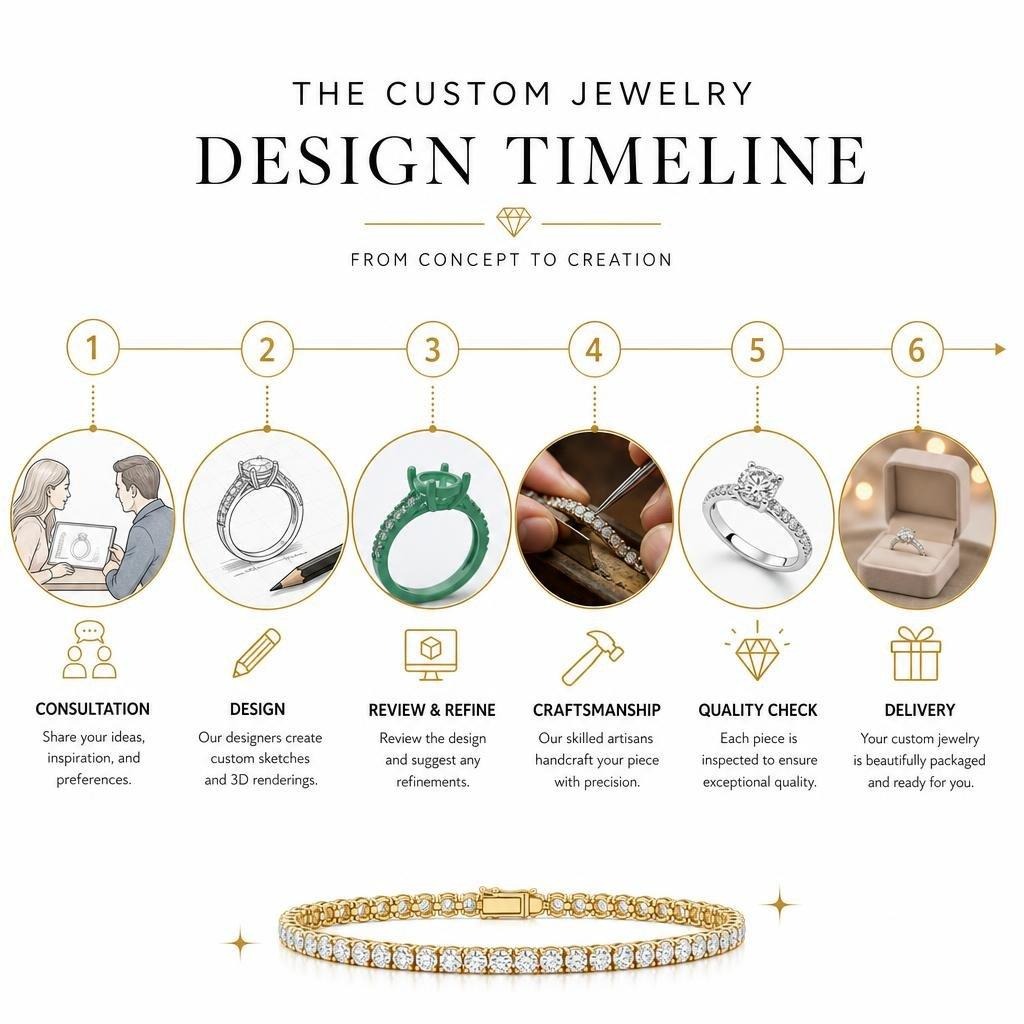
Opting for a custom engagement ring offers a myriad of advantages that transcend the appeal of off-the-shelf options. Foremost among these is the ability to achieve unique styles that cannot be found elsewhere. Whether you envision a vintage-inspired piece, a contemporary design, or something entirely avant-garde, custom creation brings your specific vision to life. This level of personalization ensures that the ring is not just beautiful, but also deeply meaningful and reflective of the wearer’s personality.
Beyond aesthetics, a custom ring offers a tailored fit, both literally and figuratively. Jewelers can craft the piece to exact finger measurements, ensuring comfort and security. More importantly, the design process itself becomes an act of personal storytelling. Every choice, from the cut of the diamond to the type of metal, can be infused with significance, creating a piece that embodies a couple’s journey and aspirations. This same philosophy applies to other custom diamond jewelry; for instance, an 18k tennis bracelet can be customized with specific diamond sizes or unique setting patterns to tell its own story or commemorate a special event, becoming a cherished personal heirloom.
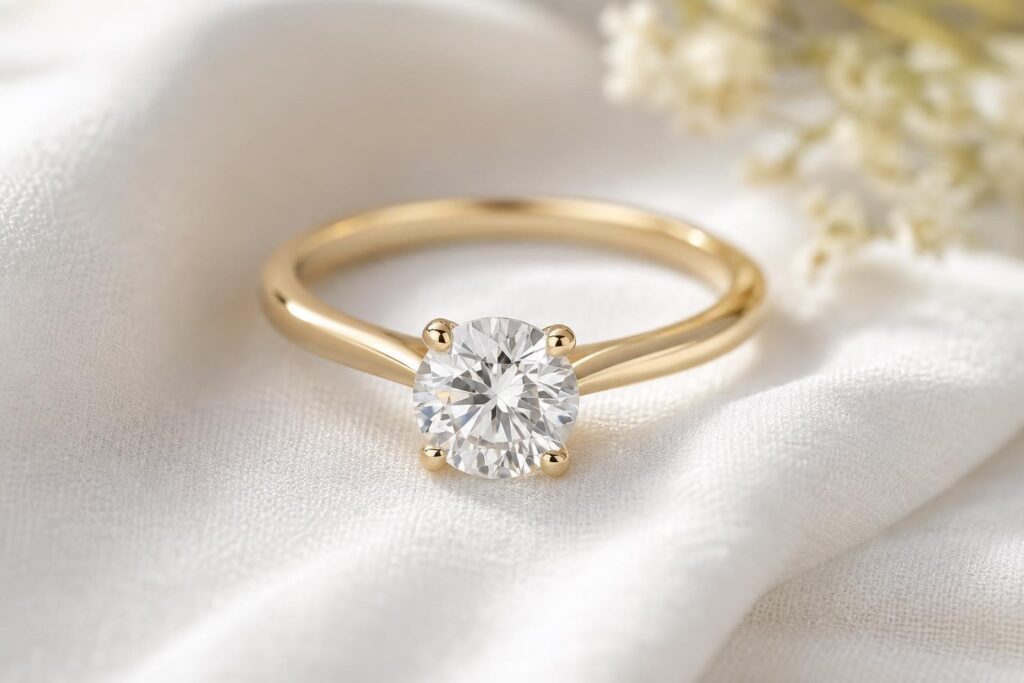
How to Budget for Custom Engagement Rings
Budgeting for a custom engagement ring, or any significant piece of custom diamond jewelry like an 18k tennis bracelet, involves understanding several key cost factors. The primary determinants are metal choice and diamond selection. The type of metal chosen—whether it’s platinum, 18k white gold, 18k yellow gold, or rose gold—will significantly influence the base cost. For instance, 18k gold, being 75% pure gold, commands a premium over 14k gold due to its higher precious metal content.
Diamond selection is often the most substantial part of the budget. This includes considering the 4Cs: carat weight, cut, color, and clarity. A larger carat weight will naturally increase the price, but so will higher grades in cut, color, and clarity. For example, a 7.92 carat total weight (ctw) 18k white gold tennis bracelet recently sold at auction for approximately $10,350, while a 10.99 ctw bracelet with similar metal in 18k white gold had an estimated auction price of $18,250. This demonstrates the significant impact of carat weight on value. Understanding these nuances allows you to prioritize what is most important for your custom piece, whether it’s the size of the main diamond, the overall brilliance, or the intricate details of the setting. For a deeper dive into making informed decisions when selecting precious metals and natural diamonds for your bespoke pieces, including insights that apply to various fine jewelry, you might find this guide on custom engagement rings and natural diamonds particularly useful.
Selecting the Perfect Metal: 18k White Gold vs. 18k Yellow Gold
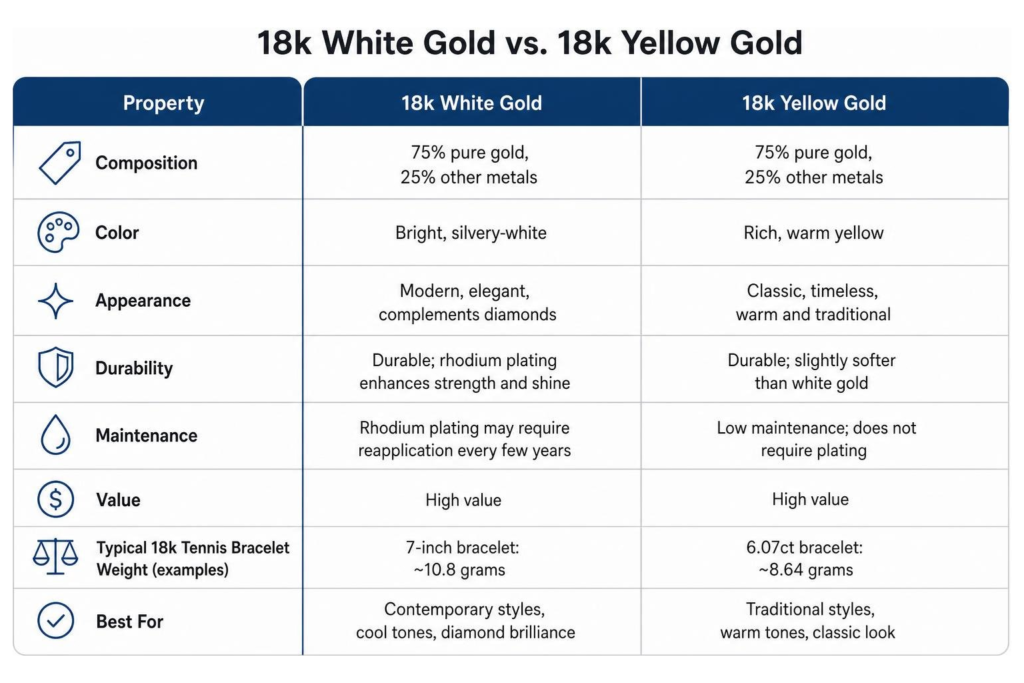
When designing custom jewelry, the choice of metal is paramount, influencing not only the aesthetic but also the durability and overall value. For high-end diamond pieces like engagement rings and 18k tennis bracelets, 18k gold is a popular and luxurious choice. This metal purity signifies that the alloy contains 75% pure gold, with the remaining 25% composed of other metals that impart strength and color.
18k White Gold: This alloy is highly favored for its bright, silvery-white luster, which beautifully complements the brilliance of diamonds. It’s often plated with rhodium to enhance its whiteness and durability, though this plating may require reapplication every few years. The premium alloy of 18k white gold is a common choice for high-carat diamond tennis bracelets due to its elegant appearance and robust nature.
18k Yellow Gold: Offering a rich, warm hue, 18k yellow gold exudes a classic and timeless appeal. It is a blend of pure gold with silver and copper, which gives it its distinctive color. While 18k yellow gold is slightly softer than 14k gold, its higher gold content makes it less prone to tarnishing and provides a luxurious feel. For instance, a 6.07 carat total weight (ctw) diamond tennis bracelet in 18k yellow gold had an auction estimate ranging from $12,831 to $16,680, showcasing its significant market value.
18k vs. 14k Gold: While both are excellent choices, 18k gold contains more pure gold (75%) compared to 14k gold (58.3% pure gold). This higher purity makes 18k gold generally more valuable and less likely to cause allergic reactions. However, 14k gold is slightly harder and more resistant to scratches due to its higher proportion of alloy metals, making it a more durable option for very active daily wear. Buyer preference often leans towards 18k for its prestige and richer color, especially for significant pieces.
Gold Weight in Grams: The weight of the gold in grams also contributes to the overall value and feel of a piece. A substantial gold weight indicates a well-made, durable piece. For example, a standard 7-inch 18k white gold tennis bracelet can weigh approximately 10.8 grams, providing a solid and luxurious feel. Similarly, a 6.07ct 18k yellow gold tennis bracelet was noted to weigh 8.64 grams. This physical weight is an important consideration for both durability and intrinsic value.
Here’s a comparison of their key properties:
Understanding Diamond Quality and Settings for Custom Jewelry
The allure of custom diamond jewelry, whether an engagement ring or an 18k tennis bracelet, lies significantly in the quality of its diamonds and the artistry of its setting. Understanding these elements is crucial for creating a piece of lasting beauty and value.
Diamond Carat Weight (ctw) and Value Impact: Carat weight is often the most noticeable factor influencing a diamond’s price. For tennis bracelets, the total diamond carat weight (ctw) refers to the combined weight of all diamonds in the piece. As the ctw increases, so does the value, often exponentially. For example, a 7.92 ctw diamond 18k white gold tennis bracelet recently sold for $10,350 at auction. In contrast, a 10.99 ctw diamond tennis bracelet in 18k white gold had an upcoming auction estimate of $18,250, illustrating how a higher ctw significantly elevates the market value.
Color and Clarity: Beyond size, the color and clarity of diamonds are vital for their visual appeal and price.
- Color: Diamonds are graded on a color scale from D (colorless) to Z (light yellow or brown). For high-end jewelry, diamonds in the near-colorless range (G-J) or colorless range (D-F) are highly sought after. Our research indicates that diamonds with an ‘I’ color grade are often found in auctioned 18k tennis bracelets, offering excellent value with a classic and timeless appeal.
- Clarity: Clarity refers to the absence of inclusions (internal flaws) and blemishes (external imperfections). The clarity scale ranges from Flawless (FL) to Included (I). Many high-quality 18k tennis bracelets feature diamonds with VS1 clarity (Very Slightly Included), meaning inclusions are minor and difficult for a skilled grader to see under 10x magnification. This balance of quality and value makes VS1 clarity a popular choice.
Diamond Cuts: The cut of a diamond determines its brilliance, fire, and sparkle.
- Round Brilliant: This is the most popular and brilliant diamond shape, maximizing light return. Many 18k tennis bracelets feature round brilliant diamonds. For instance, a 6.07ct 18k yellow gold tennis bracelet featured 53 round brilliant diamonds.
- Baguette: These are rectangular, step-cut diamonds that offer a sleek, elegant look. They are often used as accent stones or in specific bracelet designs.
- Cluster: A cluster setting uses multiple smaller diamonds set closely together to create the illusion of a larger stone or a dazzling pave effect. A 3.05 ctw 18k white gold tennis bracelet, for example, can feature as many as 387 individual diamonds in a cluster design, creating an impressive display of brilliance.
Setting Styles: The setting not only secures the diamonds but also contributes significantly to the bracelet’s overall design and market value.
- Prong Setting: This is the most common setting, where small metal claws (prongs) hold the diamond in place. A 3-prong setting (often called a “basket” setting in tennis bracelets) or a classic 4-prong setting allows maximum light to enter the diamond, enhancing its sparkle.
- Cluster Setting: As mentioned, this design arranges many small diamonds together for a grander effect.
- Other settings like bezel, channel, and pave are also used, each offering a distinct aesthetic and level of protection for the diamonds. The choice of setting can greatly influence the bracelet’s perceived luxury and market appeal.
Evaluating Value, Authenticity, and Secondary Market Dynamics
When acquiring high-value diamond jewelry, especially from secondary markets like auctions, a thorough understanding of value, authenticity, and market dynamics is paramount. This is particularly true for items like 18k tennis bracelets, where significant investments are involved.
Auction Estimates vs. Starting Prices vs. Final Sale Prices: The auction market operates on a distinct pricing structure. An item will typically have an auction estimate, which is an expert’s assessment of what the piece is likely to fetch. For example, a 3.05 ctw 18k white gold tennis bracelet with a retail value of $19,425 had an auction estimate of $8,500-$13,000. The starting price or opening bid is usually set lower to encourage bidding, often significantly below the retail value, such as $6,150 for that same 3.05 ctw bracelet. The final sale price is what the item ultimately sells for, which can be above, within, or below the estimate, depending on buyer interest. A 7.44 ctw 18k white gold tennis bracelet sold for $11,750, while a similar 7.92 ctw piece went for $10,350, demonstrating the variability. Analyzing these figures provides real-world secondary market pricing benchmarks, which can range from $10,000 to over $18,000 for high-carat (7ct to 11ct) 18k white gold tennis bracelets.
Buyer’s Premium: A critical factor to consider in auction purchases is the buyer’s premium. This is an additional percentage added to the hammer price (the winning bid) that the buyer must pay to the auction house. Buyer’s premiums can significantly increase the total cost, often ranging from 20% to 25%. For example, a common buyer’s premium structure might be 25% up to $10,000, slightly less for higher values. Always factor this into your budget before bidding.
Seller Reputation: The reputation of the auction house or seller plays a crucial role in buyer confidence. Reputable auction houses are known for their rigorous authentication processes and transparent dealings. While specific names like Serenity Gallerie or Bidhaus are examples of entities in this space, the general principle is to seek out platforms with established track records and positive reviews to ensure a trustworthy transaction.
GIA Certification and Authenticity Verification: For high-value diamond jewelry, obtaining a Certificate of Authenticity or an independent gemologist assessment is highly recommended. Verifying the diamond grading and certification, especially from renowned laboratories like the Gemological Institute of America (GIA) or International Gemological Institute (IGI), provides assurance regarding the diamonds’ quality (4Cs) and natural origin. These reports are invaluable for confirming the piece’s authenticity and stated specifications.
Condition Considerations: The physical condition of the bracelet is another key factor.
- Metal Weight: Check the total gram weight of the gold setting. A standard 7-inch 18k white gold tennis bracelet can weigh around 10.8 grams. A substantial weight indicates a well-made piece with good durability, while a lighter weight might suggest a less robust construction.
- Clasp Mechanisms: For high-carat bracelets, secure clasp mechanisms are essential to prevent loss. Look for features like a three-prong setting or a double-latch safety clasp.
- Overall Integrity: Inspect for any signs of wear, loose stones, or damage to the setting. Professional cleaning and maintenance can restore brilliance, but structural issues can be costly to repair.
Frequently Asked Questions about Custom Bridal Jewelry
Navigating custom bridal jewelry, or indeed any bespoke diamond piece, often brings forth a range of questions. Here, we address some common inquiries to help you make informed decisions about your custom design journey and ensure the lasting beauty and value of your investment.
What is the price difference between 14k and 18k gold in custom jewelry?
The price difference between 14k and 18k gold in custom jewelry stems primarily from their gold purity. 18k gold is composed of 75% pure gold, while 14k gold contains 58.3% pure gold. This higher percentage of precious metal makes 18k gold inherently more valuable and, consequently, more expensive per gram. Beyond the raw material cost, 18k gold is often chosen for its richer color and more luxurious feel, which can also contribute to a higher overall price for the finished piece.
Regarding durability for daily wear, 14k gold is generally harder due to its higher proportion of alloy metals. This makes it slightly more resistant to scratches and dents, which can be a consideration for items intended for constant wear, such as an engagement ring or a daily 18k tennis bracelet. However, 18k gold is still very durable and an excellent choice for fine jewelry, offering a beautiful balance of purity and strength. The price variance will depend on the current market price of gold and the weight of the piece, but expect 18k gold to command a noticeable premium over 14k.
How do diamond color and clarity affect the value of custom pieces?
Diamond color and clarity are two of the most critical factors, alongside carat weight and cut, that determine a diamond’s value and visual brilliance in custom pieces.
- Color: Diamonds are graded on a scale from D (colorless) to Z (light yellow). The closer a diamond is to colorless, the rarer and more valuable it becomes. A perfectly colorless diamond allows light to pass through unimpeded, maximizing its sparkle. However, diamonds with an ‘I’ color grade, often found in high-carat 18k tennis bracelets, still offer excellent visual appeal at a more accessible price point. While they may have a very faint tint, it’s often imperceptible to the untrained eye, especially when set in yellow gold or alongside other diamonds.
- Clarity: Clarity refers to the presence of inclusions (internal characteristics) and blemishes (external characteristics). The clarity scale ranges from Flawless (FL) to Included (I). Diamonds with fewer and smaller inclusions are rarer and more valuable because they allow more light to reflect and refract, enhancing brilliance. A VS1 clarity grade (Very Slightly Included), commonly seen in auctioned 18k tennis bracelets, indicates very minor inclusions that are difficult to spot even under 10x magnification. This grade strikes an excellent balance between high quality and value, ensuring the diamond appears eye-clean and brilliant.
Both color and clarity are assessed by gemological laboratories like GIA, and their grades significantly impact the market value of a diamond. Opting for slightly lower, but still high-quality, grades in these areas can allow for a larger carat weight or a more intricate custom design within a given budget.
What security features should I look for in custom bracelets and rings?
When investing in custom diamond jewelry, especially high-value pieces like engagement rings or an 18k tennis bracelet, ensuring the security of the diamonds and the integrity of the piece is paramount. Several key features contribute to this:
- Secure Prongs: For prong settings, ensure the prongs are well-formed, evenly spaced, and securely hold each diamond without obscuring its brilliance. For tennis bracelets, a 3-prong setting is common, offering good security while maximizing light exposure. Regularly check that prongs haven’t become bent or worn over time.
- Robust Clasp Mechanisms: This is particularly important for bracelets. A high-quality 18k tennis bracelet should feature a secure clasp, often a box clasp, accompanied by at least one, if not two, safety latches. A double-latch safety clasp provides an extra layer of protection against accidental opening and loss. The clasp should feel sturdy and close firmly with an audible click.
- Metal Weight and Construction: The overall weight and construction of the gold setting contribute to its structural integrity. A piece with a substantial gold weight (e.g., 10.8 grams for a 7-inch 18k bracelet) will generally be more durable and less prone to bending or damage than a lighter, flimsier piece. Ensure the links in a tennis bracelet are solid and well-articulated, allowing for flexibility without weakness.
- Regular Inspections: Beyond initial features, regular professional inspections are crucial. Jewelers can check for loose stones, worn prongs, or damaged clasps, addressing issues before they lead to loss. This proactive approach ensures the longevity and security of your cherished custom jewelry.
Conclusion
Embarking on the custom design journey for an engagement ring or any significant piece of diamond jewelry, such as an 18k tennis bracelet, is an investment in both beauty and personal expression. By understanding the critical factors we’ve explored—from the nuances of 18k white versus yellow gold, to the impact of diamond carat weight, color, and clarity, and the importance of secure settings—you are empowered to make choices that reflect your unique vision and values.
Whether you’re exploring the dynamic pricing of auction markets or working directly with a designer, prioritizing authenticity through certifications like GIA and considering the structural integrity of the piece will ensure lasting value. The goal is to create not just a piece of jewelry, but a tangible symbol of a moment, a memory, or a lifelong commitment. With careful consideration and expert guidance, your custom design will become a cherished heirloom, embodying elegance and personal storytelling for generations to come.