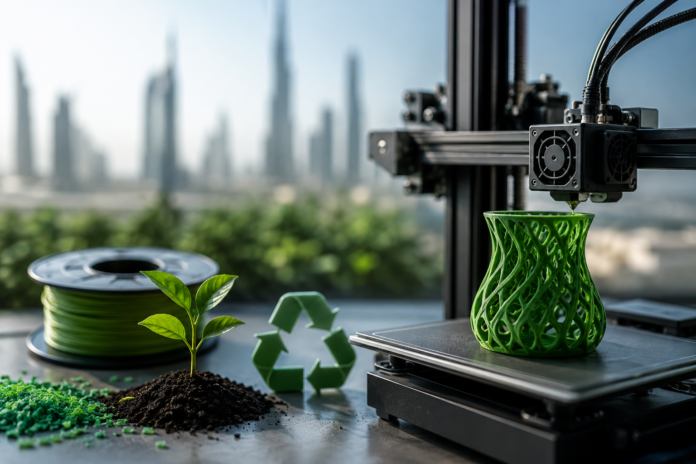

Sustainability has become an important goal for manufacturers, but it is not only about using different materials or reducing emissions. It also comes down to how products are designed, how much material is used, and whether parts are manufactured only when they are needed. This is where eco-friendly 3D printing in Dubai can make a practical difference. By producing parts layer by layer and supporting on demand manufacturing, 3D printing gives businesses another way to reduce unnecessary waste while improving production efficiency.
Sustainability Begins with Using Only the Material You Need
Not every manufacturing process uses material in the same way. Some methods start with a larger piece of material and remove sections until the final part is created. Others build the part from the ground up.
3D printing follows the second approach. Material is added layer by layer until the part is complete. Because of this, there is often less unused material compared with manufacturing methods that rely on cutting, milling, or machining away sections from a solid block.
That does not mean there is no waste at all. Depending on the design, some printed parts may still require support structures or post processing. Even so, additive manufacturing can often make better use of material, especially for parts with complex shapes.
The basic difference between the two approaches is shown below.
| Additive Manufacturing | Subtractive Manufacturing |
| Builds parts layer by layer | Removes material from a larger block |
| Material is placed where it is needed | Material is removed to create the final shape |
| Often produces less unused material for complex parts | May generate more leftover material depending on the process |
| Suitable for complex geometries | Well suited for many high volume and precision applications |
The choice between these methods depends on the product and its intended use. In many cases, they are used together rather than as competing technologies. Selecting the right manufacturing process for the job can improve efficiency while making better use of available materials.
Why Producing Only What You Need Reduces Waste
Manufacturing more products than the market requires creates waste in ways that are not always obvious. Extra inventory takes up storage space, ties up resources, and may never be used if demand changes or the product is updated.
One advantage of 3D printing in Dubai is that it supports on demand and low volume manufacturing. Instead of producing large batches from the beginning, manufacturers can create smaller quantities based on current requirements. This gives businesses more flexibility while reducing the risk of overproduction.
Producing smaller batches can also help businesses:
- Respond more quickly to changes in customer demand.
- Test new products before increasing production.
- Avoid storing large quantities of unused inventory.
- Reduce the number of products that may become obsolete.
- Make design improvements without discarding large production runs.
For many manufacturers, this approach fits naturally into product development. A design can be tested, refined, and produced in smaller quantities before larger manufacturing commitments are made. That not only helps reduce unnecessary production but also supports better planning throughout the manufacturing process.
Local Manufacturing Can Reduce Transport Related Emissions
Where a product is manufactured can also influence its environmental impact. Parts that travel through long international supply chains often require additional transport, handling, and storage before they reach the customer.
Supporting sustainable manufacturing in the UAE through local production can help shorten that journey. Manufacturing parts closer to where they will be used may reduce shipping distances, shorten lead times, and make supply chains more responsive.
Local manufacturing can also offer practical benefits such as:
- Faster delivery of parts and prototypes.
- Greater flexibility when production schedules change.
- Reduced dependence on overseas suppliers.
- Easier communication during product development.
- Shorter supply chains for local manufacturing projects.
These advantages are not limited to sustainability alone. They can also help businesses respond more quickly to changing project requirements while improving overall manufacturing efficiency.
Sustainable Manufacturing Also Depends on Material Choice
It is easy to assume that every 3D printed part is automatically more sustainable, but the reality is more nuanced. The material used for the part is just as important as the manufacturing process itself.
Different materials are developed for different applications. Some are chosen because they are lightweight, while others are selected for their strength, heat resistance, or durability. The right choice depends on how the part will be used, not simply on its environmental profile.
For example, PLA is often recognised as a material with renewable plant based origins and is used in many prototyping applications. Engineering materials such as nylon and industrial resins, however, are selected because they offer higher performance for demanding industrial environments. These materials may have different recycling options and disposal requirements compared with PLA.
Rather than assuming one material is always better than another, manufacturers should consider factors such as:
- The purpose of the part.
- Mechanical and thermal requirements.
- Expected product lifespan.
- Material efficiency during production.
- Available recycling or disposal options.
Looking at the whole product lifecycle gives a clearer picture of sustainability than focusing on a single material. In many cases, choosing a durable material that performs well over a longer period can be a more practical decision than selecting a material based only on its environmental credentials.
Sustainability Comes from Better Manufacturing Decisions
Technology alone does not make manufacturing more sustainable. The biggest improvements often come from making better decisions throughout the product development and production process.
A well planned manufacturing strategy considers how products are designed, tested, produced, and delivered. Small improvements at each stage can reduce unnecessary material use, avoid repeated production runs, and make better use of available resources.
Some of the practices that support more sustainable manufacturing include:
- Designing products carefully before production begins.
- Validating designs through prototypes.
- Producing only the quantity that is needed.
- Selecting materials that suit the application.
- Manufacturing closer to the point of use where possible.
- Reviewing production processes to improve efficiency over time.
None of these steps completely eliminates environmental impact. Manufacturing will always require materials, energy, and resources. However, improving efficiency throughout the process can reduce unnecessary waste while supporting more responsible production.
This balanced approach is one of the reasons additive manufacturing continues to become an important part of modern manufacturing. It gives businesses more flexibility to develop products, respond to changing demand, and improve production processes without committing to unnecessary manufacturing from the outset.
“We are committed to helping businesses and individuals leverage the full potential of additive manufacturing with the most advanced and cost effective 3D printing solutions.”
— Pir Arkam, Founder & CEO, Proto21
Conclusion
3D printing supports more sustainable manufacturing by helping businesses use materials more efficiently, produce only what is needed, and improve product development before moving into larger production runs. Local manufacturing, thoughtful material selection, and better production planning also play an important role. Rather than offering a single solution, additive manufacturing provides manufacturers with another way to reduce waste and improve efficiency across the production process.
Businesses looking to adopt eco-friendly 3D printing in Dubai can work with Proto21 to combine additive manufacturing, product development, and low volume production into a more efficient and sustainable manufacturing workflow.
Frequently Asked Questions
1. What is eco-friendly 3D printing in Dubai?
Eco friendly 3D printing in Dubai refers to manufacturing practices that use additive manufacturing to improve material efficiency, reduce unnecessary production, and support more sustainable product development. The overall environmental impact also depends on material selection and production methods.
2. How does 3D printing reduce material waste?
Unlike many traditional manufacturing methods that remove material from a larger block, 3D printing builds parts layer by layer. This often results in more efficient material use, particularly for complex designs, although some waste may still occur depending on the application.
3. Is 3D printing in Dubai more sustainable than traditional manufacturing?
3D printing in Dubai can support more sustainable manufacturing in many applications by reducing material waste, enabling on demand production, and minimising overproduction. However, the most suitable manufacturing method depends on the product, material, and production volume.
4. How does low volume production support sustainability?
Low volume production allows manufacturers to produce smaller batches before scaling up. This helps reduce excess inventory, avoids unnecessary manufacturing, and gives businesses the opportunity to refine products before committing to larger production runs.
5. Does additive manufacturing completely eliminate manufacturing waste?
No. While additive manufacturing often uses material more efficiently than some traditional methods, it can still generate waste through support structures, failed prints, or post processing. The amount of waste depends on the design, material, and production process.
6. How does local manufacturing contribute to sustainable manufacturing in the UAE?
Supporting sustainable manufacturing in the UAE through local production can reduce transport distances, shorten supply chains, and improve production responsiveness. It may also reduce the need for overseas shipping and long term warehousing.
7. Are all 3D printing materials equally sustainable?
No. Different materials have different properties and recycling options. For example, PLA, nylon, and engineering resins each have their own performance characteristics and environmental considerations. Material selection should always match the intended application.
8. Can 3D printing in Dubai help reduce overproduction?
Yes. 3D printing in Dubai supports on demand and low volume manufacturing, allowing businesses to produce only the quantities they need. This reduces the risk of excess inventory and unnecessary production.
9. What industries benefit from sustainable additive manufacturing?
Industries such as aerospace, automotive, healthcare, architecture, oil and gas, and industrial manufacturing can benefit from additive manufacturing by improving material efficiency, supporting product development, and reducing production waste where appropriate.
10. Why are better manufacturing decisions important for sustainability?
Sustainability is influenced by the entire manufacturing process, from design and material selection to production planning and inventory management. Making informed decisions at each stage can help reduce waste, improve efficiency, and support more responsible manufacturing practices.